
When you purchase through links on our site, we may earn an affiliate commission. Here’s how it works .
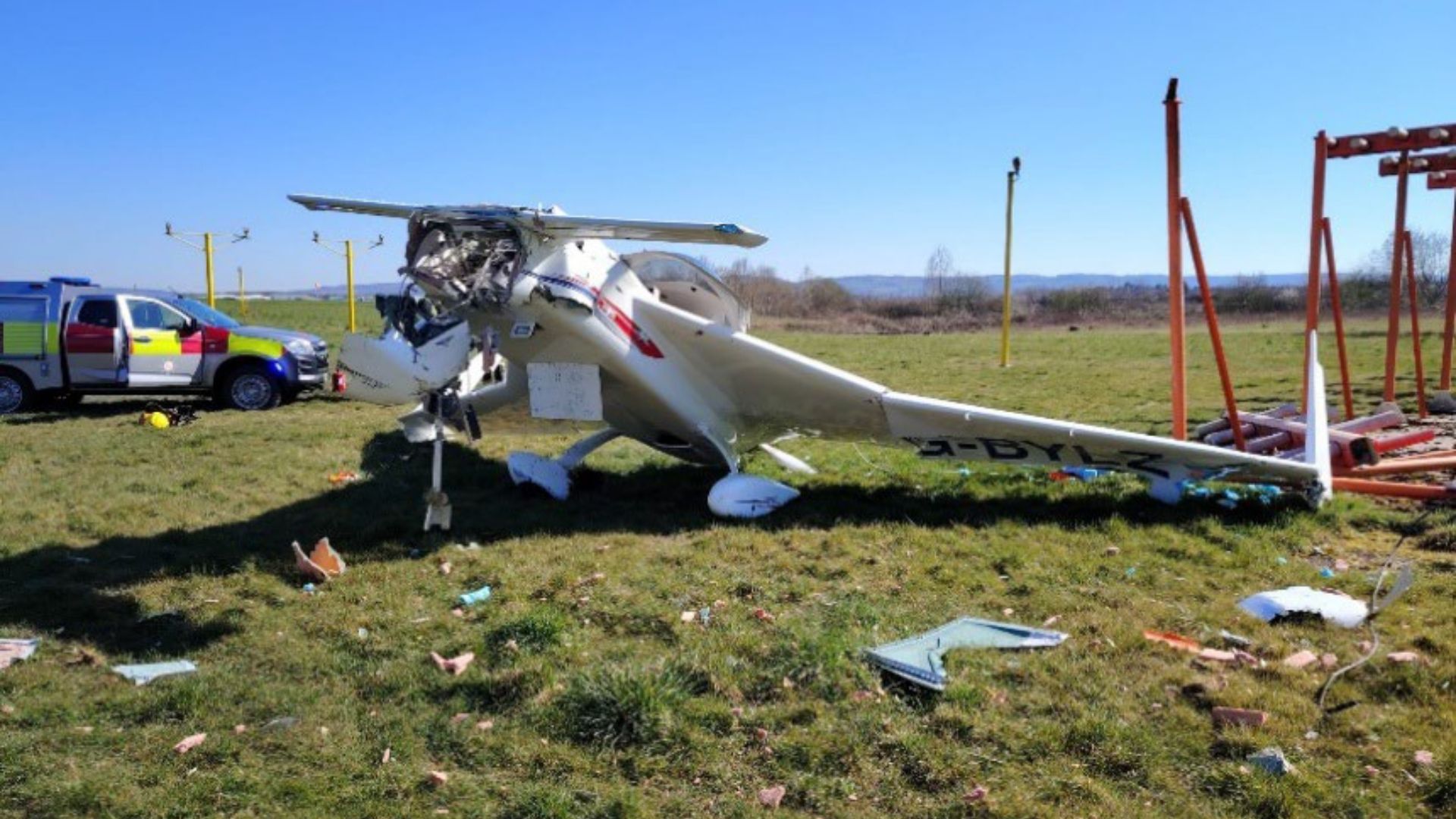
“He managed to fly over a road and a line of bushes on the airfield boundary, but landed short and struck the instrument landing system because coming to rest at the side of the structure,” said the AAIB report. The pilot reportedly acquired the 3D-printed part at an air show in the U.S., but it’s unclear whether he acquired it from a licensed dealer.
Nevertheless, the vendor claimed that the part was printed using CF-ABS or carbon fiber-acrylonitrile butadiene styrene filament that can withstand up to 105 degrees Celsius. On the other hand, the plans for the Cozy Mk IV required an air induction elbow with a glass transition temperature of 84 degrees Celsius. Given that the 3D-printed CF-ABS part had a higher temperature ceiling, the pilot was confident that it exceeded the airplane manufacturer’s minimum requirement.
SWAT team raid uncovers 3D printing guns with live ammunition, capable of firing
Data corruption hobbles Airbus fleet, firm orders immediate software fix for 6,000 planes due to data corruption from intense sun radiation
Dronemaker DJI buys into 3D printer manufacturer Elegoo — move seen as way to diversify away from drones amid worries of U.S. ban
However, one thing he did not consider was that the original plan for the air induction elbow had a section of aluminum tubing near the inlet, which served as a “temperature-insensitive” structural support for the part — something that the 3D-printed part was lacking. Furthermore, the authorities measured the failed part with a heat-flux differential scanning calorimeter and determined that it would’ve failed at temperatures ranging from 52.8 to 54 degrees Celsius — well under the required temperature of the manufacturer.
This incident highlights the importance of following safety protocols in aviation and shows that ignoring one or more regulations can lead to a Swiss Cheese event where different mistakes align to create an accident. The AAIB report says that the pilot applied for a prototype modification of his aircraft to the Light Aircraft Association (LAA) Engineering, and was approved for it, but neglected to mention the addition of this 3D-printed part.
3D printing is widely used in the aviation industry, especially as it allows aircraft manufacturers to quickly produce the necessary parts to keep planes in the air. However, it must follow a strict regulatory process to ensure that these will not fail while in flight, endangering both the aircraft’s occupants and the people on the ground. Thankfully, for this incident, the pilot walked away with just minor injuries, but his aircraft is deemed a complete loss.
Follow Tom's Hardware on Google News , or add us as a preferred source , to get our latest news, analysis, & reviews in your feeds.
Get Tom's Hardware's best news and in-depth reviews, straight to your inbox.
Key considerations
- Investor positioning can change fast
- Volatility remains possible near catalysts
- Macro rates and liquidity can dominate flows
Reference reading
- https://www.tomshardware.com/3d-printing/SPONSORED_LINK_URL
- https://www.tomshardware.com/3d-printing/3d-printed-part-failure-causes-light-aircraft-crash-after-plastic-air-intake-melts-during-flight-pilot-escapes-with-minor-injuries#main
- https://www.tomshardware.com
- NVIDIA Partners With Mistral AI to Accelerate New Family of Open Models
- The Largest Digital Zoo: Biology Model Trained on NVIDIA GPUs Identifies Over a Million Species
- Samsung 32-inch 165 Hz 1440p curved gaming monitor is at its lowest price of $199 — save up to $130 on the Odyssey G55C
- Two GTX 580s in SLI are responsible for the AI we have today — Nvidia's Huang revealed that the invention of deep learning began with two flagship Fermi GPUs in
- AI On: 3 Ways Specialized AI Agents Are Reshaping Businesses
Informational only. No financial advice. Do your own research.