
Authorities were looking for a trade secret. Stories involving digital forensics remain very topical over half a century later.
When you purchase through links on our site, we may earn an affiliate commission. Here’s how it works .
The case involved University Computing Company and a program described in court documents as a remote-plotting system (a trade secret) valued at $15,000, or around $120,000 today. In his affidavit, Sgt. Terence Green requested authority to seize “computer memory bank or other data storage devices,” along with “computer printout sheets,” language that shows how investigators might have been struggling to grapple with the concept of intangible forms of property at a time when most computing infrastructure would fill entire rooms.
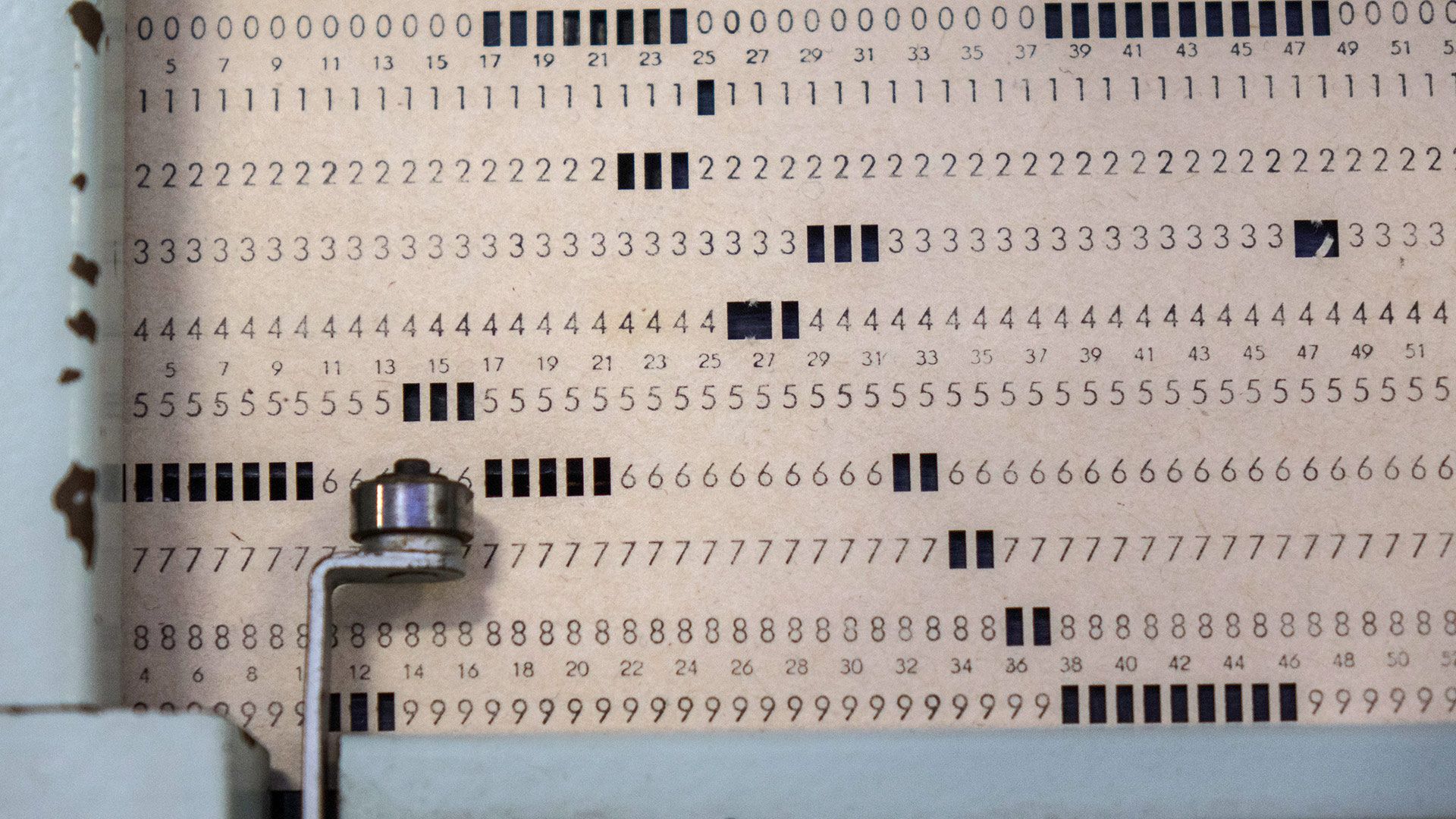
Central to the dispute were punch cards, the dominant medium for program storage and job submission at the time. The affidavit describes “a deck of key punch cards” tied to the remote plotting program. Each card represented a line of code or data, meaning a full program could be made up of hundreds or thousands of cards that had to be meticulously kept in order.
‘Most of you steal your software’ — Bill Gates complained about software piracy 50 years ago
Erroneously assembled 1974 Altair 8800 computer gets fixed and enjoys first run in 2026
ENIAC, the world’s first general-purpose digital computer, turns 80 years old today
By the late 1960s, IBM’s 80-column punched card format had effectively become the industry standard, meaning systems from multiple vendors were built around reading and writing this layout. This also meant that a stolen program could be as tangible as a misplaced deck of cards. At the same time, once those cards were written to storage, the program no longer existed solely on punch cards, which explains why investigators sought authority to seize both the physical cards and the “computer memory bank or other data storage devices” that might contain the same code in electronic form.
The warrant itself would later be reproduced in Jay Becker’s The Investigation of Computer Crime , published as part of the National Center on White-Collar Crime’s operational guide. A copy of an “actual state search warrant” appears in Appendix 5 of the report. Becker.
Becker’s manual offers a glimpse into how investigators in the early 1970s were already wrestling with now-routine problems in digital forensics. In the section titled “The Nature of Computerized Evidence,” he notes that evidence in a computer is “more ‘dense’ than in any other information system,” describing how what appears to be a single computer tape can contain as much information as “a shelf full of books.” Much of that information, he explains, is invisible without translating the machine-readable symbolism into print.
According to the reproduced documentation, investigators conducting the February 1971 search didn’t simply remove hardware, but generated printed directories of files stored on the system and produced magnetic tapes to preserve the contents. Becker emphasizes that in some cases it may be “desirable, if not necessary, to duplicate the controls” of each information-storing device, whether tape, disk, or card, so that subsequent changes cannot compromise the evidentiary record.
Get Tom's Hardware's best news and in-depth reviews, straight to your inbox.
Key considerations
- Investor positioning can change fast
- Volatility remains possible near catalysts
- Macro rates and liquidity can dominate flows
Reference reading
- https://www.tomshardware.com/premium
- https://www.tomshardware.com/tech-industry/SPONSORED_LINK_URL
- https://www.tomshardware.com/tech-industry/55-years-ago-today-the-first-computer-search-warrant-was-issued#main
- 218-pound PC built inside a cast-iron Victorian radiator — cooling an RTX 5090 'probably out of the question'
- Hands-on: G’AIM’E 30th Anniversary Time Crisis Light Gun Game
- GeForce NOW Turns Screens Into a Gaming Machine
- India’s Global Systems Integrators Build Next Wave of Enterprise Agents With NVIDIA AI, Transforming Back Office and Customer Support
- Lenovo and Asus handheld owners warned as Ryzen Z1 Extreme driver support reportedly ends — lack of official updates threatens longevity for Legion Go, Go S, an
Informational only. No financial advice. Do your own research.