
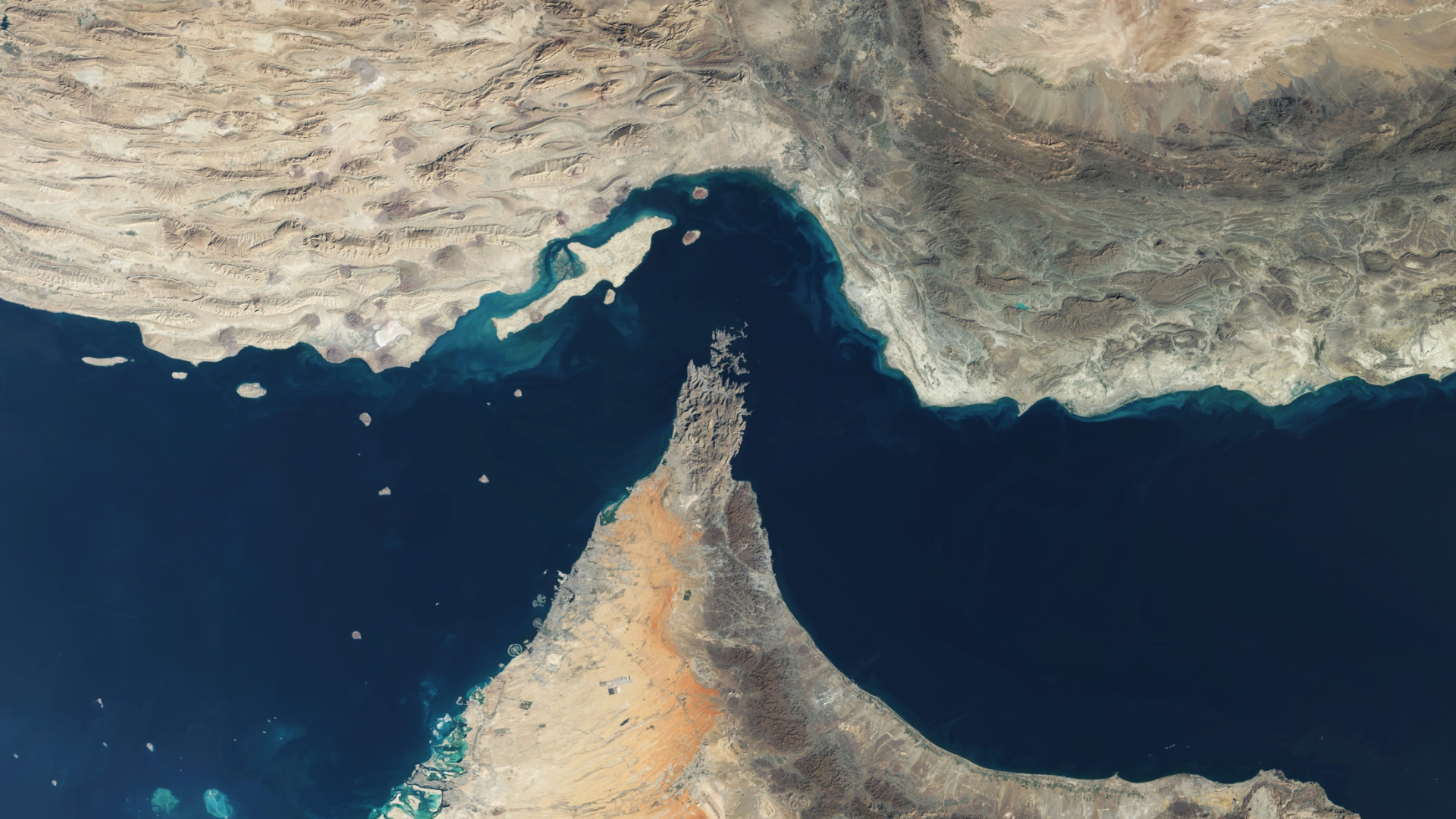
Helium is used at multiple stages of chip manufacturing, from cooling silicon wafers during lithography to flushing toxic chemical residue after cleaning. It’s also got no viable substitute in fabbing processes. Qatar accounted for about 30% of global output before the war halted production at the Ras Laffan complex earlier this month, and the subsequent Iranian strike on the facility has turned a temporary shutdown into potentially a long-term shutdown.
What’s more is that around 200 specialized containers used to transport liquid helium were stranded near the Strait of Hormuz when the war began, according to Phil Kornbluth, a helium industry consultant cited by the New York Times . He says that repositioning, refilling, and delivering those containers could take months. “There is a tsunami coming, but it’s still a thousand miles offshore.”
You may like Qatar helium shutdown puts chip supply chain on a two-week clock US-Iran conflict threatens the world's chip supply chain as Taiwan faces potential energy crisis The ongoing Strait of Hormuz blockage will impact the semiconductor and AI industries with Aluminum, Helium and LNG shortages Helium must be stored near absolute zero in liquid nitrogen-insulated containers. Once that insulation is depleted, the helium warms, expands into a gas, and becomes hazardous. Richard Brook, CEO of helium consultancy Garrison Ventures, told the New York Times that chip makers can only store about six weeks' worth of supply before it starts heating up.
Air Liquide's Taichung facility sits near one of Taiwan's three ports equipped to handle liquefied natural gas and helium. The company said it is assessing customer stockpiles and diversifying its helium sources. TSMC said it doesn’t anticipate a significant impact at this time but is monitoring the situation, while Taiwanese thinktank director Arisa Liu reckons that the chip maker should have enough helium “for several months” at this time.
It’s chip makers in South Korea that are particularly vulnerable to the shortage, because two-thirds of the country’s helium imports came from Qatar last year. South Korea's Ministry of Trade, Industry, and Energy has launched a review of more than a dozen semiconductor materials and equipment types with high dependence on Middle Eastern sources.
South Korea and Taiwan each account for around 18% of global wafer fabrication capacity, according to Boston Consulting Group and the Semiconductor Industry Association. Memory chip prices have already risen sharply amid booming AI demand, and any further supply constraint on helium could force chip makers to prioritize high-margin AI silicon over consumer products.
Get Tom's Hardware's best news and in-depth reviews, straight to your inbox.
Key considerations
- Investor positioning can change fast
- Volatility remains possible near catalysts
- Macro rates and liquidity can dominate flows
Reference reading
- https://www.tomshardware.com/tech-industry/semiconductors/SPONSORED_LINK_URL
- https://www.tomshardware.com/tech-industry/semiconductors/air-liquide-opens-taiwan-factory-as-helium-shortage-tightens-around-chip-makers#main
- https://www.tomshardware.com
- The Future of AI Is Open and Proprietary
- Save big on Intel's Arrow Lake refresh with almost $300 off on this 3-item bundle — new Core Ultra 270K Plus processor, MSI Z890 Carbon Wifi motherboard, and 32
- Blowing Off Steam: How Power-Flexible AI Factories Can Stabilize the Global Energy Grid
- Corsair's Scimitar RGB Elite gaming mouse hits an all-time low of $49 — 17 programmable buttons built for MMO gaming
- US Senators call for a halt to Nvidia GPU exports in the wake of the Super Micro scandal — looming Chip Security Act may put a wrench into Huang's China ambitio
Informational only. No financial advice. Do your own research.