
When you purchase through links on our site, we may earn an affiliate commission. Here’s how it works .
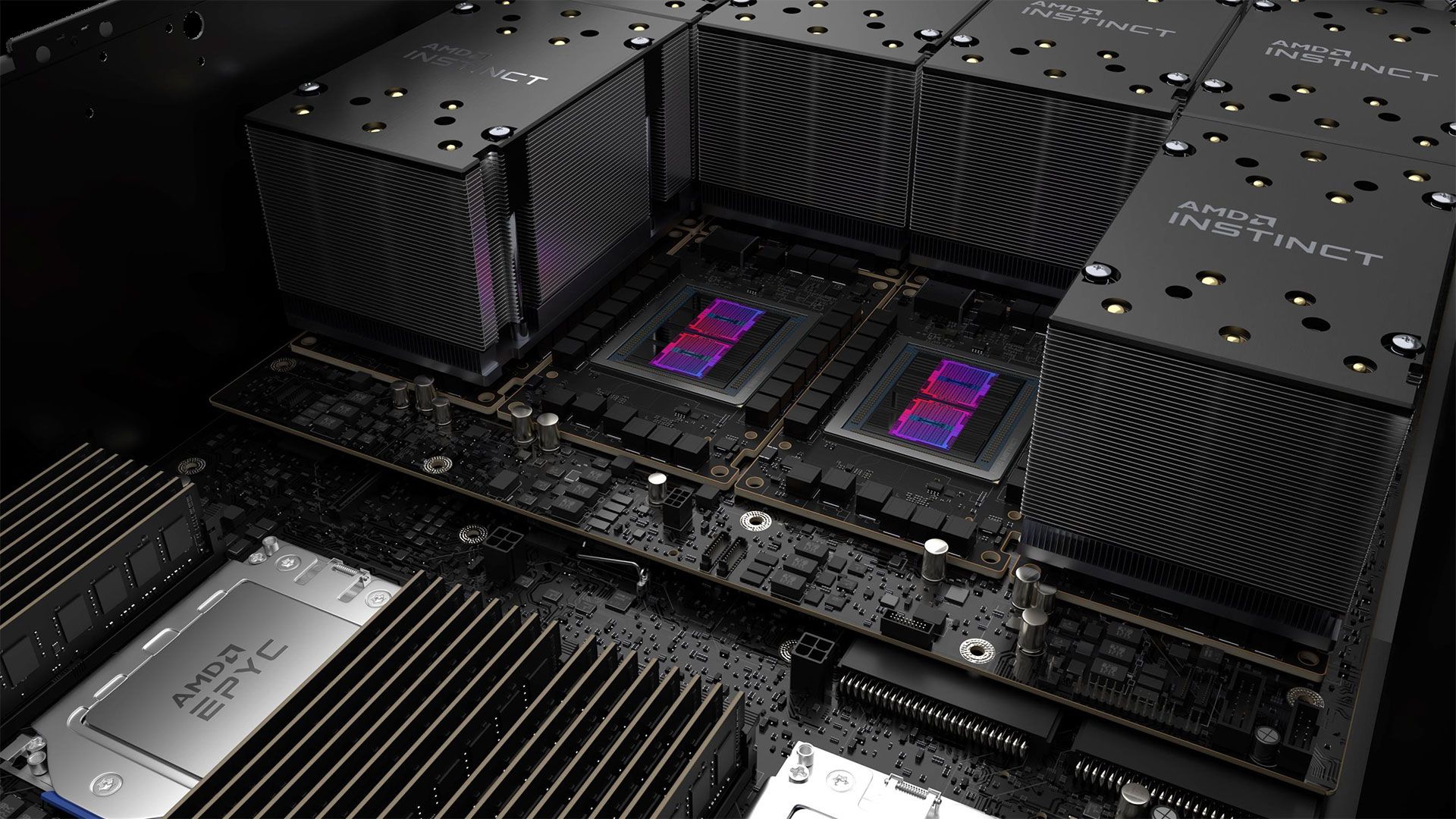
(Image credit: AMD) AMD and Eviden, an Atos Group-controller maker of supercomputers, have announced their first project — the Alice Recoque supercomputer — that will use AMD's next-generation EPYC 'Venice' CPUs and Instinct MI430X accelerators to achieve performance beyond 1 ExaFLOPS. The machine will cost over half a billion euros and will be accessible to researchers working on demanding AI and scientific projects.
The Alice Recoque supercomputer will be based on AMD's upcoming EPYC 'Venice' processors with up to 256 cores; the company's next-generation Instinct MI430X accelerators based on the CDNA 5 architecture and equipped with 432 GB of HBM4 memory that is tailored for HPC, but also supports FP4 and FP8 data formats to make them useful for AI; and AMD's FPGAs to give the system more flexibility and versatility.
The full installation of Alice Recoque will consist of 94 racks based on Eviden's BullSequana XH3500 platform with DDN storage and will use the company’s BXI fabric to link all compute resources and enable high-performance scale-out connectivity. The system's 5th-Generation warm-water liquid cooling for all power-hungry components.
Interestingly, the Alice Recoque supercomputer will also pack sovereign Rhea2 CPUs (note that this is the first time we hear about Rhea2, as previously we only heard about Rhea or Rhea1) for users who prefer to perform their computations on processors developed in Europe. Keeping in mind that Rhea2 has not taped out yet, we can only wonder when these racks will be installed, but perhaps sometime towards the end of the decade.
Alice Recoque will cost €554 billion, which will come from EuroHPC JU, the Digital Europe Programme, and the Jules Verne consortium, which includes France (GENCI, CEA), the Netherlands (SURF), and Greece (GRNET). The machine will be installed in France under the responsibility of GENCI, which will host the system, while CEA will operate it once deployed. The system will ultimately serve researchers and industrial users across Europe and will support a variety of projects, including climate research, materials and energy science, personalized medicine, AI model development, and analysis of massive data streams from satellites, telescopes, and IoT sources.
The press release does not specify the commissioning or operational date of Alice Recoque, but given the fact that AMD is set to introduce its EPYC 'Venice' CPUs and Instinct MI430X accelerators in 2026, it is reasonable to expect the machine to enter service in 2027 or 2028.
Follow Tom's Hardware on Google News , or add us as a preferred source , to get our latest news, analysis, & reviews in your feeds.
Get Tom's Hardware's best news and in-depth reviews, straight to your inbox.
Key considerations
- Investor positioning can change fast
- Volatility remains possible near catalysts
- Macro rates and liquidity can dominate flows
Reference reading
- https://www.tomshardware.com/tech-industry/supercomputers/SPONSORED_LINK_URL
- https://www.tomshardware.com/tech-industry/supercomputers/amd-and-eviden-unveil-europes-second-exascale-system-epyc-venice-and-instinct-mi430x-power-system-breaks-the-exaflop-barrier#main
- https://www.tomshardware.com
- Hackers steal 1.8 terabytes of data from PC peripheral vendor Logitech — firm says zero-day vulnerability to blame, no sensitive information stolen
- GlobalFoundries buys silicon photonics firm Advanced Micro Foundry for undisclosed amount — move makes chipmaker one of the largest silicon photonics manufactur
- Apple and Broadcom job listings suggest potential Intel Foundry collaborations — requirements highlight expertise in Intel's EMIB and 2.5D memory packaging tech
- NVIDIA Accelerates AI for Over 80 New Science Systems Worldwide
- Crucial's blistering T710 price slashed, 2TB now cheaper than 1TB — get one of the fastest SSDs on the market at a new all-time low price
Informational only. No financial advice. Do your own research.