
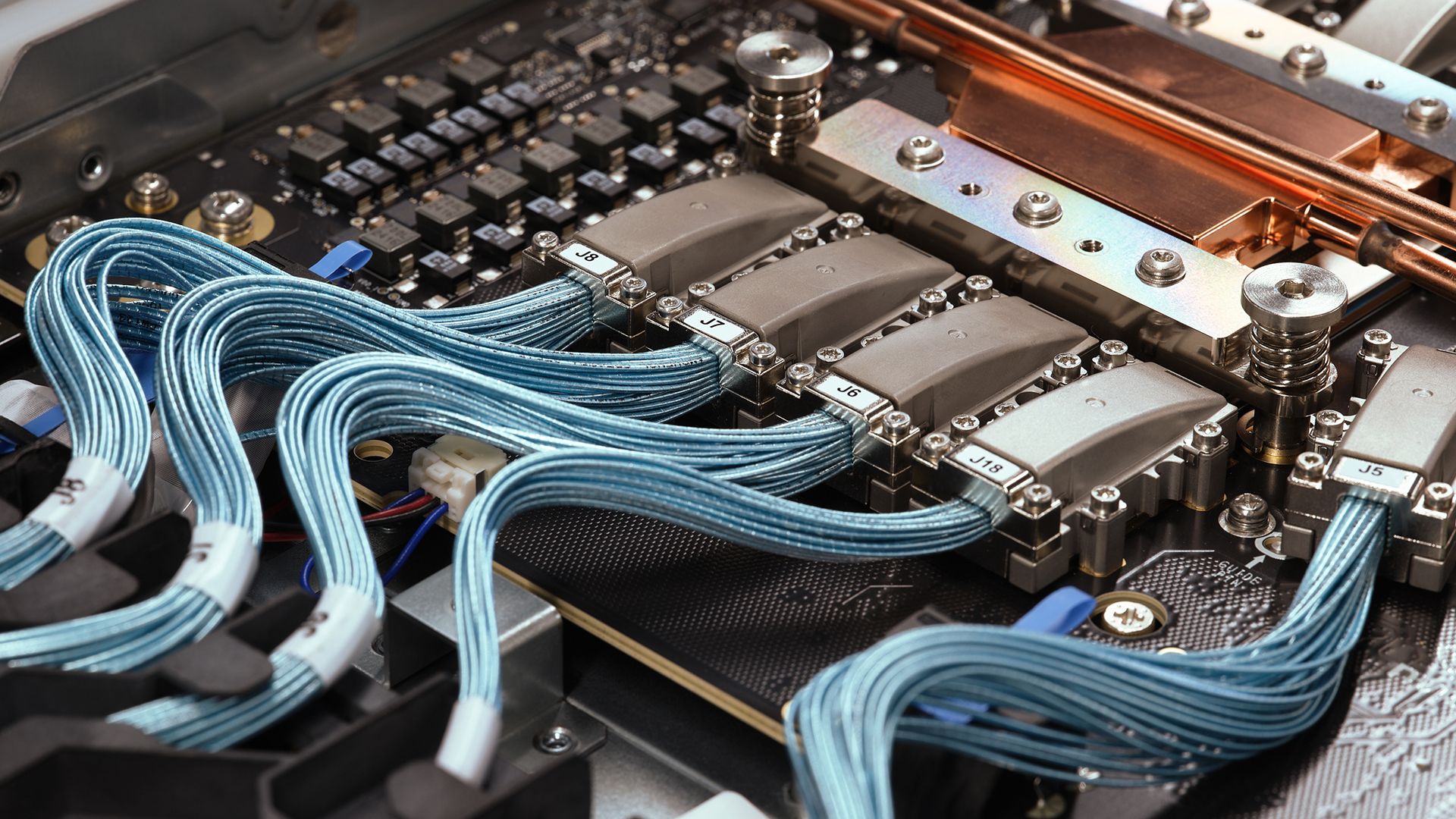
Firstly, the OCI MSA is hyperscaler-driven rather than vendor-driven. The arrangement is unlike most industry consortia, which are organized and led by independent hardware vendors (IHVs), IP companies, and networking suppliers.
Secondly, OCI targets a very specific architectural layer of AI systems — short-reach links that connect accelerators and switches within a scale-up domain. By contrast, traditional hardware development groups tend to standardize on a vertically integrated set of technologies to be widely adopted across a market or markets.
Thirdly, as the organization is a Multi-Source Agreement (MSA) group, it will, by definition, be faster than a typical industry standard setting body. MSAs are meant to enable select companies to align on electrical/optical interfaces and build interoperable products quickly, without the lengthy consensus processes typical of classic organizations like JEDEC or the Ultra Ethernet Consortium (which are designed to unite tens or hundreds of companies and support an entire industry). The OCI MSA — at least for now — will enable AMD, Broadcom, and Nvidia to build interoperable short-reach interconnections for Microsoft, Meta, and OpenAI.
"Nvidia is a founding member of the OCI MSA to establish a common optical standard across global AI infrastructures," said Gilad Shainer, Senior Vice President of Networking at Nvidia. "By equipping best-in-class compute with state-of-the-art optics, the OCI MSA can deliver the scale and performance required by the next era of super-intelligence."
Follow Tom's Hardware on Google News , or add us as a preferred source , to get our latest news, analysis, & reviews in your feeds.
Anton Shilov is a contributing writer at Tom\u2019s Hardware. Over the past couple of decades, he has covered everything from CPUs and GPUs to supercomputers and from modern process technologies and latest fab tools to high-tech industry trends. ","collapsible":{"enabled":true,"maxHeight":250,"readMoreText":"Read more","readLessText":"Read less"}}), "https://slice.vanilla.futurecdn.net/13-4-18/js/authorBio.js"); } else { console.error('%c FTE ','background: #9306F9; color: #ffffff','no lazy slice hydration function available'); } Anton Shilov Social Links Navigation Contributing Writer Anton Shilov is a contributing writer at Tom’s Hardware. Over the past couple of decades, he has covered everything from CPUs and GPUs to supercomputers and from modern process technologies and latest fab tools to high-tech industry trends.
alan.campbell99 Personally looking to the day when this sort of tech advancement is reported on more as HPC development rather than AI, I'd say that's wishful thinking though. Reply
Key considerations
- Investor positioning can change fast
- Volatility remains possible near catalysts
- Macro rates and liquidity can dominate flows
Reference reading
- https://www.tomshardware.com/tech-industry/artificial-intelligence/SPONSORED_LINK_URL
- https://www.tomshardware.com/tech-industry/artificial-intelligence/amd-broadcom-and-nvidia-join-hyperscalers-to-define-optical-scale-up-interconnect-of-the-future-for-ai-clusters-meta-microsoft-and-openai-to-benefit-as-speeds-eventually-scale-to-3-2-tb-s#main
- https://www.tomshardware.com
- 11-month old Russian outfit claims it has developed 16-core and 32-core chips, flaunts Cyrillic-badged processors — chips appear to be sanctions-swerving rebadg
- Into the Omniverse: How Industrial AI and Digital Twins Accelerate Design, Engineering and Manufacturing Across Industries
- Qatar helium shutdown puts chip supply chain on a two-week clock — SK hynix forced to diversify after 30% of global supply removed from the market
- As Open Models Spark AI Boom, NVIDIA Jetson Brings It to Life at the Edge
- Keychron Q16 HE 8K Review: All-ceramic, but not all good
Informational only. No financial advice. Do your own research.