
democog Hmm looks like L1 and L2 cache sizes have not changed since that era, which looks kinda weird I may say 🙂 There is only L3 being introduced in bigger sizes.. Reply
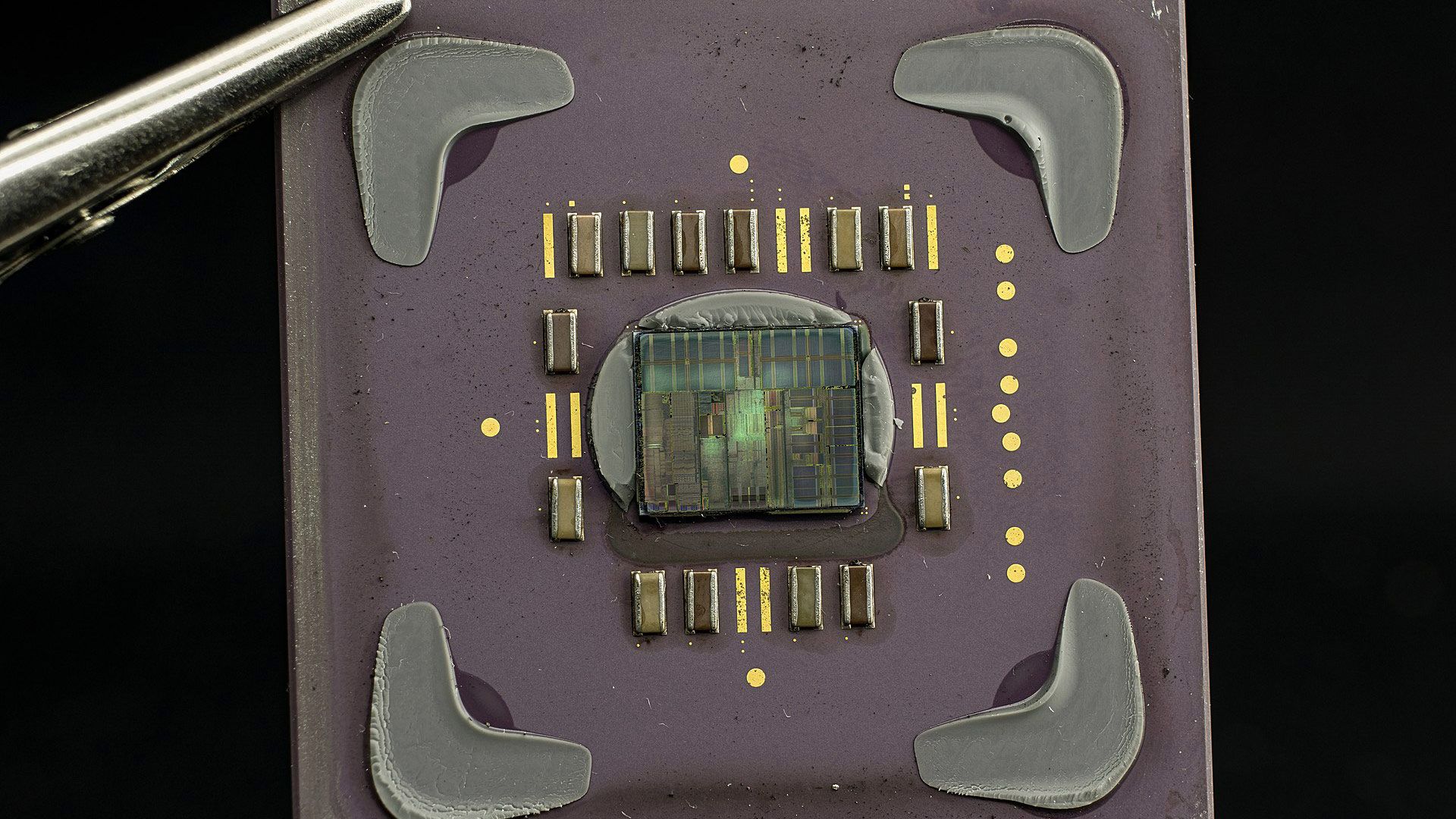
razor512 I have one of their ancient K6 II CPUs, I took a pic of it. While an extremely low 533MHz, it handled windows 98 pretty decently back then, though they really skimped on the cache back then. https://i.imgur.com/PJRKIZm.jpeg Reply
vinay2070 I wanted to upgrade my pentium 100 to a K6 2 3D now, but being a school kid and lack of funds, I had to hold on till Duron came out. Duron was a nice upgrade along with a color monitor 🙂 Reply
Ogotai i still have a K6 2 and k6 3, and both work just fine still… too bad i dont have room to keep them usable, currently sitting in the mobo box… Reply
thesyndrome Once upon a time a company could just decide they were going to clone a popular CPU that would work in the same socket, and they got away with a slap on the wrist and went on to become one of the biggest names in PC hardware. Now we are stuck in monopolies of what might as well be the hardware equivalent of a "two-party system", with trademark and copyright rules so strict that if anyone even ATTEMPTED the same in the modern age, they would be demonised by the industry and financially ruined by legal fees. Reply
abufrejoval razor512 said: I have one of their ancient K6 II CPUs, I took a pic of it. While an extremely low 533MHz, it handled windows 98 pretty decently back then, though they really skimped on the cache back then. https://i.imgur.com/PJRKIZm.jpeg 533MHz isn't slow, it quite near top clock for the chip (550MHz). And please remember that the 32-bit x86 era started at 16 MHz on an 80386 in 1985, already enough to punch out quite a few multi-user VAXes. With quite a few IPC and ISA enhancements and caches to take advantage of these, after little more than a decade it was probably 100x faster than the initial class-defining CPU on anything intenger and logic. Add floating point, especially the AMD vector variant instead of the obsolete 8-bit "optimized" 287 stack ops from Intel, and you can add two extra orders of magnitude! On single threaded integer code things might have improved only 20x nearly 30 years later. Pumping out 512 bit vector results on 192 cores at every clock cycle at 10x clock, obviously yields a bit more HPC, but does little for Word on Windows 95. And it was the on-die L2 cache the K6-3 added only a year later, much like the V-cache more recently, which helpled with many, but not all workloads. Calling it "skimping" is had to swallow: those were made in 250nm, not 2.5nm and that's 100X on both the X and the Y axis for a factor of 1:10,000 in density or simply available transistors: please, show some respect! Reply
abufrejoval democog said: Hmm looks like L1 and L2 cache sizes have not changed since that era, which looks kinda weird I may say 🙂 There is only L3 being introduced in bigger sizes.. Printed on paper, the CPU design literature on that topic might easily balance a sky scraper. It's only weird, until you've started reading, but the simple truth is: cache costs more than just transistors for the data, it needs to be found, which requires searching and management, which requires time, not just extra transistors for that logic. The bigger the cache, the higher the processing overhead, and no, that's not just linear, that's the sky-scraper part, trying to fight the diminishing returns. Have a go, find the easy video lectures, lean back and enjoy the hard work which made modern performance levels possible. In those "CPU wars", far fewer people ever died. Reply
Key considerations
- Investor positioning can change fast
- Volatility remains possible near catalysts
- Macro rates and liquidity can dominate flows
Reference reading
- https://www.tomshardware.com/pc-components/cpus/SPONSORED_LINK_URL
- https://www.tomshardware.com/pc-components/cpus/amds-k6-iii-sharptooth-debuted-this-week-in-1999-with-on-die-l2-cache-to-savage-the-intel-pentium-ii-it-also-held-the-line-against-the-pentium-iii#main
- https://www.tomshardware.com
- Windows 11 continues gaining traction, nears 75% market share — Windows 10 finally on the way out, some five months after Microsoft axes support
- Device that can extract 1,000 liters of clean water a day from desert air revealed by 2025 Nobel Prize winner — claimed to work in desert air with 20% humidity
- NVIDIA Brings AI-Powered Cybersecurity to World’s Critical Infrastructure
- GeForce NOW Celebrates Six Years of Streaming With 24 Games in February
- 390TB video game archive being taken offline due to skyrocketing RAM, SSD, and hard drive prices — AI-driven supply squeeze results in closure of one of the lar
Informational only. No financial advice. Do your own research.