
When you purchase through links on our site, we may earn an affiliate commission. Here’s how it works .
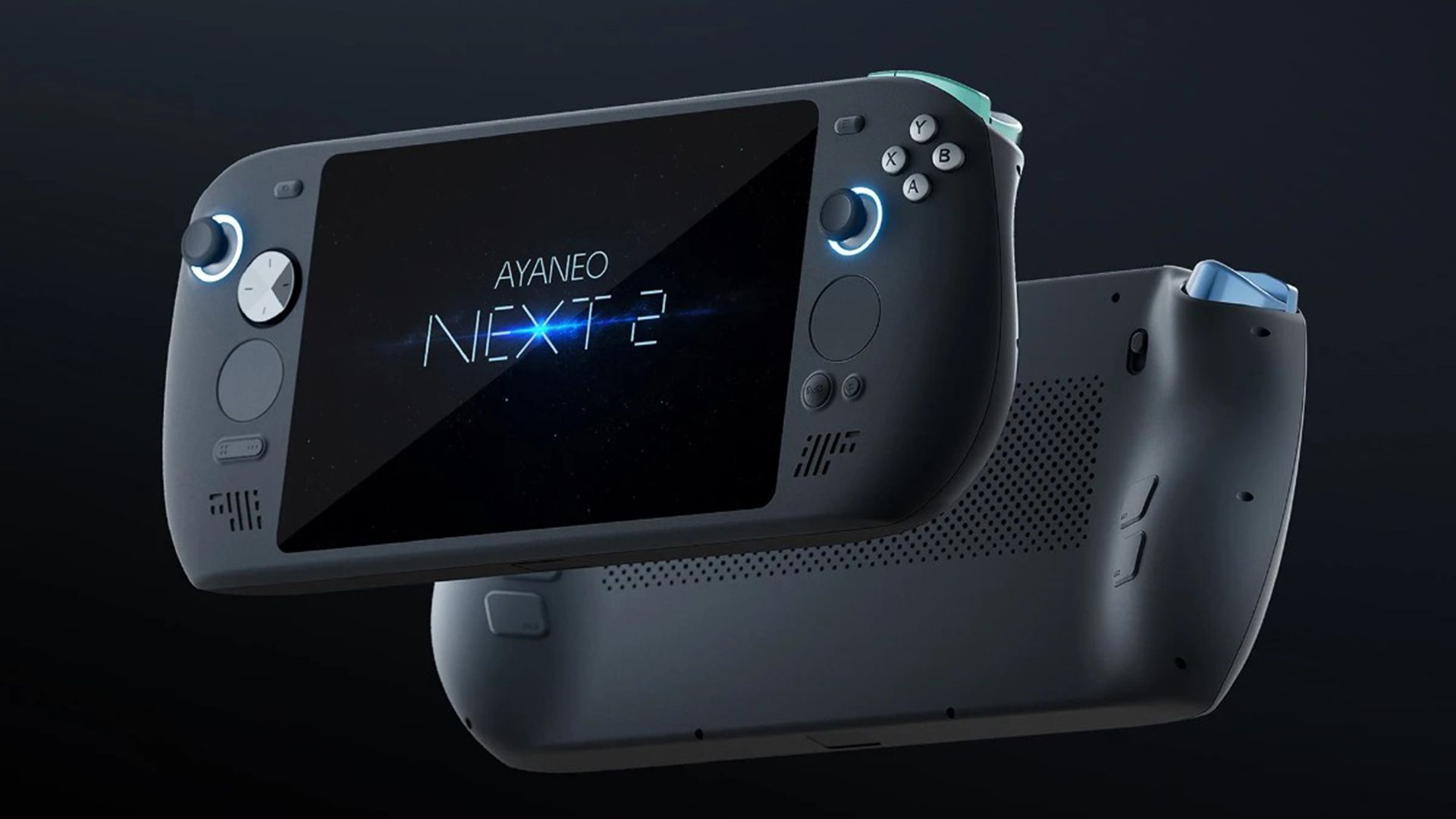
Last month, Ayaneo unveiled the Next 2 — a new premium handheld console featuring AMD's Strix Halo chips and all the specs you could ever ask for. Windows-based handhelds are already niche enough, but launching a high-end one during a global component crisis was going to pose even more of a challenge. Sure enough, the company has just announced it's "no longer sustainable" to sell the Next 2, and pre-orders for the device are being suspended temporarily.
Ayaneo posted the update on its Indiegogo page, saying that it was already prepared to absorb a slight loss on the Next 2 due to ongoing shortages, but the situation has now slipped out of control. At the time of the initial announcement, storage prices were already high, but following the Chinese New Year, quotes from memory vendors had shot up many times, making it impossible to produce the device feasibly.
As a reminder, the Next 2 started at $1,999, but you could get it for $1,799 as part of early bird pricing, and that's with an AMD Ryzen AI Max 385 chip, 32 GB of LPDDR5X RAM, and 1 TB of storage. The higher-spec'd configs were much more expensive; the unit with the flagship Ryzen AI Max 395+ and 128 of RAM, along with a 2 TB SSD, was priced at $4,299 ($3,499 for early bird preorders).
You may like Ayaneo Next 2 Windows handheld goes official with Ryzen AI Max+ 395 Steam Deck availability goes up in smoke — suddenly goes out of stock in US, Asia stores Valve confirms Steam Deck is out of stock because of memory and storage shortages
Those price tags already look eye-watering, even with preorder discounts, so the fact that Ayaneo can't hit them anymore should signal just how bad things have gotten. The company claims the cost is approaching "twice the price" that was originally set, throwing away any profit and incurring a massive loss that a small OEM like Ayaneo can't absorb.
Still, Ayaneo is going to honor all the existing preorders, so if you already bought one via the Indiegogo campaign, you will receive the handheld. Going forward, though, all sales channels for the Next 2 are blocked, and no new preorders are being accepted, but the suspension is temporary. The company says it doesn't want to submit to price fluctuations, and the handheld should return to sale if the component crisis eases up.
Moreover, the after-sales customer support for the Next 2 is not affected, as promised by Ayaneo, with sufficient spare parts for any repairs or RMA. The Next 2 product line is not ending either; this is just a provisional pit stop, and the handheld is too spec'd out to just be left on the table. It features a 9.06-inch 2K 165 Hz OLED display and a 116 Wh battery, providing performance comparable to a laptop.
Follow Tom's Hardware on Google News , or add us as a preferred source , to get our latest news, analysis, & reviews in your feeds.
Get Tom's Hardware's best news and in-depth reviews, straight to your inbox.
Key considerations
- Investor positioning can change fast
- Volatility remains possible near catalysts
- Macro rates and liquidity can dominate flows
Reference reading
- https://www.tomshardware.com/video-games/handheld-gaming/SPONSORED_LINK_URL
- https://www.tomshardware.com/video-games/handheld-gaming/ayaneos-upcoming-next-2-handheld-gaming-console-shelved-due-to-rising-component-prices-company-stops-preorders-for-the-usd1-999-strix-halo-device#main
- https://www.tomshardware.com/subscription
- Into the Omniverse: How Industrial AI and Digital Twins Accelerate Design, Engineering and Manufacturing Across Industries
- Intel Core Ultra 5 250K Plus review: The new best $200 CPU
- Get an entire RTX 5090 Alienware gaming PC for just 17% more than the GPU's standalone cost — 9800X3D beast with 32GB DDR5 and 1TB SSD drops below $4,450 at Del
- Advancing Open Source AI, NVIDIA Donates Dynamic Resource Allocation Driver for GPUs to Kubernetes Community
- Trump administration targets $4 trillion Pax Silica investment fund for semiconductors — the US will start with a $250 million investment for global consortium
Informational only. No financial advice. Do your own research.