
This is the list of games we’re testing now, with a mixture of newer additions and some of our old favorites that provide a good sanity check as we’re flipping chips. About a third of our benchmarks are canned, compared to two-thirds that are in-game. We like to include both with a heavier emphasis on in-game benchmarks, as some canned benchmarks give us more repeatable results in otherwise random games; Monster Hunter Wilds and Counter-Strike 2 are good examples of that.
This list isn’t static. It’s what we’re using for this retest for Bench, but it will evolve as time goes on and new games are released. Upcoming releases like Crimson Desert, Marathon, Death Stranding 2, Pragmata, and 007 First Light are all interesting candidates, and that only takes us to May 2026. We’ll revisit this list once we do another pass for Bench, but you may see newer titles start to show up in reviews before then.
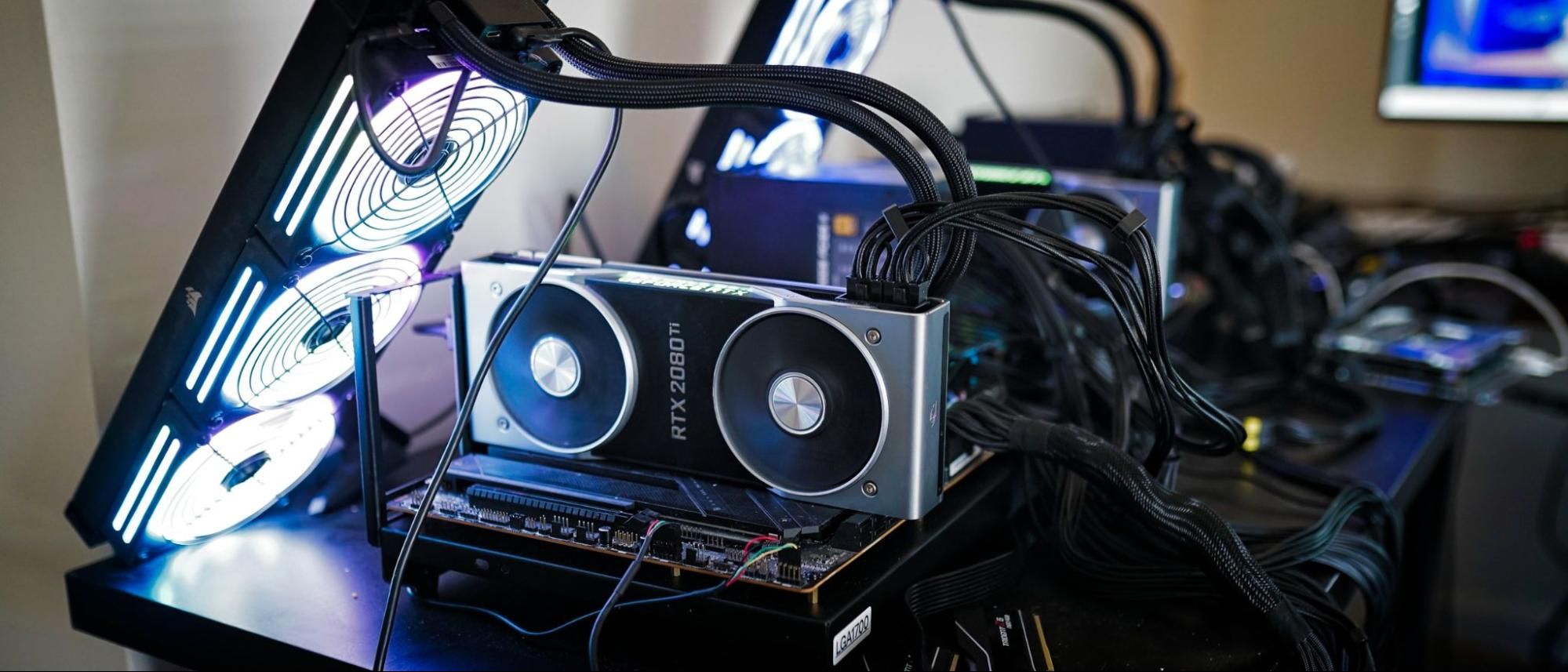
We use identical benches across games and apps, short of one component: the GPU. We use the RTX 2080 FE for apps, not for any processing power — no compute is actively running on the GPU — but as a glorified display output. The main reason we use it is to keep the drivers consistent across games and apps. For games, we’re using the RTX 5090 FE. We could technically use the RTX 5090 FE across games and apps, though that would lead to unnecessary power draw and somewhere in the range of $20,000 in expenses to run multiple systems at the same time. We don’t need a bunch of RTX 5090s laying around acting as paperweights if we’re not testing games.
In addition to the hardware, there are a few specific settings we change for our game benchmarking. We turn Virtualization-Based Security (VBS) off in Windows, enable Resizeable BAR, and manually disable any automatic overclocking profiles. That includes PBO for AMD and the Performance and Extreme power profiles for Intel. Although many motherboards default to these settings out of the box, they aren’t technically covered under warranty, so we manually disable them for testing.
The more interesting conversation is around resolution, game settings, and upscaling like DLSS. Frame generation isn’t really a factor here. It calls for a small amount of compute, which runs on your GPU, bypassing the traditional rendering pipeline and ignoring the CPU entirely.
Starting with game settings, we test with a combination of High or Ultra settings, depending on the game, and with ray tracing disabled. The one exception is DOOM: The Dark Ages, which has always-on ray tracing. Ray tracing is an important pillar of modern PC games, but we’re still in a time where it’s optional if you have performance overhead. As we see more games like DOOM: The Dark Ages and Alan Wake 2 with always-on ray tracing, we’ll reevaluate this position.
We test CPUs at 1080p without any upscaling assistance. That’s because 1080p performance says a lot about how a CPU performs across resolutions in a time of ubiquitous upscaling. As you read about in our investigation into CPU scaling with DLSS enabled, we can see CPU scaling all the way up to 4K with upscaling enabled. Those deltas narrow or completely disappear as the resolution climbs with native rendering, but even top-shelf hardware struggles to run the most demanding games at 4K without some upscaling assistance.
Testing across the three main 16:9 resolutions already triples game testing time, and adding DLSS or other upscalers into the mix would further multiply the testing time. It takes about 10 hours for a full pass of our test suite per chip; extending that out to 40 or 50 hours per chip just isn’t tenable right now. We’d have to massively shrink our suite of games, which we believe would give us less useful data overall.
Instead, we are focused on making our test suite as varied as possible, given the variable role your CPU plays in each individual game. Testing at native 1080p also lets us extrapolate up to higher resolutions with upscaling in the mix. We see largely similar scaling at 1440p with Quality or Balanced DLSS, and, depending on the game, even similar scaling up to 4K with Performance mode.
Over the coming weeks, you’ll start to see our new test results show up in Bench. For some of the older CPUs we’re testing, this is the last time we plan to take a look at them in our standard benchmarking suite. We’re still keeping the last several generations in our test pool moving forward, but you might not see, for example, 6th- and 7th-gen Intel chips as we continue to evolve our testing suite over time. We're setting the ground truth with these older chips now for historical purposes, and you'll be able to reference those results against newer versions of our test suite to gauge relative performance deltas.
As new games are released and new versions of popular benchmarks roll out, we’ll update our suite, though not immediately. We need to understand the benchmarks we’re running before presenting data from them, especially when it comes to a database like Bench. The bar is much less high for something like a review, where we can incorporate a new workload without upsetting our established suite.
Jake Roach is the Senior CPU Analyst at Tom\u2019s Hardware, writing reviews, news, and features about the latest consumer and workstation processors. ","collapsible":{"enabled":true,"maxHeight":250,"readMoreText":"Read more","readLessText":"Read less"}}), "https://slice.vanilla.futurecdn.net/13-4-17/js/authorBio.js"); } else { console.error('%c FTE ','background: #9306F9; color: #ffffff','no lazy slice hydration function available'); } Jake Roach Social Links Navigation Senior Analyst, CPUs Jake Roach is the Senior CPU Analyst at Tom’s Hardware, writing reviews, news, and features about the latest consumer and workstation processors.
Key considerations
- Investor positioning can change fast
- Volatility remains possible near catalysts
- Macro rates and liquidity can dominate flows
Reference reading
- https://www.tomshardware.com/pc-components/cpus/SPONSORED_LINK_URL
- https://www.tomshardware.com/pc-components/cpus/behind-the-scenes-of-our-massive-cpu-retest-for-bench-testing-at-1080p-choosing-new-apps-and-gathering-data-for-a-decade-of-cpus#main
- https://www.tomshardware.com
- Corsair Sabre v2 Pro Wireless CF review: Feels like carbon fiber
- Rapidus secures $1.7 billion from Japan’s government and private investors for 2nm chip production — company says it is in active discussions with more than 60
- Nvidia still hasn’t sold a single H200 to China nearly three months after getting the green light from the White House — U.S. Commerce official says department
- Razer launches $130 laptop sleeve featuring two wireless charging pads — Base variant with no tech costs $80, supports up to 16-inch devices
- All About the Games: Play Over 4,500 Titles With GeForce NOW
Informational only. No financial advice. Do your own research.