
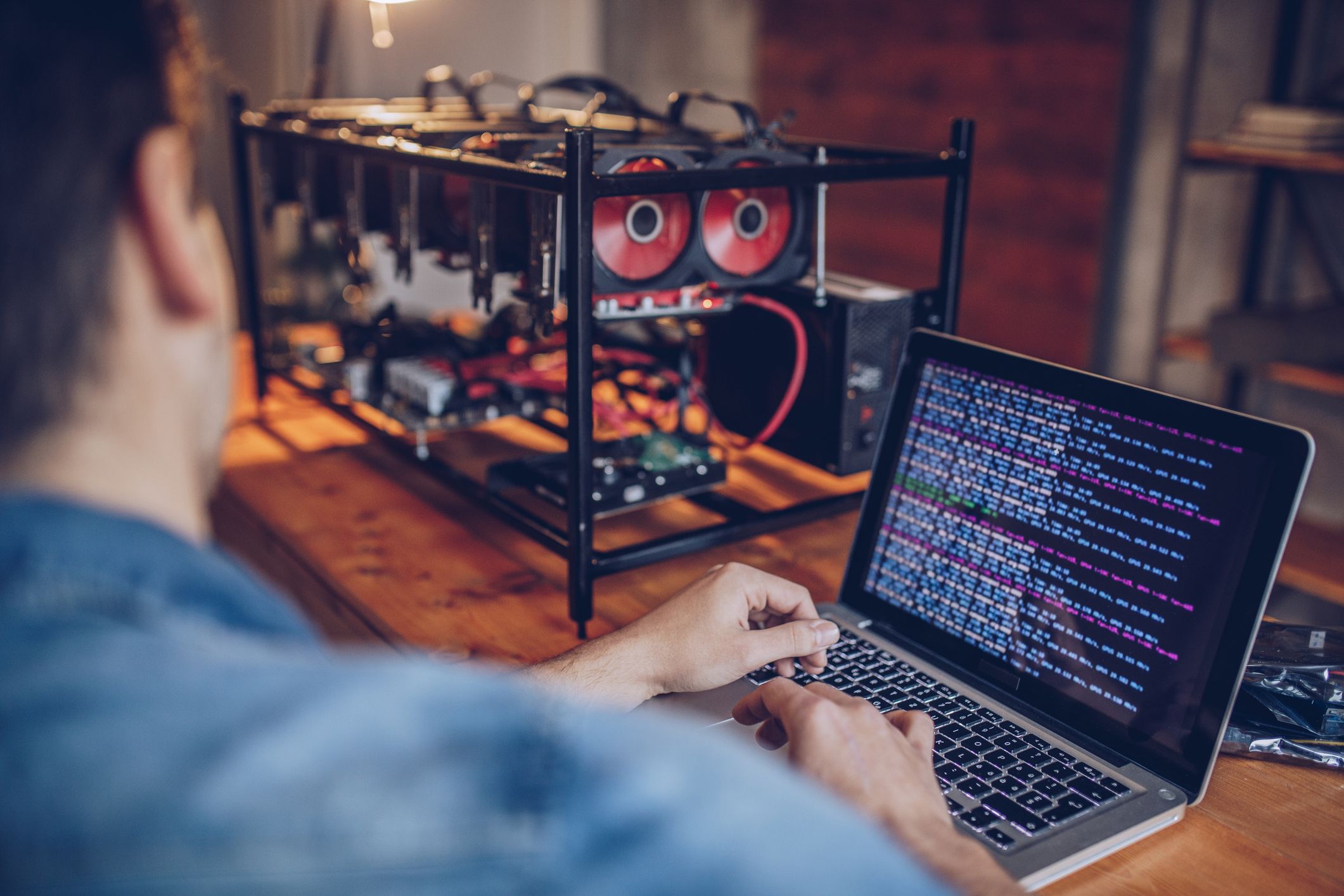
Coindesk attributes most of the drop to the interesting times the Middle East is living in, namely the Iran-U.S. conflict and the subsequent closure of the Strait of Hormuz, a key passageway for oil tankers worldwide. This caused the price of oil to spike, a figure currently sitting above $100 for a single barrel of crude oil, up 49% month over month. In turn, the price per kWh of electrons is creeping up across most of the world.
Even though half the power of BTC mining is estimated to come from renewable sources , the rise in power prices still affects miners, who became stuck between a rock and a hard place thanks to 1 BTC only commanding about $66,700 as of this writing. Both factors result in math that isn't quite mathing for miners, as the price of producing one Bitcoin is about $88,000, resulting in a $19,000 loss for those looking to stay in the game.
You may like Nvidia-backed trial shows AI data centers can flexibly adjust power use in near real time, with global implications for energy consumption Data center developers building private natural gas 'Shadow Grid' power plants to sidestep strained grids Photonics and high-speed data movement is the next big AI bottleneck
The BTC network automatically scales mining difficulty up according to the hashrate. As miners leave the ecosystem, mining gets easier, hopefully inviting miners back in again. However, when the market is under the sign of the bear, mining operators also sell the BTC they're holding, further driving the price down and causing a spiral effect until the next upswing lifts all the boats again.
This time, it might be a bit different, as Coindesk believes that mining operators are switching to hosting AI instead. In that universe, the speedy ASICs dedicated to mining BTC are paperweights that can't do training or inference, so the mining gear is kicked out of datacenters to make room for racks full of Nvidia and AMD GPUs.
That's very likely a wise move in the current zeitgeist, as a key blocker for AI data center growth is the logistics around a facility, rather than the hardware within. Among other necessities, a data center requires absurd amounts of power delivered over stable grid connections that can take years to approve, and uses up copious amounts of water that beget environmental impact studies and permits. Considering the size of the investments in the AI space, having a readymade facility ready to roll and host GPUs is therefore a win-win for both landlord and tenant.
Follow Tom's Hardware on Google News , or add us as a preferred source , to get our latest news, analysis, & reviews in your feeds.
Get Tom's Hardware's best news and in-depth reviews, straight to your inbox.
Key considerations
- Investor positioning can change fast
- Volatility remains possible near catalysts
- Macro rates and liquidity can dominate flows
Reference reading
- https://www.tomshardware.com/tech-industry/cryptomining/SPONSORED_LINK_URL
- https://www.tomshardware.com/tech-industry/cryptomining/iran-conflict-forces-bitcoin-mining-operators-to-pivot-to-ai-infrastructure-btc-network-sees-the-first-quarterly-hashrate-drop-since-2020#main
- https://www.tomshardware.com
- Geekbench investigates up to 30% jump with Intel's iBOT — performance gain attributed to newly-vectorized instructions
- Last chance to buy a PlayStation 5 Digital Edition for $399 and save $200 before Sony's price hikes — secure your savings today before MSRP skyrockets from $499
- Into the Omniverse: How Industrial AI and Digital Twins Accelerate Design, Engineering and Manufacturing Across Industries
- How Autonomous AI Agents Become Secure by Design With NVIDIA OpenShell
- Museum opens doors to ‘World’s largest collection of Apple products’ on April 1 to celebrate Apple’s 50th anniversary — 2,000 artifacts spread across 20,000 sq
Informational only. No financial advice. Do your own research.