
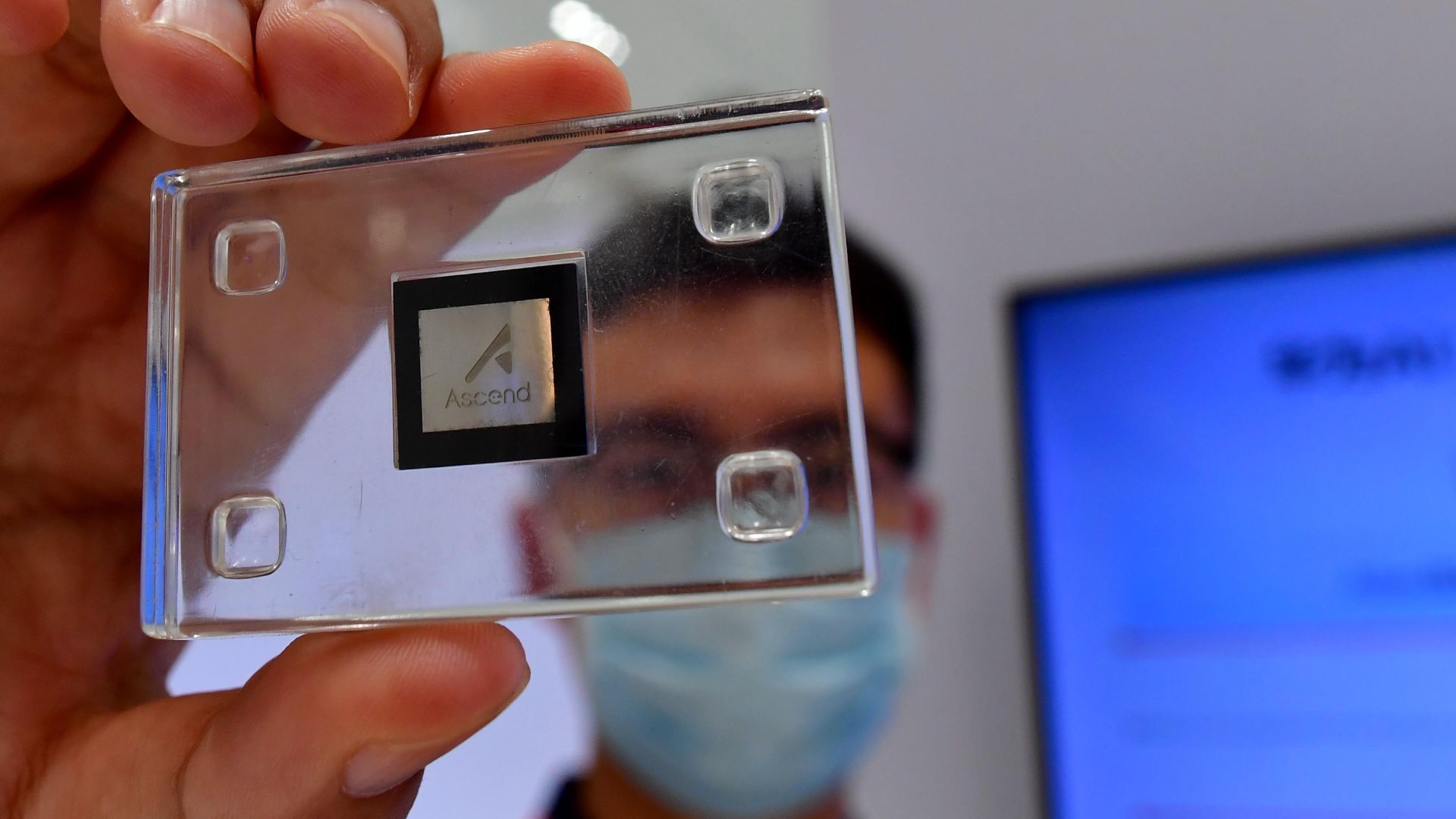
Companies like Huawei are developing high-performance chips , clustering them together and pumping them full of additional power, but that makes them less efficient, in turn leading to rapidly rising energy costs.
These rising energy costs have led to grumbling in the Chinese tech industry, so Chinese government officials are looking to sweeten the deal with proposed energy subsidies. Regions like Gansu, Guizhou, and Inner Mongolia, where data centers are heavily concentrated, have begun offering large energy subsidies, cutting bills by as much as 50% in some cases.
The catch is that data centers that use GPUs and chips from foreign manufacturers, like Nvidia, are exempt from the incentives. This plan has the dual benefit for local governments of meeting central party demands, while also helping attract data center production to their region, as local governments compete for contracts.
These subsidies are funded by the $50 billion Big Fund III , which China set up to compete with the U.S., in order to bolster its chip design and fabrication industry, thereby bolstering the country's AI efforts. China is ultimately expected to spend close to $100 billion in government investment on accelerating the development of these domestic industries this year.
Across the Pacific, American companies like OpenAI, Nvidia, Oracle, and CoreWeave are all collectively investing hundreds of billions of dollars in AI infrastructure, building out enormous data centers and circularly buying each other's services, hardware, and software . Chinese tech companies are looking to compete, although Goldman Sachs has predicted that those companies will "only" invest around $70 billion in data centers in 2026 .
Despite greater investment in the U.S., it might also be energy which proves the bottleneck. Microsoft CEO Satya Nadella said that the company is sitting on unused GPUs and AI chips that it can't use because it doesn't have the energy to run them. Elon Musk's xAI has been buying up gas turbines by the thousands and is even trying to import a power station. One thing is clear: massive AI data center buildouts are causing a squeeze in energy supplies across the board. Small, modular nuclear reactors could be one way around the issue, but it's far from a simple, quick solution.
Power may well remain in short supply, even with all the solar coming online around the world. Especially in China, where the country built more solar power in the first half of 2025 than the U.S. has in its entire history. China's advancements in nuclear and hydropower could give it a distinct advantage in the years to come, if energy proves to be a more significant bottleneck for AI than pure compute performance.
Follow Tom's Hardware on Google News , or add us as a preferred source , to get our latest news, analysis, & reviews in your feeds.
Jon Martindale Freelance Writer Jon Martindale is a contributing writer for Tom's Hardware. For the past 20 years, he's been writing about PC components, emerging technologies, and the latest software advances. His deep and broad journalistic experience gives him unique insights into the most exciting technology trends of today and tomorrow.
Key considerations
- Investor positioning can change fast
- Volatility remains possible near catalysts
- Macro rates and liquidity can dominate flows
Reference reading
- https://www.tomshardware.com/tech-industry/SPONSORED_LINK_URL
- https://www.tomshardware.com/tech-industry/china-and-americas-ai-war-isnt-just-about-compute-its-about-energy-energy-subsidies-promote-homegrown-chip-push-amid-data-center-energy-squeeze#main
- https://www.tomshardware.com
- Apple's latest MacBook Air, MacBook Pro, and Mac Mini are on sale ahead of Black Friday — several models drop to all-time low prices
- NVIDIA and US Technology Leaders Unveil AI Factory Design to Modernize Government and Secure the Nation
- Apple's latest MacBook Air, MacBook Pro, and Mac Mini are on sale ahead of Black Friday — several models drop to all-time low prices
- Quantum diamond scanner delivers non-invasive 3D imaging of semiconductors — EuQlid Qu-MRI could ‘save chip foundries billions of dollars’
- As expected, Nvidia's $3,999 mini AI supercomputer is terrible for gaming — DGX Spark struggles to hit 50 FPS at 1080p on medium settings in Cyberpunk 2077
Informational only. No financial advice. Do your own research.