
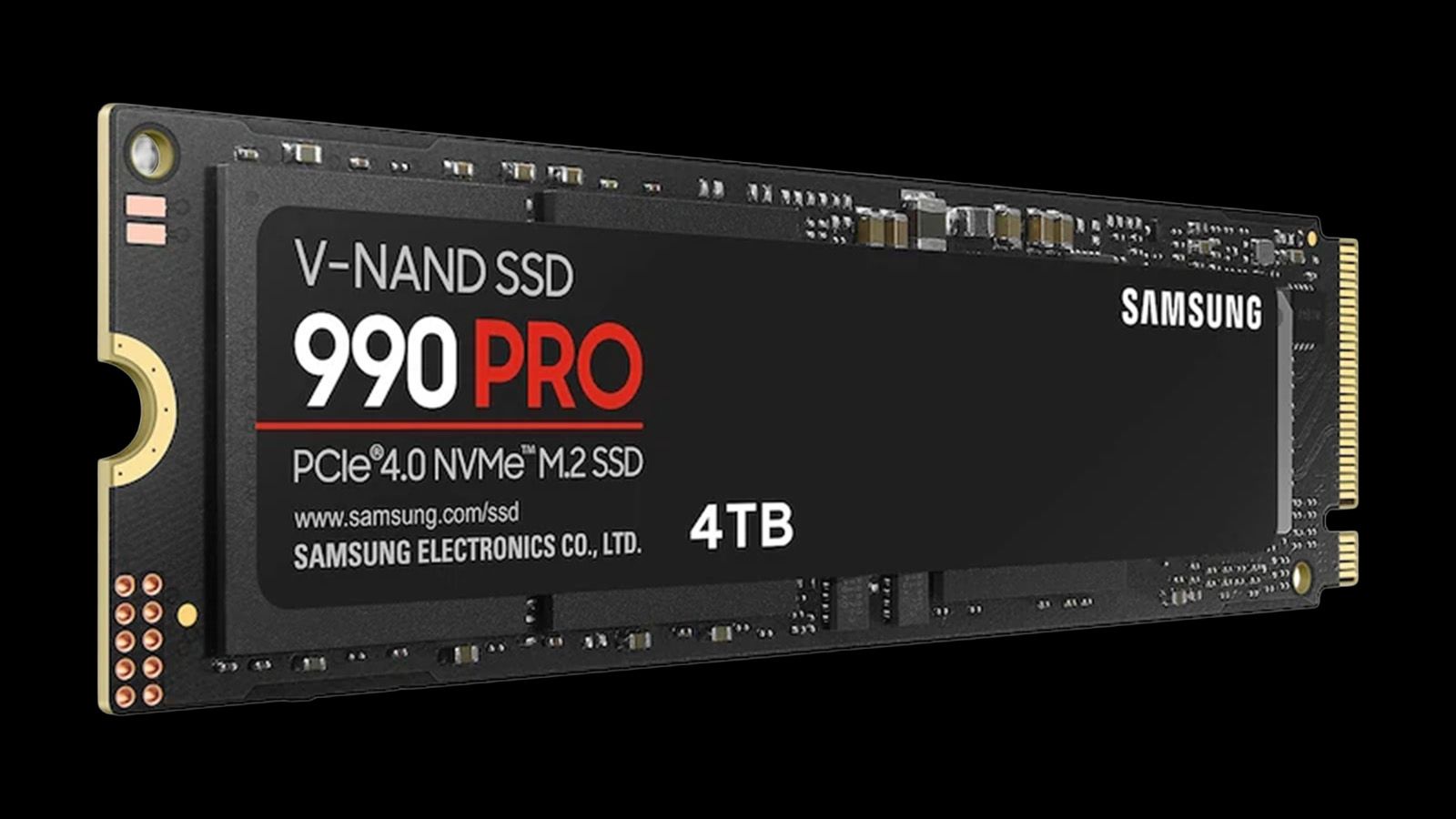
The best way to weed out clones from the real ones with Samsung SSDs is to use the Samsung Magician software to authenticate the drive. Furthermore, it doesn't allow you to use the software's features, such as the diagnostic scan and performance optimization, on fake drives.
Spotting Samsung clones has become routine for every generation of Samsung SSDs. Previously, we saw many Samsung 980 Evo and Samsung 980 Pro clones. Some entrepreneurs even invented SSDs that even Samsung didn't know were in its lineup, such as the Samsung 1080 Pro . The takeaway from all this is always to purchase your Samsung SSDs from trusted, reputable retailers. Even if your new drive passes the sniff test, run Samsung Magician for that extra peace of mind, as you can see, clones are getting better by the day.
Follow Tom's Hardware on Google News , or add us as a preferred source , to get our latest news, analysis, & reviews in your feeds.
Zhiye Liu is a news editor, memory reviewer, and SSD tester at Tom\u2019s Hardware. Although he loves everything that\u2019s hardware, he has a soft spot for CPUs, GPUs, and RAM. ","collapsible":{"enabled":true,"maxHeight":250,"readMoreText":"Read more","readLessText":"Read less"}}), "https://slice.vanilla.futurecdn.net/13-4-19/js/authorBio.js"); } else { console.error('%c FTE ','background: #9306F9; color: #ffffff','no lazy slice hydration function available'); } Zhiye Liu News Editor, RAM Reviewer & SSD Technician Zhiye Liu is a news editor, memory reviewer, and SSD tester at Tom’s Hardware. Although he loves everything that’s hardware, he has a soft spot for CPUs, GPUs, and RAM.
Gururu "The takeaway from all this is always to purchase your Samsung SSDs from trusted, reputable retailers." Unfortunately, not even Amazon services/warehouse can be trusted anymore. Reply
Dementoss Samsung will always be popular with the cloners, as they are both popular and expensive, added to which, there are a lot of people out there who will think, "ooh cheap", and not even consider checking to see if the retailer is genuine and trustworthy. Reply
Notton It looks familiar… I haven't seen a Lexar NQ790 under the sticker, but it's presumably the same PCB as the NM790. https://www.tomshardware.com/reviews/lexar-nm790-ssd-review Reply
PEnns Did the article mention the price of the Samsung-like fake SSD?? Is it being sold for less or the same price?? If it's "exceptional" but cheaper, some might accept the fakery! Reply
Stomx I will not buy Samsung even from the Samsung itself. In October or last year I decided to try Samsung SSDs. On the latest Linux Mint 22.2 (Zara), latest AMD server Turin processor and motherboard with latest BIOS, both the latest PCIe4 and PCIe5 4TB Pro Samsung SSDs (bought from Amazon and sold by Amazon itself not from some third party, everything was genuine Samsung) behaved totally irrationally. The PCIe5 one heavily corrupted the data, ran slow and stopped working almost in 5 minutes while PCIe4 was kind of OK but in a couple weeks disappeared from the list of drives. Most probable reason was the incompatible or older firmware, at least this is what internet suggested to try to fix. But the Samsung Magician software is absent in Linux and so you can not update the firmware if you do not have Windows Reply
abufrejoval What frightens me, is that any failing part these days means I'm loosing an entire machine, because spares are too expensive, unavailable, or risky. Reply
usertests abufrejoval said: What frightens me, is that any failing part these days means I'm loosing an entire machine, because spares are too expensive, unavailable, or risky. You probably won't lose the RAM. Unless it's soldered. 💀 Reply
Kindaian It will be sold at similar, maybe some usd less than the original, but just a small within the tolerances of a different supply chain so that it doesn't make it suspect. If it was me, i would sell it more expensive than the original, just because it is available. But it isn't me! And i wouldn't ever do that anyway… Reply
abufrejoval usertests said: You probably won't lose the RAM. Unless it's soldered. 💀 Actually I've been very lucky, very few failures overall, mostly mainboards actually and mostly because of the frequent rebuilding. Earliest was a 80386 mainboard that still had the old style DIN keyboard connector: that broke off and I had to do some brutish resoldering because there was no such thing as USB in those days and without a keyboard a computer was useless. And they easily cost $10.000 in those days. Decapitated a capacitor decades later, which had odd effects, I've purged from memory. The main challenges were getting a matching part (too small to properly identify the capacity) and soldering on a mostly SMD board… looks terrible but it still works, through. Mostly it's been EE-PROMs going bad and mainboards then becoming functionally dead. A fine laptop didn't survive a CMOS re-config and an X99 Xeon board that failed to POST was thankfully easy enough to replace. Never had a CPU fail or burn, my first RAM chips were 16k DILs, but I only had marginal parts I had to accomodate timing for, not outright failures. Some extremely early HDDs died, a few 2nd or 3rd generation SATA SSDs did as well. Some cheap Chinese Ethernet NICs and SATA adapters died or were DoA when I tried using them months or even years after putting them in stock, while I've operated LSI RAID6 controllers for 15 years 24×7 without issue. Mostly I've always assumed that computer don't die, they just get obsolete. But I got a few Nvidia GPUs with that awful power design and connector as well as an ASUS AM5 mainboard with 96 GB of DDR5 ECC RAM very close to the RTX 4090. I never considered PCs a fire hazard in 40 years of building them… until recently. P.S. competely forgot about mobile batteries: Yes, far too many phones and laptops got destroyed by those. Two rather new laptops were killed by Windows 10 deciding it was a good time to look for updates, while suspended to disk in the middle of a flights between Frankfurt and Lyon: fortunately the damage didn't exit the hand luggage. Phones and tablets just decided it was just time to get replaced after two to three years. Reply
Shiznizzle abufrejoval said: What frightens me, is that any failing part these days means I'm loosing an entire machine, because spares are too expensive, unavailable, or risky. Which is why i kept my back up machine and my parts tester machine. 2 Am4 and 1 Am5 i have. This will have to do till AI flops on its belly. It will. It is just a matter of time. Investors wont keep investing in a venture that is not only losing money but not making, much, money. OpenAI even went as far as forcing ads on the paid for track which is insanely stupid if you ask me. I refuse to pay and watch ads. No way. Not on any service. Not doing it. Reply
Key considerations
- Investor positioning can change fast
- Volatility remains possible near catalysts
- Macro rates and liquidity can dominate flows
Reference reading
- https://www.tomshardware.com/pc-components/ssds/SPONSORED_LINK_URL
- https://www.tomshardware.com/pc-components/ssds/exceptional-fake-ssd-clone-of-samsung-990-pro-is-almost-impossible-to-spot-near-identical-performance-blurs-the-line-between-real-and-fake-as-ai-crunch-drives-knock-off-market#main
- https://www.tomshardware.com
- Russian ‘Starlink Rival’ established with 16 satellites launched, aims for 900 by 2035 — commercial operation to begin next year with 250 sputniks
- HP Omen Max 45L review: Flagship desktop gaming PC performance with a price tag to match
- Intel's upcoming 'Wildcat Lake' low-power series breaks cover in Geekbench listing — 'Core 3 304' is twice as fast in single-core performance versus last-gen
- Samsung’s 870 EVO SATA SSD quietly gets 8TB variant despite storage shortage and skyrocketing pricing — new model spotted in Europe for €1,300 with higher cache
- SMIC sent chipmaking tools to Iran's military, Trump administration officials say — report claims exchange began a year ago, 'almost certainly included technica
Informational only. No financial advice. Do your own research.