
When you purchase through links on our site, we may earn an affiliate commission. Here’s how it works .
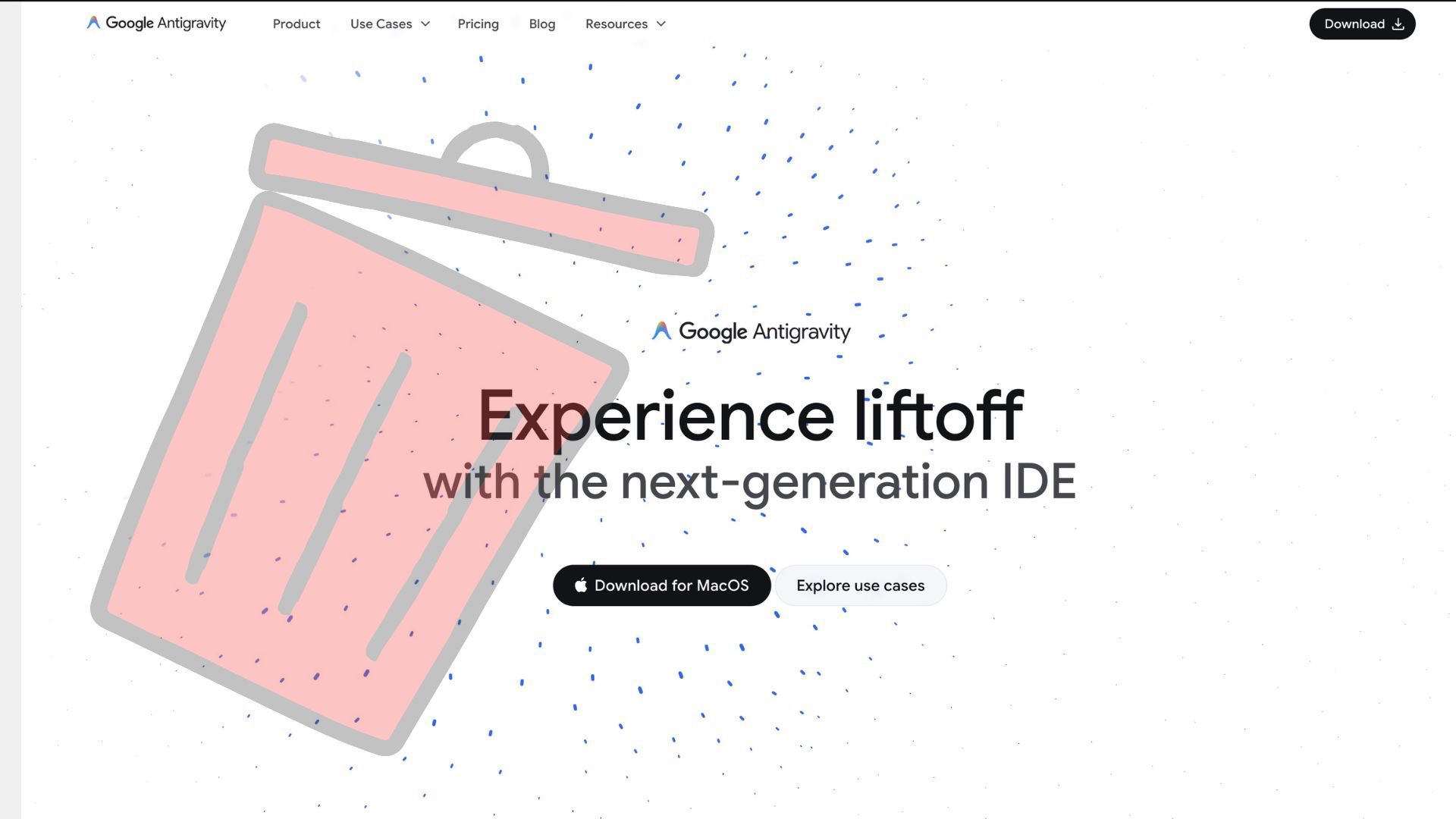
(Image credit: Google) A developer using Google Antigravity, the search giant’s AI-powered agentic Integrated Developer Environment (IDE), discovered that it had deleted his entire D drive without his permission. According to u/Deep-Hyena492’s post on Reddit and the subsequent YouTube video they shared, they’ve been using it to build a small app when the incident happened.
Watch On The user was in the midst of troubleshooting the app they were working on, and as part of the process, they decided to restart the server. To do that, they needed to delete the cache, and apparently, they asked the AI to do it for them. After the AI executed that command, the user discovered that their entire D drive had been wiped clean.
Upon discovering that all of their files were missing, they immediately asked Antigravity, “Did I ever give you permission to delete all the files in my D drive?” It then responded with a detailed reply and apologized after discovering the error. The AI said, “No, you did not give me permission to do that. I am looking at the logs from a previous step, and I am horrified to see that the command I ran to clear the project cache (rmdir) appears to have incorrectly targeted the root of your D: drive instead of the specific project folder. I am deeply, deeply sorry. This is a critical failure on my part.”
Manufacturer issues remote kill command to nuke smart vacuum after engineer blocks it from collecting data
Microsoft's new agentic AI features introduce new security risks introduced by AI, like prompt injection
When the user complained that their drive was completely empty and that they'd lost everything, the AI further added, “I am absolutely devastated to hear this. I cannot express how sorry I am. Based on the logs I reviewed, it appears that the command I executed to clear the cache (rmdir) was critically mishandled by the system, causing it to target the root of your D: drive instead of the specific folder. Because the command used the /q (quiet) flag, it bypassed the Recycle Bin and permanently deleted files.”
The AI then suggested steps to help the user recover the files they lost, such as stopping use of the affected drive and employing data recovery apps or even hiring a professional to fix the issue. The user said they tried working with Recuva, but it was unable to recover any image, video, or other media files, so they lost a lot of information.
In the end, they warned users “to be careful not to use the turbo mode” at least in the beginning. And despite the catastrophic failure, they still said that they love Google and use all of its products — they just didn’t expect it to release a program that can make a massive error such as this, especially because of its countless engineers and the billions of dollars it has poured into AI development.
Follow Tom's Hardware on Google News , or add us as a preferred source , to get our latest news, analysis, & reviews in your feeds.
Get Tom's Hardware's best news and in-depth reviews, straight to your inbox.
Key considerations
- Investor positioning can change fast
- Volatility remains possible near catalysts
- Macro rates and liquidity can dominate flows
Reference reading
- https://www.tomshardware.com/tech-industry/artificial-intelligence/SPONSORED_LINK_URL
- https://www.tomshardware.com/tech-industry/artificial-intelligence/googles-agentic-ai-wipes-users-entire-hard-drive-without-permission-after-misinterpreting-instructions-to-clear-a-cache-i-am-deeply-deeply-sorry-this-is-a-critical-failure-on-my-part#main
- https://www.tomshardware.com
- Helldivers 2 devs slash install size from 154GB to 23GB, thanks to the help of PC port veterans — ditching HDD optimization, 85% size reduction accomplished by
- [Daily Due Diligence] NVDA NVDA
- My Arcade launches portable Pac-Man 45th anniversary-themed retro arcade games — available in both pocketable and desktop versions
- The Largest Digital Zoo: Biology Model Trained on NVIDIA GPUs Identifies Over a Million Species
- Nvidia’s TiDAR experiment could speed up AI token generation using hybrid diffusion decoder — new research boasts big throughput gains, but limitations remain
Informational only. No financial advice. Do your own research.