
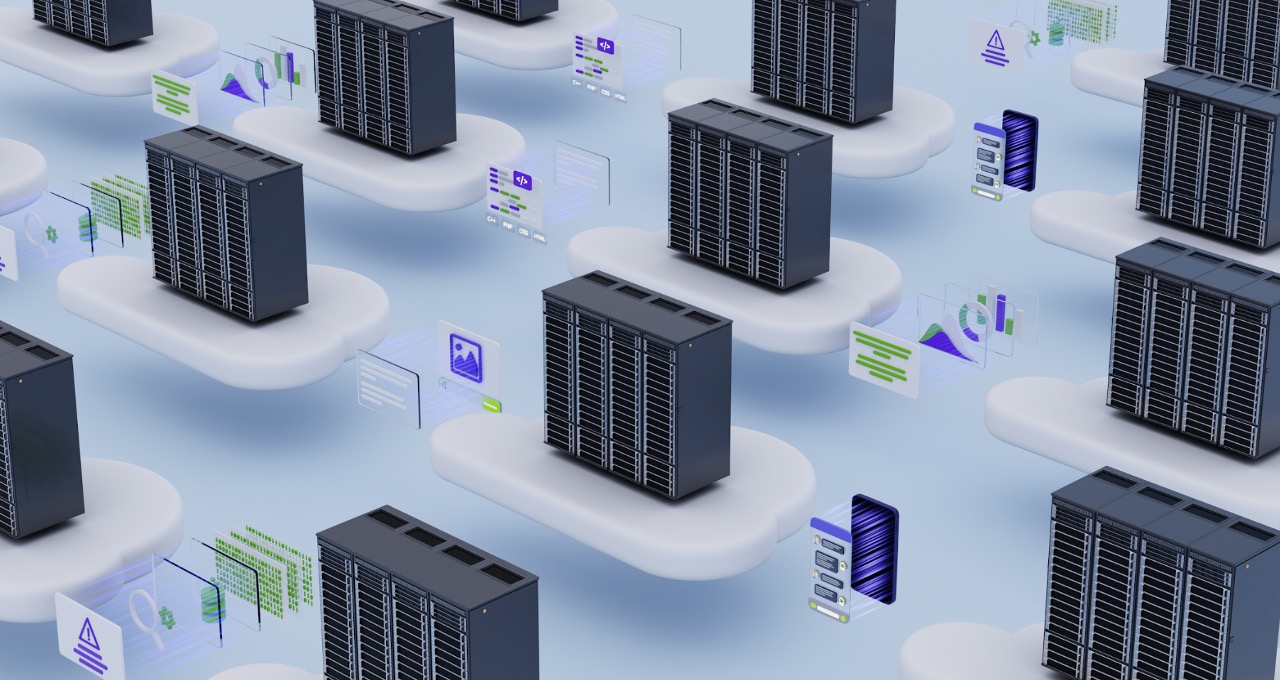
Today’s AI workloads are data-intensive, requiring more scalable and affordable storage than ever. By 2028, enterprises are projected to generate nearly 400 zettabytes of data annually, with 90% of new data being unstructured, comprising audio, video, PDFs, images and more.
This massive scale, combined with the need for data portability between on-premises infrastructure and the cloud, is pushing the AI industry to evaluate new storage options.
Enter RDMA for S3-compatible storage — which uses remote direct memory access (RDMA) to accelerate the S3-application programming interface (API)-based storage protocol and is optimized for AI data and workloads.
Object storage has long been used as a lower-cost storage option for applications, such as archive, backups, data lakes and activity logs, that didn’t require the fastest performance. While some customers are already using object storage for AI training, they want more performance for the fast-paced world of AI.
This solution, which incorporates NVIDIA networking , delivers faster and more efficient object storage by using RDMA for object data transfers.
For customers, this means higher throughput per terabyte of storage, higher throughput per watt, lower cost per terabyte and significantly lower latencies compared with TCP, the traditional network transport protocol for object storage.
Lower Cost: End users can lower the cost of their AI storage, which can also speed up project approval and implementation.
Workload Portability: Customers can run their AI workloads unmodified in both on premises and in cloud service provider and neocloud environments, using a common storage API.
Accelerated Storage: Faster data access and performance for AI training and inference — including vector databases and key-value cache storage for inference in AI factories.
AI data platform solutions gain faster storage object storage access and more metadata for content indexing and retrieval.
Reduced CPU Utilization: RDMA for S3-compatible storage doesn’t use the host CPU for data transfer, meaning this critical resource is available to deliver AI value for customers.
NVIDIA has developed RDMA client and server libraries to accelerate object storage. Storage partners have integrated these server libraries into their storage solutions to enable RDMA data transfer for S3-API-based object storage, leading to faster data transfers and higher efficiency for AI workloads.
Client libraries for RDMA for S3-compatible storage run on AI GPU compute nodes. This allows AI workloads to access object storage data much faster than traditional TCP access — improving AI workload performance and GPU utilization.
While the initial libraries are optimized for NVIDIA GPUs and networking, the architecture itself is open, because other vendors and customers can contribute to the client libraries and incorporate them into their software. They can also write their own software to support and use the RDMA for S3-compatible storage APIs.
NVIDIA is working with partners to standardize RDMA for S3-compatible storage.
Key considerations
- Investor positioning can change fast
- Volatility remains possible near catalysts
- Macro rates and liquidity can dominate flows
Reference reading
- https://blogs.nvidia.com/blog/s3-compatible-ai-storage/#content
- https://www.nvidia.com/en-us/
- https://blogs.nvidia.com/?s=
- Taiwan to spend $3 billion turning nation into 'AI island', targets top five global compute power — new goals threatened by energy shortfalls
- Save 50% on this Corsair mechanical gaming keyboard, thanks to Black Friday — just £89.99 with lightning-fast switches and plenty of customization
- High-ranking TSMC executive faces Taiwan legal investigation over murky return to Intel — report alleges employee took technical documents with him
- AMD announces FSR Redstone premiere on December 10 — confirms technology will be limited to the RX 9000 series
- Distributors force unprecedented RAM and motherboard bundle mandate to fight global shortage, report claims — distributors require one-to-one ratio from buyers
Informational only. No financial advice. Do your own research.