
Best Black Friday gaming GPU deals 2025 — ongoing deals on cheap Nvidia, AMD, and Intel gaming graphics cards
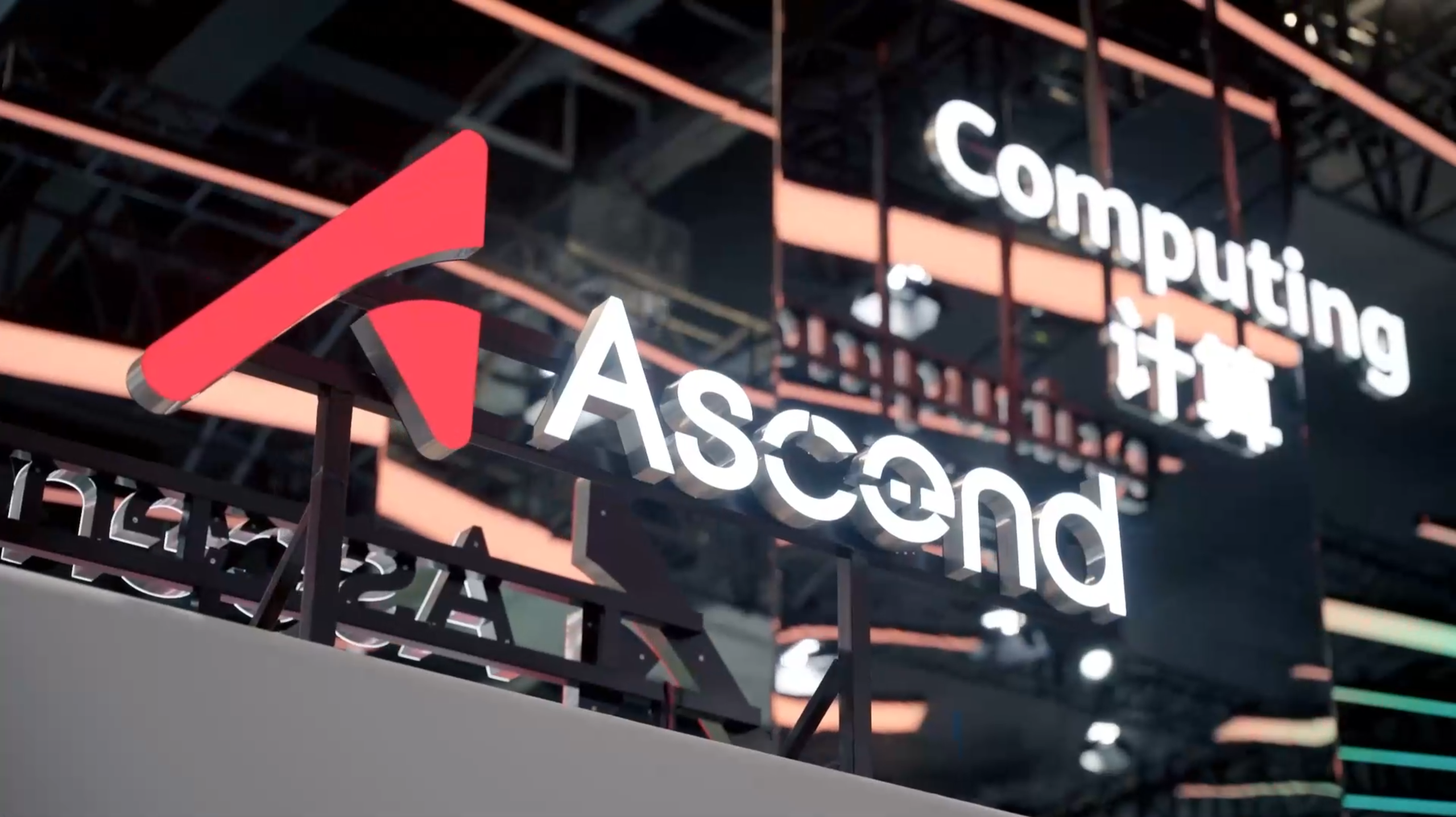
The foundation of Huawei’s server strategy is the Ascend 910C , a dual-chiplet accelerator built using stacked HBM2E memory and a DaVinci NPU architecture tailored for AI workloads. The chip delivers up to 780 TFLOPS of dense BF16 compute, with the entire package consuming 350 watts
That trails Nvidia’s Hopper-based H100 or Blackwell-based B200 in both peak throughput and power efficiency , but Huawei offsets the difference by scaling up. The CloudMatrix 384 system, for example, combines twelve racks of Ascend modules with four optical interconnect racks, creating a 384-processor fabric that delivers around 300 PFLOPS in total. The network is entirely optical, with 6,912 pluggable transceivers forming a high-bandwidth, all-to-all topology.
The system draws around 559 kilowatts at peak load , which is nearly four times the power draw of Nvidia’s GB200-based DGX system. But Chinese data centers face fewer regulatory constraints on energy use, and local power costs remain significantly lower than in the U.S. That trade-off, paired with large-scale domestic chip availability, makes the Ascend stack a viable foundation for training large-scale AI models in-country. Huawei’s internal tests claim CloudMatrix outperforms Nvidia H100 platforms on specific model classes, although public benchmarks remain scarce.
The software stack around Ascend is also maturing. Huawei’s CANN programming environment and MindSpore framework support common model architectures through a translation layer that can ingest PyTorch or TensorFlow graphs. While CUDA remains dominant globally, Huawei is planning to open-source more of its toolchain to accelerate local development and draw interest from non-domestic partners where export controls permit.
What makes Huawei’s AI hardware strategy notable is how tightly integrated it has become with the broader Chinese chip supply chain. Hubble, Huawei’s private equity arm, has taken minority stakes in dozens of component and material suppliers since its formation. These firms are now expanding capacity or acquiring competitors, often with local government backing, to ensure domestic resilience against future sanctions.
Jiangsu-based HHCK Advanced Materials, in which Huawei holds a 2% stake, is one example. In November, the company acquired a rival producer of heat-resistant epoxy resins for around $255 million. In parallel, Vertilite, 4%-owned by Huawei, opened a new compound semiconductor facility in Jiangsu. It produces lasers and modulators for high-speed optical links, key to Huawei’s full-rack optical mesh interconnects. Meanwhile, Shanghai Winscene Technology is scaling up production of photoresists, which are essential to lithographic processes. Aerotech, another Huawei-linked firm, is expanding capacity for gas flow systems and valves used in chipmaking equipment.
Each of these firms targets a known vulnerability in China’s chip manufacturing pipeline. Huawei has also been linked to domestic efforts in electronic design automation. While Huawei is not believed to have an equity stake in Empyrean Technology, China’s leading EDA developer, sources say the two collaborate closely on tool development and circuit verification.
TP-Link pre-Black Friday sale brings steep discounts up to 36 percent on Wi-Fi 7 mesh, travel routers, and outdoor satellites
RAM Benchmark Hierarchy 2025: DDR5, DDR4 for AMD, Intel CPUs
Key considerations
- Investor positioning can change fast
- Volatility remains possible near catalysts
- Macro rates and liquidity can dominate flows
Reference reading
- https://www.tomshardware.com/tech-industry/semiconductors/SPONSORED_LINK_URL
- https://www.tomshardware.com/tech-industry/semiconductors/huaweis-ascend-ai-chip-ecosystem-scales#main
- https://www.tomshardware.com
- Asus tempts fate, unleashes 800W "XOC" vBIOS for its $4,000 ROG Matrix RTX 5090 — Overclockers and high-end GPU junkies now have their hands on the hottest, mos
- PlayStation 5 consoles are $100 off for Black Friday — Digital Edition is $399, PS5 Pro is $649 at Amazon, Walmart, Best Buy
- Powering AI Superfactories, NVIDIA and Microsoft Integrate Latest Technologies for Inference, Cybersecurity, Physical AI
- Wall Street warns of rising AI debt risk as stocks slide on wobbly investor confidence — analysts warn of 'systemic risk' as Nvidia share price creaks
- AWS, Google, Microsoft and OCI Boost AI Inference Performance for Cloud Customers With NVIDIA Dynamo
Informational only. No financial advice. Do your own research.