
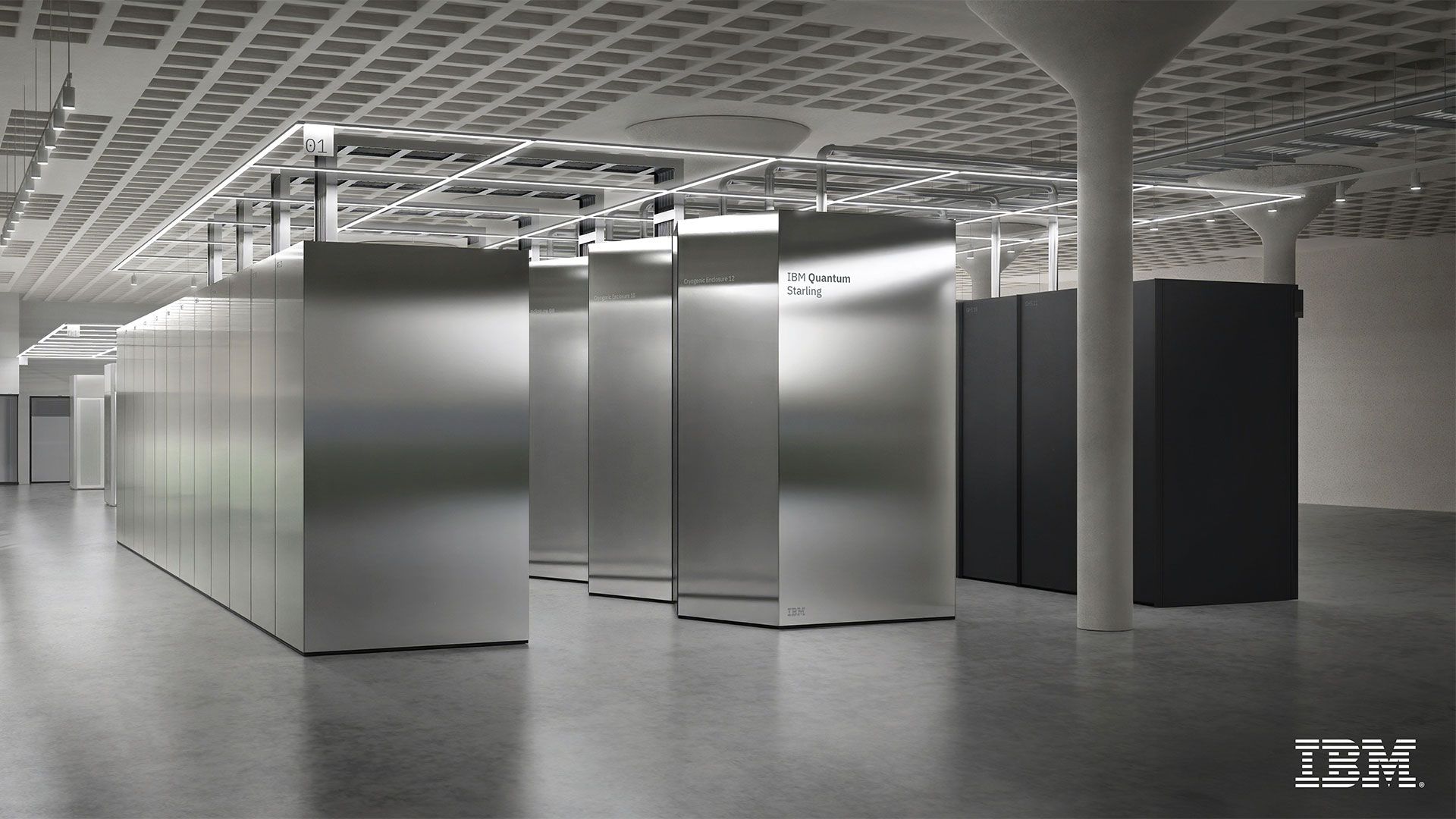
The companies are also working on software protocols that manage entanglement routing across the network. Unlike classical networks, where bits can be duplicated and retransmitted, quantum systems depend on ephemeral, one-time-use states. That means entangled links must be established just-in-time, managed through a new class of control protocols that coordinate not only logical dataflow but also the physical movement of qubit states. Cisco says it will contribute a high-speed software protocol framework to support these operations.
The long-term vision goes well beyond inter-device communication. IBM and Cisco say their roadmap could extend into a future quantum internet where quantum processors and entangled photonic links form a planetary-scale network of physically distributed (but logically connected) resources.
The idea of a quantum internet has been proposed before. Several research groups have published designs for node-based or repeater-style architectures, but most of those are focused on specific applications such as quantum key distribution or secure messaging. IBM’s goal, however, is to make distributed compute a viable path for running quantum algorithms that can’t fit in memory on a single machine.
If achieved, it could allow new types of applications, from supply chain modelling to real-time climate simulation using quantum-enhanced sensing. IBM has suggested that such networks could support “trillions of quantum gates” across multiple QPUs, far beyond the practical limits of even a thousand-logical-qubit monolithic device.
The 2030 timeline for demonstrating a basic entanglement between two QPUs is extremely ambitious. A scalable multi-node quantum network is expected to follow just a few years later, with long-distance networking only arriving in the latter half of that decade. The quantum internet vision, where processors and entangled repeaters span entire regions, is likely more than 15 years out.
Some significant engineering challenges will need to be overcome to make this timeline a reality. No existing transducer meets the required efficiency and fidelity thresholds for scalable links. Meanwhile, distributed quantum error correction is still in development, and most of the proposed network protocols are theoretical or exist only in research simulations. There is also the challenge of integrating Cisco’s photonic networking expertise with IBM’s cryogenic systems in a way that minimizes thermal interference and maximizes link yield.
After more than a decade of pushing processor design, IBM is now turning its attention to interconnects. Cisco, for its part, is betting that quantum computing will need entirely new systems thinking, where classical routing is blended with real-time entanglement management.
It is a different way to think about infrastructure, not just as a transport layer, but as a co-designed part of the computational pipeline itself. If IBM and Cisco can build it, they’ll be reshaping what it means to run a program when the processor is no longer a single machine.
Follow Tom's Hardware on Google News , or add us as a preferred source , to get our latest news, analysis, & reviews in your feeds.
Luke James Social Links Navigation Contributor Luke James is a freelance writer and journalist. Although his background is in legal, he has a personal interest in all things tech, especially hardware and microelectronics, and anything regulatory.
Key considerations
- Investor positioning can change fast
- Volatility remains possible near catalysts
- Macro rates and liquidity can dominate flows
Reference reading
- https://www.tomshardware.com/tech-industry/quantum-computing/SPONSORED_LINK_URL
- https://www.tomshardware.com/tech-industry/quantum-computing/ibm-and-cisco-plan-to-lay-the-foundation-for-distributed-quantum-computing#main
- https://www.tomshardware.com
- TSMC says advanced‑node capacity falls ‘about three times short’ of AI demand — company's wafer capacity is 'still not enough' as demand continues to rise
- An entire PS5 now costs less than 64GB of DDR5 memory, even after a discount — simple memory kit jumps to $600 due to DRAM shortage, and it's expected to get wo
- Major insurers move to avoid liability for AI lawsuits as multi-billion dollar risks emerge — Recent public incidents have lead to costly repercussions
- Staples Black Friday Sale! Save up to 55% on laptops, monitors, and more
- Powering AI Superfactories, NVIDIA and Microsoft Integrate Latest Technologies for Inference, Cybersecurity, Physical AI
Informational only. No financial advice. Do your own research.