
When you purchase through links on our site, we may earn an affiliate commission. Here’s how it works .
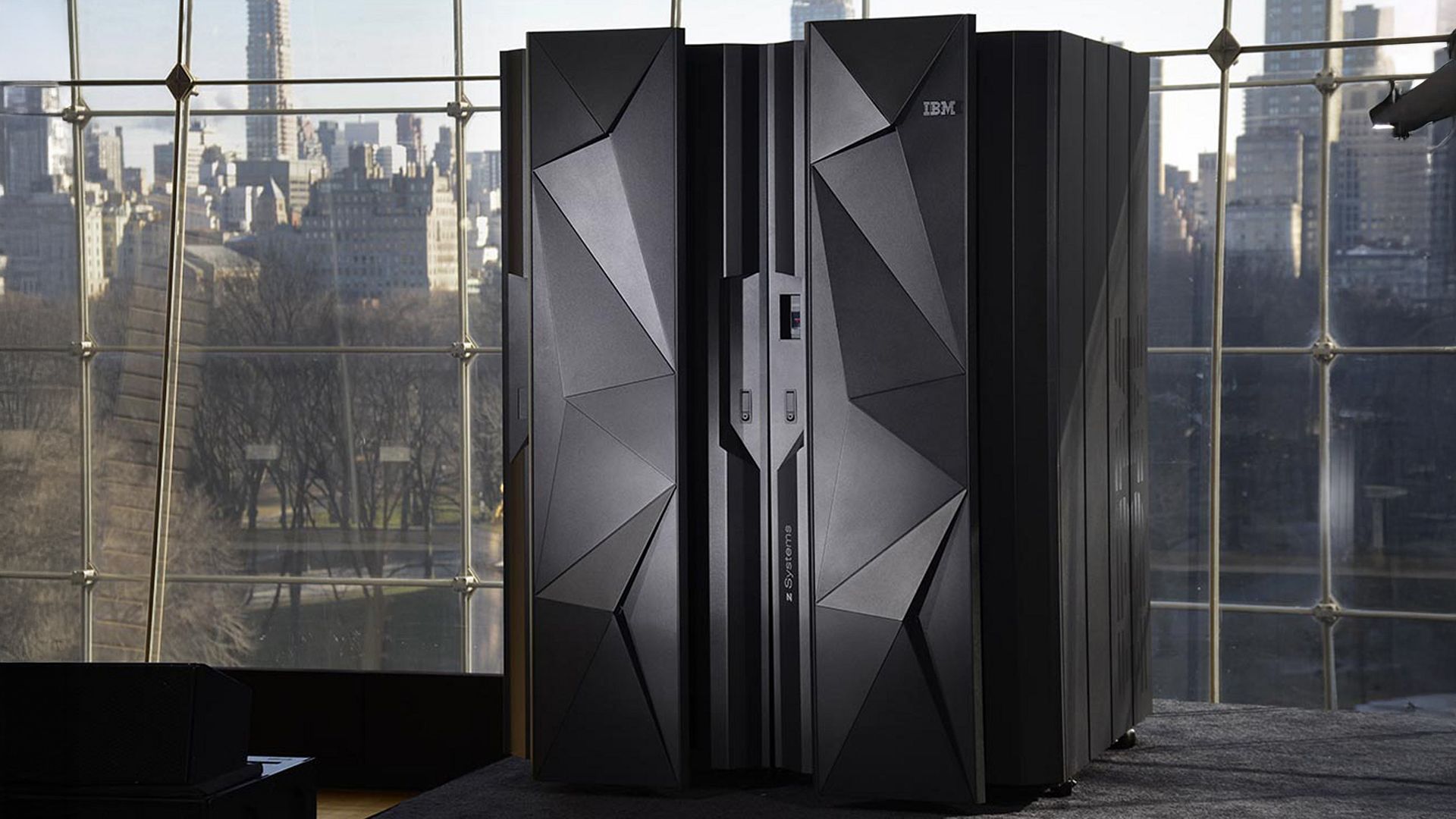
IBM and Arm on Thursday announced a strategic collaboration to co-develop dual-architecture enterprise platforms that would enable software designed for the Arm ecosystem to work on IBM Z mainframes and LinuxONE systems in emulation mode. The collab is designed to enable enterprises to run AI and cloud-native workloads originally developed for Arm on mission-critical IBM Z enterprise hardware with ultimate reliability, availability, and security .
Nowadays, a lot of AI frameworks as well as data-intensive cloud-native applications are developed for the Arm ecosystem, whereas IBM Z platforms (based on the Z390x or z/Architecture ISA) excel in reliability, availability, and serviceability but have a narrower native software stack. This is why enterprises increasingly operate a mix of legacy transaction processing alongside AI inference and microservices, which are typically deployed on separate Arm or x86 servers, according to IBM.
Running Arm workloads on IBM Z is designed to enable running a broad software ecosystem on IBM's Z mainframe systems, particularly those that are based on the Telum II processor and Spyre AI accelerator, through virtualization or emulation without porting them to IBM Z, which is costly, time consuming, and not common for the modern industry that relies more on x86 and Arm and less on IBM Z. Therefore, by bringing these newer workloads onto the same system, IBM reduces architectural complexity, lowers integration overhead, and simplifies operations.
You may like Arm moves beyond IP with AGI CPU silicon Arm to sell its new AGI CPU in China Anthropic's new AI tool can write 67-year-old COBOL code, which sends 115-year-old IBM's stock tumbling by 13% Furthermore, this approach keeps workloads close to where critical data already resides: financial systems, government databases, and high-value transactional engines, which reduces latencies, minimizes security and compliance risks, and eliminates the need to replicate datasets across external platforms.
"IBM's defining role in shaping enterprise infrastructure spans decades, showcasing the breadth and commitment required to support our clients' most intensive and sensitive workloads," said Christian Jacobi, Chief Technology Officer and IBM Fellow, IBM Systems Development. "This moment marks the latest step in our innovation journey for future generations of our IBM Z and LinuxONE systems, reinforcing our end-to-end system design as a powerful advantage."
The model is not intended for performance-hungry applications. In addition, emulation and virtualization introduce a host of additional performance penalties, so do not expect IBM Z systems running Arm workloads on Telum II CPUs and Spyre accelerators to demonstrate leading performance. That being said, enterprise decision-making does not prioritize performance per se, but rather total cost of ownership, operational stability, reliability, risk mitigation, and scalability.
As a result, the trade-off may well be justified, particularly for those companies that already use IBM Z for mission-critical workloads and yet have to run additional workloads on different types of hardware. At the end of the day, IBM customers do not want to replace all of their hardware and mission-critical applications, but rather want their already deployed hardware and software to evolve, which includes running modern applications alongside legacy software. Whether or not this could lead to eventual inclusion of Arm-based CPUs or accelerators into IBM servers is something that remains to be seen, but IBM does not talk about it at this point.
Get Tom's Hardware's best news and in-depth reviews, straight to your inbox.
Key considerations
- Investor positioning can change fast
- Volatility remains possible near catalysts
- Macro rates and liquidity can dominate flows
Reference reading
- https://www.tomshardware.com/desktops/servers/SPONSORED_LINK_URL
- https://www.tomshardware.com/desktops/servers/ibm-spruces-up-its-mainframes-with-new-support-for-modern-arm-workloads-firm-teams-up-with-arm-to-run-arm-workloads-on-ibm-z-mainframes#main
- https://www.tomshardware.com
- Researchers build Wi-Fi chip that can operate inside a nuclear reactor — receiver uses special materials and design to withstand high doses of radiation for at
- Advancing Open Source AI, NVIDIA Donates Dynamic Resource Allocation Driver for GPUs to Kubernetes Community
- Raspberry Pi flagship 500+ model now costs almost as much as a Mac Mini — firm Pi launches 3GB model to fight increasing DRAM prices
- Intel buys back 49% stake in Ireland Fab Joint Venture — takes full control over Fab 34
- Blowing Off Steam: How Power-Flexible AI Factories Can Stabilize the Global Energy Grid
Informational only. No financial advice. Do your own research.