
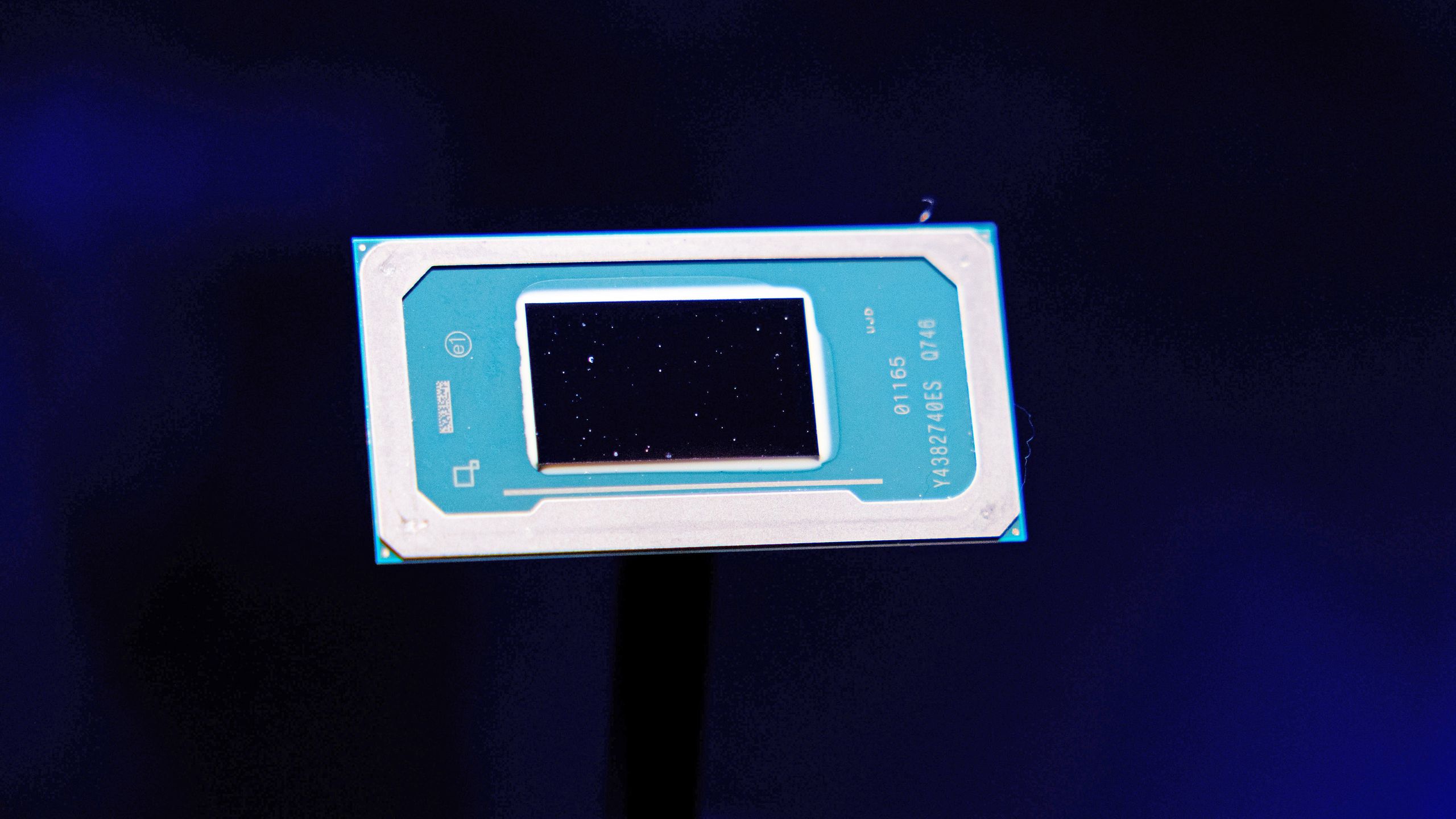
Panther Lake was not only 9.7X faster than Sandy Bridge but also consumed, on average, 7.8% less power. It's impressive because the Panther Lake chip comes equipped with 8X more cores compared to the Sandy Ridge part. The Core i7-3517U (codenamed Ivy Bridge) had the lowest average power consumption among the 15 processors. Compared to Ivy Bridge, Panther Lake consumed 1.92X more power but delivered 9.1X more performance.
The quantitative performance gains of Intel mobile chips over the years are impressive. However, Linux's embrace of older hardware is equally impressive. It's the reason why the operating system is the de facto choice for users who want to give legacy hardware a second chance at life. It's unheard of that a 2008-era processor can play nicely with a development version of Ubuntu, much less run a bunch of benchmarks that didn't exist back then.
Follow Tom's Hardware on Google News , or add us as a preferred source , to get our latest news, analysis, & reviews in your feeds.
Zhiye Liu is a news editor, memory reviewer, and SSD tester at Tom\u2019s Hardware. Although he loves everything that\u2019s hardware, he has a soft spot for CPUs, GPUs, and RAM. ","collapsible":{"enabled":true,"maxHeight":250,"readMoreText":"Read more","readLessText":"Read less"}}), "https://slice.vanilla.futurecdn.net/13-4-17/js/authorBio.js"); } else { console.error('%c FTE ','background: #9306F9; color: #ffffff','no lazy slice hydration function available'); } Zhiye Liu News Editor, RAM Reviewer & SSD Technician Zhiye Liu is a news editor, memory reviewer, and SSD tester at Tom’s Hardware. Although he loves everything that’s hardware, he has a soft spot for CPUs, GPUs, and RAM.
ekio If Intel did 95x over the past 20 years, then AMD did ~200x over the past 20 years then, since they went from much less powerful to much more powerful… Reply
DS426 The geometric mean of all the benchmark results revealed that the Core Ultra X7 358H outperformed the Core 2 Duo T9300 by 21.5X. Intel has consistently pushed the boundaries of processor technology. Not consistently — at least not in terms of performance. 21.5 times in 18 years feels "meh" to me. Look at the perf gains from Skylake to Rocket Lake and you see where that strong momentum from the Core 2 and 1st-gen Core i days came in short, pulling those long-term gains downward. Reply
DS426 However, Linux's embrace of older hardware is equally impressive. That, I agree with. 🙂 Reply
Gururu Wow a Tom's article about Intel and the only uses of the word 'but' are complimentary. Reply
75aryanpatil DS426 said: Not consistently — at least not in terms of performance. 21.5 times in 18 years feels "meh" to me. Look at the perf gains from Skylake to Rocket Lake and you see where that strong momentum from the Core 2 and 1st-gen Core i days came in short, pulling those long-term gains downward. how does 21.5 times feel meh to you what do you want 2x every gen Reply
Flayed The maximum turbo boost hasn't increased much since the Whisky Lake chip in 2018. Constraints of heat dissipation in a mobile form factor or performance per watt stagnating? Reply
cZr1210 I could've swore Intel flopped on many fronts the last 5 or so years. Transition from 14nm was a disaster. AMD came out of nowhere and became not just competive but often the better x86 product in terms of performance, efficency and price. The laptop space would be much better if more AMD SKUs existed, but they don't because "Intel", and that sucks for everyone who has to pay more for very little gains. Bonus: their well documented anti competition aggressive tactics forcing vendors to exclusively use Intel in the laptop space has been harmful to consumers and still to some extent exists today. How can you have credibility with these underhand tactics. Sorry, I've zero respect Reply
usertests 75aryanpatil said: how does 21.5 times feel meh to you what do you want 2x every gen Yeah, we would love that. But while CPU performance gains have stagnated, GPU performance has risen much more than 21.5x over that time. So that's nice. Flayed said: The maximum turbo boost hasn't increased much since the Whisky Lake chip in 2018. Constraints of heat dissipation in a mobile form factor or performance per watt stagnating? These chips have gotten close to 5 GHz boost despite being sub-45W and not the flagship in many cases. Phoronix tested: Core i5-1334U = 4.6 GHz (15W base TDP, 55W turbo) Core Ultra 7 155H = 4.8 GHz (28W base, 115W turbo) Core Ultra X7 358H = 4.8 GHz (25W base, 80W turbo) But there's also: Core i9 13900H(K) = 5.4 GHz (45W, 115W turbo) Core Ultra 9 185H = 5.1 GHz (45W, 115W turbo) Core Ultra X9 385H = 5.1 GHz (25W base, 80W turbo) Panther Lake in particular is interesting, because Intel 18A looks like a great node, but turbo isn't significantly better than 14nm. It's an efficiency oriented product, but it still makes you wonder. What's not in question is that heat dissipation is definitely a factor, many of these chips have constrained TDPs, and you are not getting that much from a higher turbo anyway. If you can get to 5.5 GHz instead of 5.0 GHz, that's a 10% improvement. On one core only (for a short time). Core count and multi-threaded performance is way up, especially after Tiger Lake. cZr1210 said: I could've swore Intel flopped on many fronts the last 5 or so years. Transition from 14nm was a disaster. AMD came out of nowhere and became not just competive but often the better x86 product in terms of performance, efficency and price. The laptop space would be much better if more AMD SKUs existed, but they don't because "Intel", and that sucks for everyone who has to pay more for very little gains. Bonus: their well documented anti competition aggressive tactics forcing vendors to exclusively use Intel in the laptop space has been harmful to consumers and still to some extent exists today. How can you have credibility with these underhand tactics. Sorry, I've zero respect You were wrong. AMD has excelled in the DIY space, taken market share in mobile and x86 server chips. But they have remained well below Intel's market share in all of these. They are around 36.4% in desktop and 26% in mobile. Intel is providing chips in a higher volume, and often targeting lower price points. A clear case has been Intel's Alder Lake-N vs. AMD's Mendocino. The chips have similar CPU/GPU performance, could target the same markets, but Intel's has been found in tons of sub-$200 mini PCs, SBCs, routers, laptops, etc. while AMD's is in $200-300 laptops sometimes. AMD is focused on selling a lower volume of more premium chips, particularly in consumer markets. I think Lisa Su or an exec explicitly stated something like that. They are also a lot more interested in getting their Epyc market share up and making sure those server/datacenter customers are satisfied. They achieved 28.8% "unit share" and 41.3% "revenue share". So despite having less than a third of the market, they are doing better than 40% of the revenue. If anything shady is going on, it's probably in the mobile market. Not to mention that they have been clobbered by Nvidia mobile dGPUs so badly, that there are no RDNA4 mobile dGPUs, and excess RDNA3 mobile dGPUs are being used by Valve to make the Steam Machine. Reply
luckzeh Gururu said: Wow a Tom's article about Intel and the only uses of the word 'but' are complimentary. The very first sentence " Intel has consistently pushed the boundaries of processor technology and has delivered some of the best CPUs we've ever seen. " already exposes it as… how do the kids say these days, 'glazing'. Reply
thestryker usertests said: But there's also: Core i9 13900H(K) = 5.4 GHz (45W, 115W turbo) Core Ultra 9 185H = 5.1 GHz (45W, 115W turbo) Core Ultra X9 385H = 5.1 GHz (25W base, 80W turbo) You're missing the most important comparison of recent CPUs: Core Ultra 7 265U = 5.3 GHz (15W base, 57W turbo) Core Ultra 7 165U = 4.9 GHz (15W base, 57W turbo) The only difference between the two is Intel 4 vs Intel 3. If we ignore the first two versions of 10nm Intel went from 5.0 GHz on TGL to 5.4 GHz on RPL mobile it seems reasonable to expect there to be room to grow with future 18A iterations. In theory they should be able to adjust the process like they did with Intel 7, but I'm not sure if the naming conventions will stay as they have in the past since we already know about 18A-P. usertests said: Panther Lake in particular is interesting, because Intel 18A looks like a great node, but turbo isn't significantly better than 14nm. It's an efficiency oriented product, but it still makes you wonder. 14nm hit 5.3 GHz on mobile so it was higher than everything until RPL mobile. 18A lopped off the top voltage support compared to Intel 3 which is possibly why it currently doesn't boost as high. Reply
Key considerations
- Investor positioning can change fast
- Volatility remains possible near catalysts
- Macro rates and liquidity can dominate flows
Reference reading
- https://www.tomshardware.com/pc-components/cpus/SPONSORED_LINK_URL
- https://www.tomshardware.com/pc-components/cpus/intel-mobile-cpus-have-achieved-up-to-95x-performance-uplift-over-the-past-two-decades-benchmarking-the-gains-from-45nm-penryn-to-18a-panther-lake#main
- https://www.tomshardware.com
- Ultra rare floppy disk game twisted and slashed into shards by US Customs or DHL checkers — ruined Tsukihime 1999 demo was one of only 50 ever produced
- GeForce NOW Turns Screens Into a Gaming Machine
- Intel Foundry boss leaves for Qualcomm — Naga Chandrasekaran takes charge of the unit
- Lenovo's Legion Go Fold-able gaming handheld concept has four screen modes, also works as a small laptop — POLED display unfolds from 7.7 to 11.6 inches
- RayNeo Air 4 Pro AR glasses review: Now enhanced with HDR10 and enhanced audio
Informational only. No financial advice. Do your own research.