
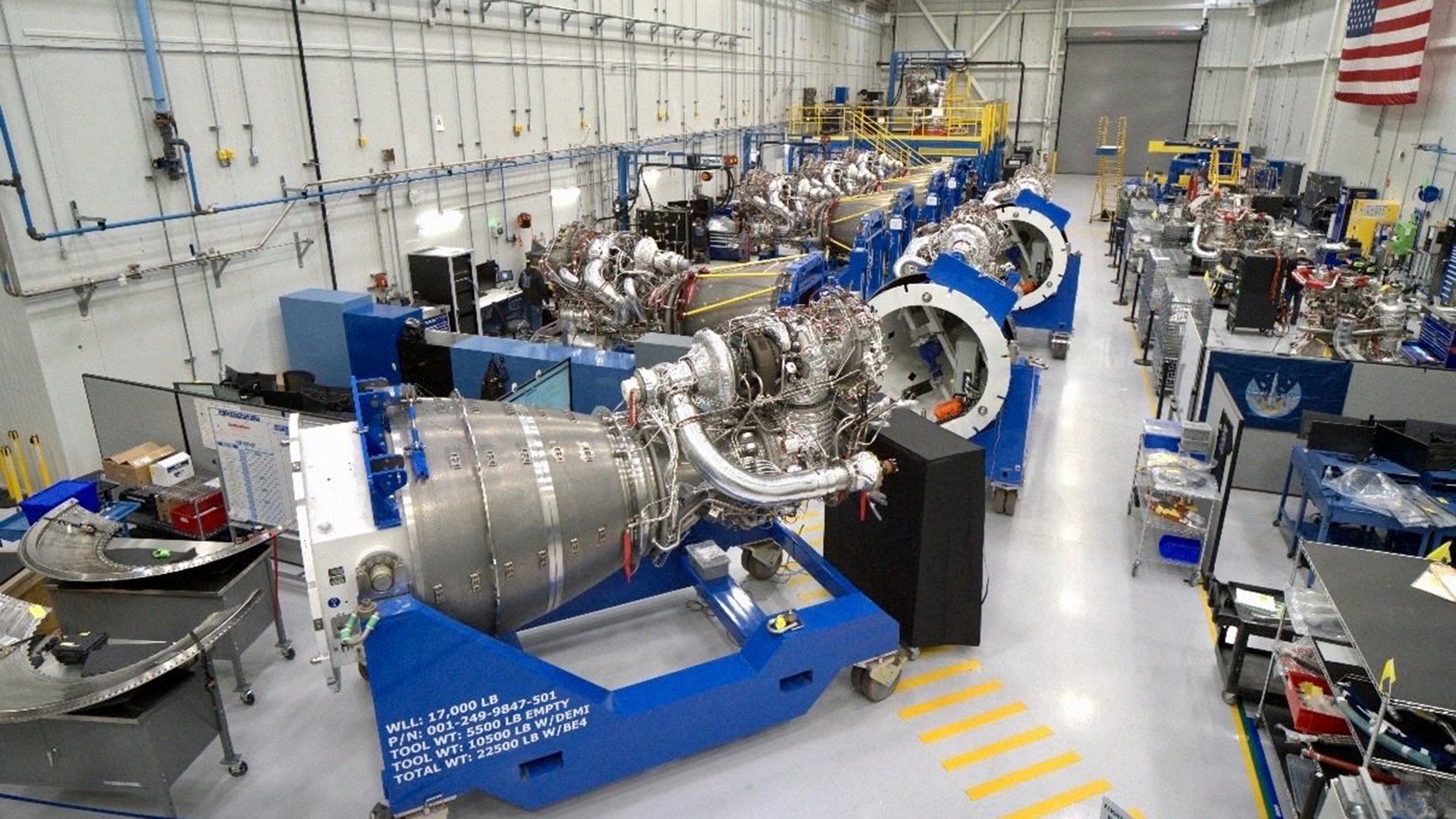
Bezos rocket firm’s FCC filing asserts its space clutter will serve the public interest by removing roadblocks in AI and cloud services provision.
When you purchase through links on our site, we may earn an affiliate commission. Here’s how it works .
Jeff Bezos’ Blue Origin has revealed its plans to launch up to 51,600 satellites to create a data center constellation in space. The filing was posted for the public to view by the FCC on Thursday (via The Register ), with explanations of Blue Origin’s goals and details of how ‘Project Sunrise’ is of benefit to the public interest.
Blue Origin’s application to the FCC starts by sketching out the scale of the proposed constellation. Project Sunrise “will consist of up to 51,600 satellites operating in circular, sun-synchronous orbits from 500–1,800 km in altitude, with inclinations between 97 degrees and 104 degrees, with each orbital plane containing approximately 300–1,000 satellites,” a rather technical description reads.
The constellation satellites will feature at least three antenna variants to address uniform coverage requirements. But, the filing goes on to elaborate that optical links will be used extensively between the satellites to reduce dependence on radio spectrum, with Earthbound traffic routed through the firm's TeraWave system and other mesh backhaul networks to the ground.
You may like SpaceX plans to deploy 1-million-satellite Orbital Data Center system Sam Altman fires back at Elon Musk's proposal for space-based data centers, says orbiting data centers 'ridiculous' for now SpaceX acquires xAI in a bid to make orbiting data centers a reality
Of course, this colossal project and undoubted billions in investment are destined to complement the insatiable demand for Artificial Intelligence data processing on Earth with space-based data centers. Project Sunrise will “make AI computer more accessible,” argues the FCC filing, by ensuring the “societal benefits of AI” aren’t bottlenecked by terrestrial data centers .
It is hard to deny that the efficiencies of always-on solar power and the removal of land use/costs are attractive aspects of this space-based project. But satellite constellations will have their own uniquely significant costs. Clearly, it will not be cheap to make this complex, custom hardware and send it to space. Then it will require servicing and maintenance – for example.
As this is an FCC filing, Blue Origin also appealed to the regulator by insisting that Project Sunrise will “use spectrum efficiently and operate on a non-interference basis.” In case you are curious about the spectrum, the constellation will use the 18.8–19.3 GHz (space-to-Earth) and 28.6–29.1 GHz (Earth-to-space) bands.
Blue Origin also states that “safety is core” to the project. That’s a little reassuring after reading recent reports about satellite proliferation , density-induced near-misses , and terminal anomalies .
Get Tom's Hardware's best news and in-depth reviews, straight to your inbox.
Key considerations
- Investor positioning can change fast
- Volatility remains possible near catalysts
- Macro rates and liquidity can dominate flows
Reference reading
- https://www.tomshardware.com/networking/SPONSORED_LINK_URL
- https://www.tomshardware.com/networking/jeff-bezos-blue-origin-reveals-51-600-satellite-space-data-center-plans-project-sunrise-will-operate-in-sun-synchronous-orbits-between-500-1-800km-in-altitude#main
- https://www.tomshardware.com
- Astro A50 X Review: For your battlestation
- New Fortnite 'Rivalry' includes chance to win RTX 5080 — top five players will be awarded GPU hardware in Chapter 7 Season 2 competition
- Walmart flooded with RTX 40-series GPUs as 50-series remains out of reach for most gamers — retailer slashes up to $480 off last-gen GPUs to offer sensible pric
- 16TB M.2 SSD hits retail if you’re ready to drop $16,000 for the ultimate storage upgrade — price tag explodes 4X in just four months
- As Open Models Spark AI Boom, NVIDIA Jetson Brings It to Life at the Edge
Informational only. No financial advice. Do your own research.