
When you purchase through links on our site, we may earn an affiliate commission. Here’s how it works .
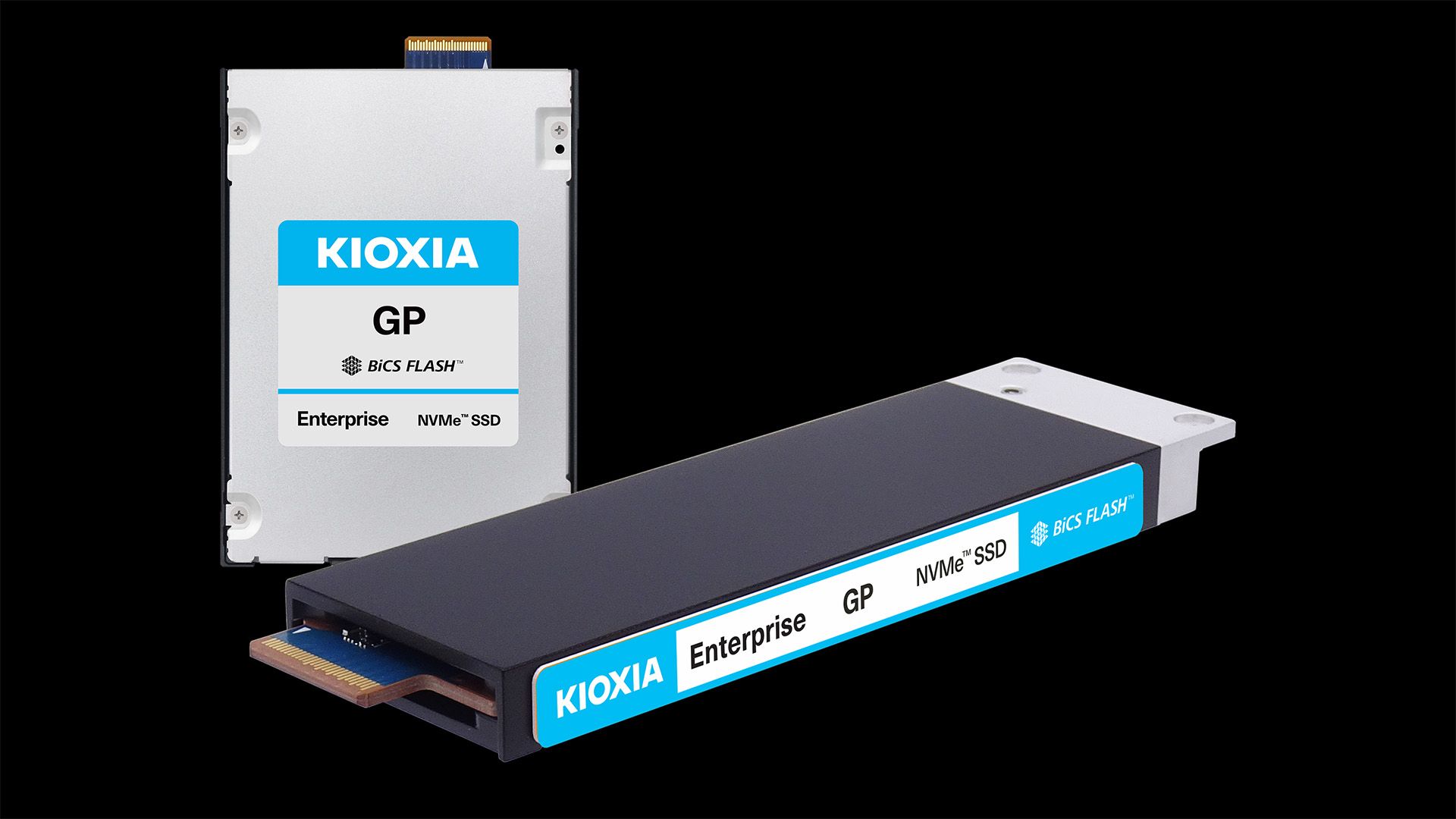
Nvidia and Kioxia have been working on a new SSD design that will keep Nvidia's AI GPUs fed with no downtime during intensive AI workloads. Kioxia has announced the new E3.S CM9 series, which Kioxia classifies as a "Super High IOPS" SSD that offers 25.6TB of capacity and can write to itself three times per day for the entirety of its warranty period. The new drive will be available for customers to evaluate by the end of 2026.
The new drive is part of Kioxia and Nvidia's move to bring incredibly fast storage to AI GPUs. The CM9 series comes with Kioxia's XL-flash, which is designed to achieve over 10 million IOPS, a figure that is around three to four times greater than traditional datacenter SSDs. XL-Flash is made using SLC NAND flash (the fastest flash type available) that boasts a read latency range of just 3 to 5 microseconds. By comparison, traditional SSDs normally have a peak at 3 to 4 million IOPS and have read latencies in the 40 to 100-microsecond range.
These new drives are part of Nvidia's Storage-Next design that sees servers utilize these drives in conjunction with a direct link to the GPU itself, bypassing additional latency penalties that would occur when transferring data from the CPU. This technology is designed to offset the limitations of existing HBM memory, giving Nvidia's AI GPUs a secondary cache layer to store data and keep the GPU cores operating at 100% without any downtime. This addresses the growing problem of growing AI models that are scaling towards trillions of parameters and context windows that consist of millions of tokens.
You may like First PCIe 6.0 SSD enters mass production with 28GB/s speeds, 5.5 million IOPS, and liquid cooling SK hynix and SanDisk announce speedy HBF flash chip standard Phison demos 10X faster AI inference on consumer PCs with software and hardware combo that enables 3x larger AI models We first saw this technology with the BlueField-4 STX storage architecture at GTC 2026. BlueField-4 uses a storage-optimized BlueField-4 DPU and ConnectX-9 SuperNIC that Nvidia claims delivers up to five times the token throughput, four times better energy efficiency, and twice the page ingestion speed compared to traditional CPU-based storage architectures.
Follow Tom's Hardware on Google News , or add us as a preferred source , to get our latest news, analysis, & reviews in your feeds.
Get Tom's Hardware's best news and in-depth reviews, straight to your inbox.
Key considerations
- Investor positioning can change fast
- Volatility remains possible near catalysts
- Macro rates and liquidity can dominate flows
Reference reading
- https://www.tomshardware.com/pc-components/ssds/SPONSORED_LINK_URL
- https://www.tomshardware.com/pc-components/ssds/kioxia-announces-new-super-high-iops-ssd-that-helps-accelerate-ai-workloads-on-nvidia-gpus-25-6tb-drive-provides-more-gpu-accessible-memory-for-faster-data-access#main
- https://www.tomshardware.com
- New NVIDIA Nemotron 3 Super Delivers 5x Higher Throughput for Agentic AI
- End of an era for decades-old PlayStation 3, Xbox 360, and Nintendo Wii U as GameStop officially declares them retro — change means faulty or 'aesthetically unf
- AMD claims it had no knowledge of fake Ryzen 5 7430U CPUs in Chuwi laptops — Chinese vendor announces recall of products and refunds, PCB manufacturer could be
- Micron enters high-volume production of HBM4 for Nvidia Vera Rubin – 2.3x bandwidth improvement and 20% boost in power efficiency
- Testing CPU scaling in Crimson Desert — X3D wins, but not by much, and Raptor Lake shines
Informational only. No financial advice. Do your own research.