
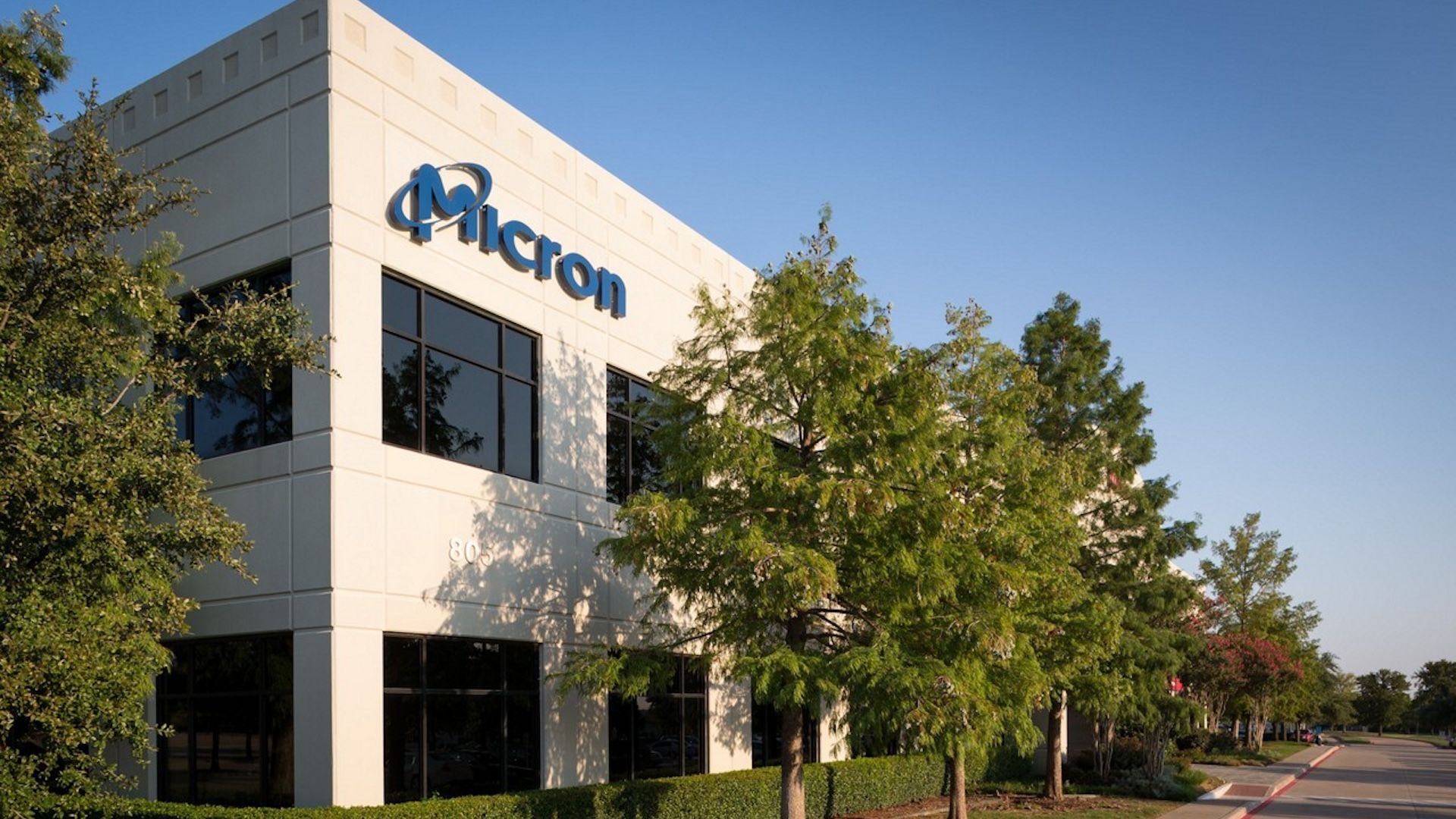
The transaction is expected to close by Q2 2026, pending receipt of all necessary approvals. After closing, Micron will gradually equip and ramp the site for DRAM production, with meaningful wafer output starting in the second half of 2027.
The agreement also establishes a long-term strategic partnership under which PSMC will support Micron with assembly services, while Micron will assist PSMC's legacy DRAM portfolio.
While the P5 site in Tongluo isn't producing memory in high volumes today, the change of ownership and inevitable upgrade of the fab itself will have an impact on global DRAM supply, which is good news for a segment that is experiencing unprecedented demand. While it is important that Micron is set to buy a production facility in Taiwan, it is even more important that the transaction marks an end to its technology-for-capacity approach to making memory on the island. In the past, instead of building large amounts of new greenfield fabs in Taiwan, Micron partnered with local foundries (most notably PSMC, but also with Inotera and Nanya) and provided advanced DRAM process technology in exchange for wafer capacity, manufacturing services, or fab access.
This approach allowed Micron to expand output faster and with less capital risk, leveraged Taiwan's mature 300mm manufacturing ecosystem, and avoided duplicating the front-end infrastructure, which was already in place.
However, it looks like the traditional technology-for-capacity model — which worked well in the 90nm – 20nm-class node era — no longer works. It worked well when DRAM fabs cost a few billion dollars, when process ramps were straightforward, and when partners could justify their capital risks in exchange for technologies (which cost billions in R&D investments) and stable wafer demand.
Today’s advanced DRAM fabs require $15 – $25 billion or more of upfront investment. This would go into equipment like pricey EUV scanners , as well as longer and riskier yield ramps. In that environment, a partner running someone else's IP absorbs massive CapEx and execution risk while getting limited advantages, which makes the economics increasingly unattractive: after all, if you can invest over $20 billion in a fab, you can certainly invest $2 billion in R&D.
In recent years, Micron's behavior has reflected this shift in thinking. Early technology-for-capacity deals helped it scale quickly, but once fabs crossed a certain cost and complexity threshold, Micron had to move on and own fabs instead of renting capacity. This is reflected in moves like its Elpida acquisition in 2013, where the company purchased a bankrupt memory maker to secure the company's capacity. This was followed up in 2016 with the Inotera acquisition, and now with PSMC.
What remains of the model is essentially pushed to legacy nodes, which are almost all fully depreciated, or to specialty DRAM, which does not require leading-edge process nodes. Other remnants of the model may be found in additional backend services, where capital intensity and strategic risks are also lower.
For leading-edge DRAM, ownership and control now outweigh the benefits of partnership, which marks the end of an era as modern fabs are now too expensive, too strategic, and too tightly integrated with product roadmaps. The acquisition of the P5 site was preceded by perhaps the last technology for a capacity partnership for Micron in Taiwan. Now, the American company will own the site and invest in its transition to its latest process technologies.
Anton Shilov is a contributing writer at Tom\u2019s Hardware. Over the past couple of decades, he has covered everything from CPUs and GPUs to supercomputers and from modern process technologies and latest fab tools to high-tech industry trends. ","collapsible":{"enabled":true,"maxHeight":250,"readMoreText":"Read more","readLessText":"Read less"}}), "https://slice.vanilla.futurecdn.net/13-4-11/js/authorBio.js"); } else { console.error('%c FTE ','background: #9306F9; color: #ffffff','no lazy slice hydration function available'); } Anton Shilov Social Links Navigation Contributing Writer Anton Shilov is a contributing writer at Tom’s Hardware. Over the past couple of decades, he has covered everything from CPUs and GPUs to supercomputers and from modern process technologies and latest fab tools to high-tech industry trends.
Key considerations
- Investor positioning can change fast
- Volatility remains possible near catalysts
- Macro rates and liquidity can dominate flows
Reference reading
- https://www.tomshardware.com/pc-components/dram/SPONSORED_LINK_URL
- https://www.tomshardware.com/pc-components/dram/micron-acquires-psmc-fab-site-in-taiwan-for-usd1-8-billion-acquisition-to-expand-the-memory-makers-operations-within-the-region-move-marks-the-end-of-the-technology-for-capacity-era#main
- https://www.tomshardware.com
- Jensen Huang says Nvidia has dethroned Apple as TSMC’s largest customer — rumor suggests that the chip fab is increasing its prices for Cupertino
- Alien fan builds a better Raspberry Pi cyberdeck — The MU/TH/UR of all homages to a classic movie series
- OpenAI shows clear compute and revenue scaling to soothe investor worries as company preps for IPO — expenditure continues to outweigh income as 10GW buildout c
- Nvidia CEO expects AI to create more jobs for construction workers, electricians, plumbers, and many others
- Steam client allegedly continues sharing your status with your friends even if you set it ‘Offline,’ report claims — setting is a ‘UI illusion’ and your friends
Informational only. No financial advice. Do your own research.