
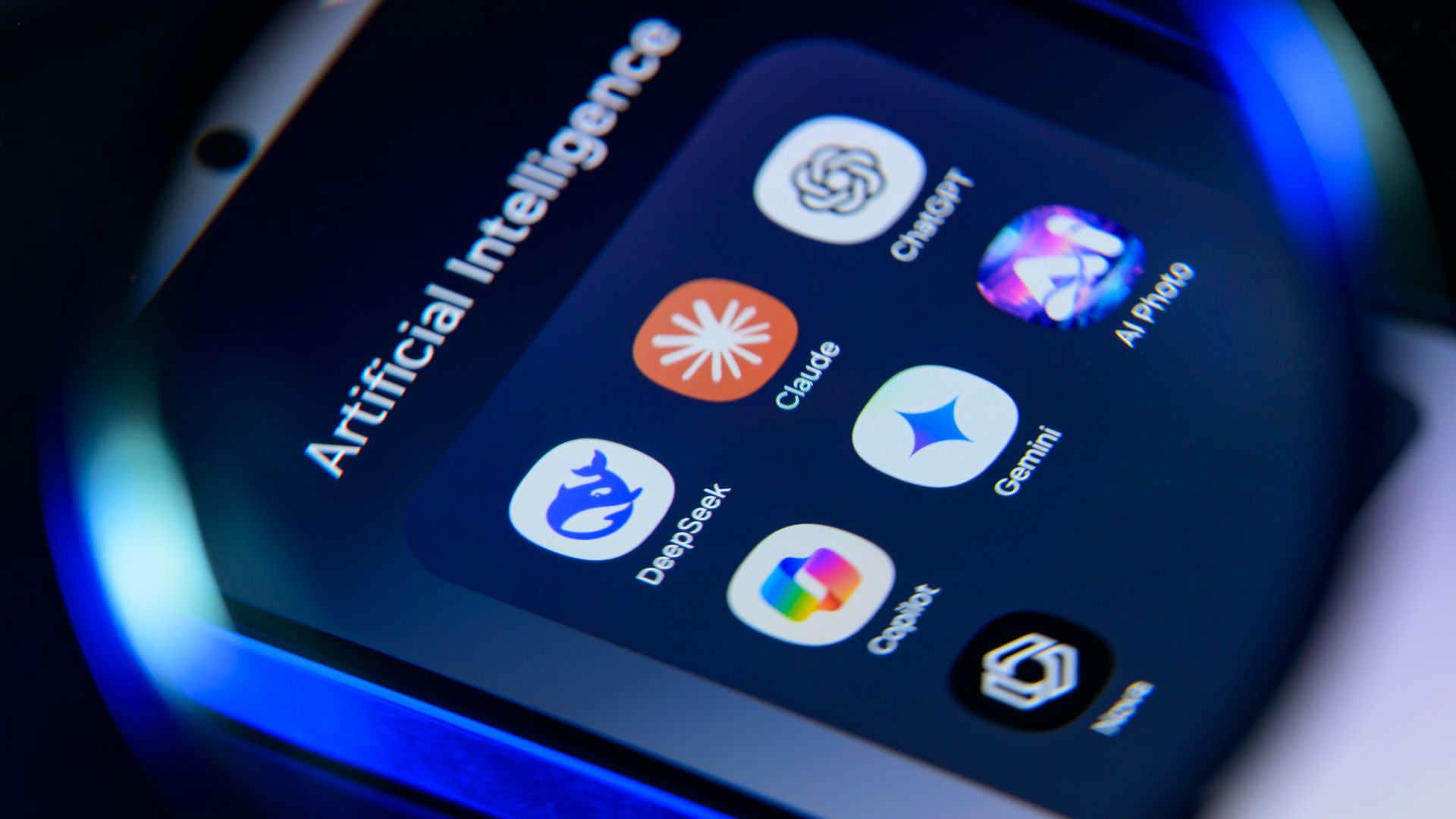
That's how it works in theory, but as the Harvard Business Review highlights , they rarely achieve the end goal in practice. Especially when it comes to customer-facing roles, AI agents just aren't ready to replace real-world workers as they can't be trusted to complete their tasks effectively enough, or at all. Hallucinations are still a real problem, and the public has little tolerance for abject failure in basic tasks or wild shifts in tone.
That doesn't mean there's no potential there, though. It's the basket the main AI companies are putting their eggs in at the moment, anyhow, hence this new initiative to pool their efforts to create something more effective, and maintain standards that they have a greater say in developing.
The group's first goal will be to develop three existing open-source tools, according to people familiar with the matter. These include: a model context protocol developed by Anthropic called MCP, to standardize how AI agents connect to other applications; an OpenAI format for giving instructions to coding agents, known as Agents.md, and an open source AI agent invented by Block that can run locally on a single computer without networking, called Goose.
MCP is already in use at OpenAI, Microsoft, Google, and Cursor, so it's no surprise that it was chosen as one of the group's main goals. As it stands, it can connect ChatGPT to a company's Slack, for example, which would allow a manager to quickly summarize conversations. But IT managers speaking to The Information claim there are serious security concerns , especially when it comes to prompt injection attacks, so MCP needs continued development, and the developers need to agree on the best way to patch discovered security holes quickly and effectively.
This foundation also has the potential to cement its participants as the premier AI companies. Although it's not just the big tech firms that have joined this foundation, and it is being organized by a long-standing organization with a strong reputation for keeping software development as its main focus, the potential is there for exploitation and, arguably, stagnation .
The largest companies are likely to have the largest input on the direction of these open standards, which could allow them to shape the future of Agentic AI in a way that benefits them. With enormous investment capabilities, larger companies are capable of pivoting toward new efforts at the drop of a hat. If any breakthroughs are made in Agentic AI that require heavy investment or access to hardware and software to take advantage, those larger companies will be in a prime position to reap the rewards.
Indeed, the very financing of the entire AI industry has been rife with major companies pumping each other's stock prices with promises of future revenue and long-tail investment pledges that won't be realized for years. The major companies all collaborating to advance the industry have some strengths, but it could also be taken as a further example of the major firms propping each other up for the foreseeable future.
At their core, the major AI tech firms have the same problem: They aren't making any money from any of this, yet. AI costs far more to run than it generates for the companies developing it, and there's no sign of that stopping any time soon.
This foundation could be a way for them to collectively try to solve this issue. Someone needs to make a killer AI app or a way for agentic AI to fix real problems, or rapidly enhance productivity, so that these massive companies can make good on their equally large investments.
Shareholders and early investors are going to come calling for the promised profits over the coming years. Accelerating the development of their tools and standards through this foundation could be one way for these major firms to also accelerate their path toward profitability.
Jon Martindale Freelance Writer Jon Martindale is a contributing writer for Tom's Hardware. For the past 20 years, he's been writing about PC components, emerging technologies, and the latest software advances. His deep and broad journalistic experience gives him unique insights into the most exciting technology trends of today and tomorrow.
Key considerations
- Investor positioning can change fast
- Volatility remains possible near catalysts
- Macro rates and liquidity can dominate flows
Reference reading
- https://www.tomshardware.com/tech-industry/artificial-intelligence/SPONSORED_LINK_URL
- https://www.tomshardware.com/tech-industry/artificial-intelligence/microsoft-google-openai-and-anthropic-join-forces-to-form-agentic-ai-alliance-according-to-report-organization-backed-by-the-linux-foundation-is-set-to-create-open-source-standards-for-ai-agents#main
- https://www.tomshardware.com
- AMD FirePro S10000 dual-GPU card from 2012 runs Arc Raiders at playable frame rates — but half of its GPU power goes unused in the process
- Cambricon targets 500,000 AI chips in 2026 as China accelerates domestic hardware push — low yields and limited HBM supply could threaten chip ambitions
- Rivian unveils its own in-house RAP1 AI chip and ACM3 self-driving platform—automaker one-ups Tesla with LiDAR support
- Supersonic airline outfit Boom unveils turbine for AI data centers — 42 MW Superpower turbine uses the same tech designed to power Concorde successor to Mach 1.
- China starts list of government-approved AI hardware suppliers: Cambricon and Huawei are in, Nvidia is not
Informational only. No financial advice. Do your own research.