
Across quantum physics, digital biology and climate research, the world’s researchers are harnessing a universal scientific instrument to chart new frontiers of discovery: accelerated computing.
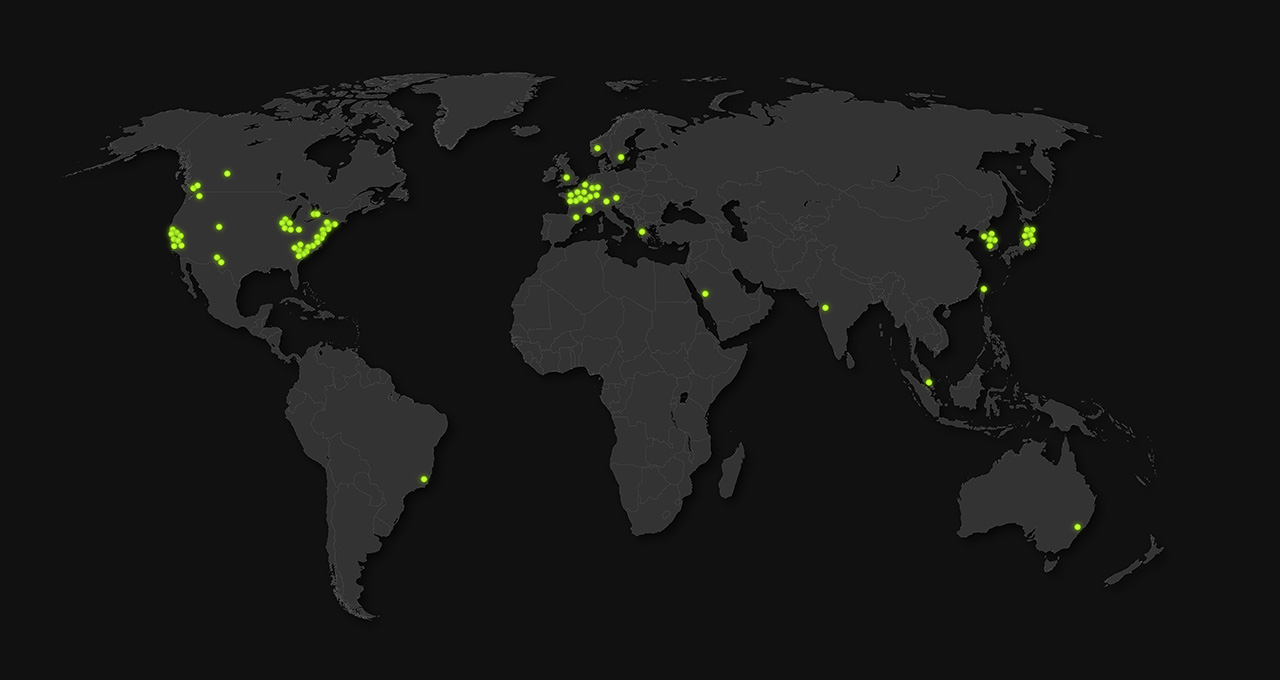
At this week’s SC25 conference in St. Louis, Missouri, NVIDIA announced that over 80 new scientific systems powered by the NVIDIA accelerated computing platform have been unveiled around the globe in the last year, contributing to a combined total of 4,500 exaflops of AI performance.
Newest among them is America’s largest academic supercomputer: the 300-petaflop Horizon system at the Texas Advanced Computing Center (TACC).
Slated to be powered by NVIDIA GB200 NVL4 and NVIDIA Vera CPU servers, interconnected with NVIDIA Quantum-X800 InfiniBand networking, Horizon is set to accelerate breakthroughs in science and engineering when it comes online in 2026, offering the nation’s research community unprecedented computing capabilities for discovery and innovation.
It’s the latest in a new wave of NVIDIA-accelerated supercomputers fueling global research by nations and private companies in areas such as healthcare, weather and climate modeling, robotics, manufacturing, quantum computing research and materials science.
NVIDIA’s full-stack accelerated computing platform — spanning GPUs, CPUs, DPUs, NICs, scale-out switches, as well as CUDA-X libraries and NVIDIA AI Enterprise software — provides the unified architecture, scale and efficiency these systems need to advance science sustainably and at unprecedented speed.
With 4,000 NVIDIA Blackwell GPUs, the Horizon supercomputer can deliver up to 80 exaflops of AI compute at FP4 precision. It was designed to support a specific set of scientific modeling and simulation applications, including:
Simulating the mechanics of disease: Researchers plan to use molecular dynamics software and AI-enhanced simulations to study viruses.
Modeling stars and galaxies across the universe: Astrophysicists plan to explore how stars and galaxies form — and simulate distant galaxies uncovered by recent discoveries from the James Webb Space Telescope.
Investigating novel materials at atomic scale: Scientists plan to study turbulence, solids with complex crystal structures and the conductivity of quantum materials.
Mapping seismic waves to prepare for earthquakes: Researchers plan to improve seismic hazard maps and simulate how faults rupture during earthquakes.
“Horizon will enable our scientists to pursue ambitious scientific research at unprecedented scale,” said John Cazes, director of high-performance computing at TACC. “This new system will transform how the research community can pursue AI-driven initiatives to decipher the molecular dynamics of viral infections, explore data from distant galaxies and simulate seismic activity decades into the future.”
The U.S. Department of Energy (DOE) recently announced a partnership with NVIDIA to build seven new AI supercomputers at Argonne National Laboratory (ANL) in Illinois and Los Alamos National Laboratory (LANL) in New Mexico.
At ANL, two AI supercomputing systems featuring NVIDIA Blackwell GPUs and NVIDIA networking will connect with the DOE’s network of scientific instruments and data assets, enabling researchers to develop powerful AI models for science and energy applications.
The largest system in the lab complex, Solstice, will feature 100,000 NVIDIA Blackwell GPUs. A system of that scale featuring NVIDIA GB200 NVL72 systems can reach a staggering 1,000 exaflops of AI training compute for training. That’s over 50% higher than the sum of AI training compute across the entire TOP500 list from June 2025, at around 650 exaflops.
Another ANL system, called Equinox, will be powered by 10,000 NVIDIA Blackwell GPUs. Three more NVIDIA-accelerated systems at the lab — Minerva, Janus and Tara — will support AI inference and workforce development.
At LANL, the Mission and Vision systems — to be built and delivered by HPE — will be powered by the NVIDIA Vera Rubin platform and the NVIDIA Quantum-X800 InfiniBand networking platform. Mission will run classified applications for the National Nuclear Security Administration, while Vision will power open science research, including foundation models and agentic AI.
Both are expected to be operational in 2027.
Key considerations
- Investor positioning can change fast
- Volatility remains possible near catalysts
- Macro rates and liquidity can dominate flows
Reference reading
- https://blogs.nvidia.com/blog/sc25-new-science-systems-worldwide/#content
- https://www.nvidia.com/en-us/
- https://blogs.nvidia.com/?s=
- Nvidia GeForce RTX 5050 vs Intel Arc B580 Face Off: $249 graphics cards duke it out for budget gaming supremacy
- Microsoft, NVIDIA and Anthropic Announce Strategic Partnerships
- Congressional report details China's new deep-sea cable cutter that can sever armored cables in 13,000 feet of water — report warns of rising Chinese undersea c
- The U.S. patent for MP3 audio was granted on this day in 1996 — laid the foundations for peer-to-peer music sharing, iTunes, and today's streaming services
- Google TPUs garner attention as AI chip alternative, but are only a minor threat to Nvidia's dominance — Alphabet's biggest challenge is widespread adoption
Informational only. No financial advice. Do your own research.