
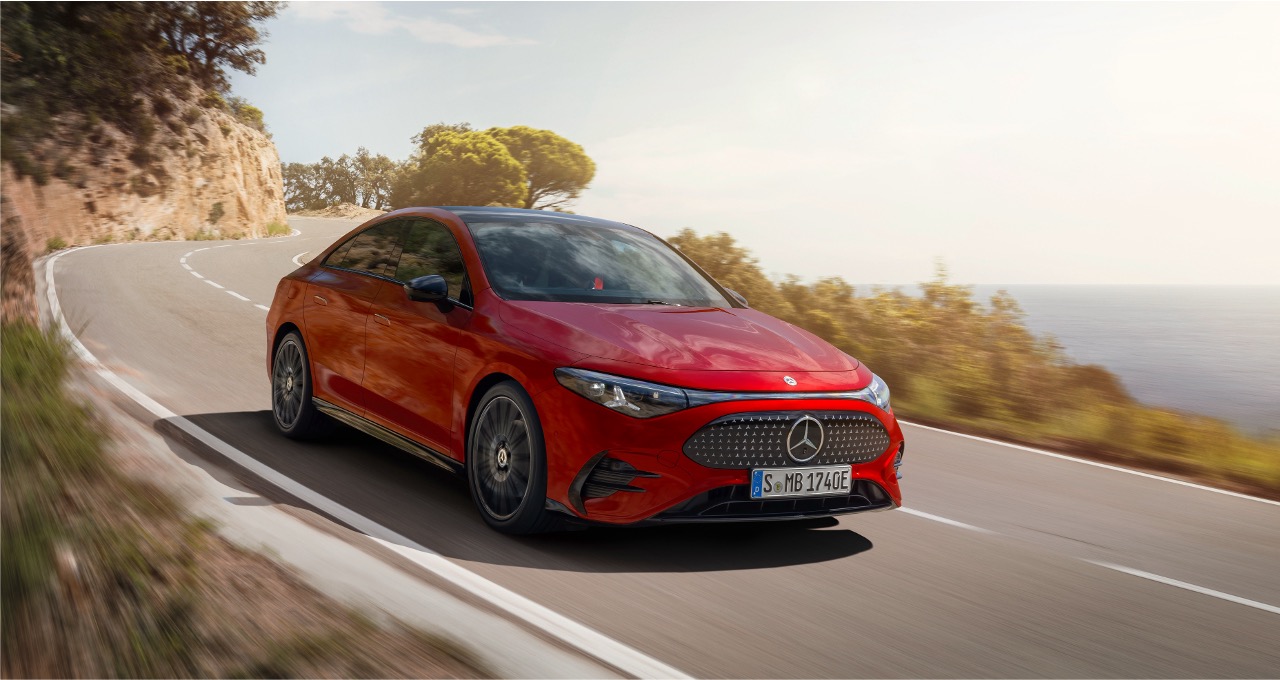
AI-powered driver assistance technologies are becoming standard equipment, fundamentally changing how vehicle safety is assessed and validated.
The recent recognition of the Mercedes-Benz CLA as Euro NCAP’s Best Performer of 2025 underscores this shift, as the vehicle combines traditional passive safety features with NVIDIA DRIVE AV software to achieve the highest overall safety score of the year.
“When Euro NCAP assesses vehicle safety, it evaluates both passive and active systems — achieving a perfect score requires a state-of-the-art advanced driver assistance system,” said Ola Källenius, CEO of the Mercedes-Benz Group. “This milestone represents the culmination of five years of collaboration between Mercedes-Benz and NVIDIA to enhance real-world safety and deliver tangible value to customers.”
Euro NCAP (European New Car Assessment Programme) has for nearly 30 years served as Europe’s independent vehicle safety authority, backed by European governments, motoring organizations and consumer groups.
Euro NCAP evaluates vehicles across four categories that reflect real-world safety. For AI-powered driver assistance, the most relevant are the “Vulnerable Road User” and “Safety Assist” categories, which assess technologies designed to help prevent crashes — including automatic emergency braking, lane-keeping support and speed assistance.
Only vehicles achieving five-star ratings with standard equipment qualify for “Best in Class” recognition, with winners determined by weighted scores across all categories. In 2025, Euro NCAP tested a record 49 models.
Safety ratings like Euro NCAP are increasingly recognizing vehicles that combine strong passive protection with advanced active safety performance. As AI becomes central to driving, the benchmark for the “safest” car will increasingly be defined not only by how well a vehicle handles a crash, but how effectively it helps prevent one.
The Mercedes-Benz CLA is built with NVIDIA DRIVE AV, a dual-stack architecture that’s designed to help automakers deliver systems that aren’t only intelligent, but predictable, verifiable and resilient in the real world. The architecture pairs an AI-driven end-to-end driving system with a parallel classical safety stack to provide redundancy across AV sensing, planning and execution.
The CLA is also built on the NVIDIA DRIVE Hyperion architecture, which incorporates sensor diversity and hardware redundancy into the vehicle’s overall design.
At the heart of this approach is NVIDIA Halos — a comprehensive safety system spanning hardware, software, tools, development processes and certification support. Halos delivers a structured safety foundation for developing automated driving and other AI capabilities while staying anchored to robust guardrails, redundancy and fault tolerance.
Third-party certification and assessments are also important to build trust:
Key considerations
- Investor positioning can change fast
- Volatility remains possible near catalysts
- Macro rates and liquidity can dominate flows
Reference reading
- https://blogs.nvidia.com/blog/drive-av-mercedes-benz-cla-euro-ncap-safety-award/#content
- https://www.nvidia.com/en-us/
- https://blogs.nvidia.com/?s=
- NVIDIA RTX Accelerates 4K AI Video Generation on PC With LTX-2 and ComfyUI Upgrades
- Chinese semiconductor industry gears up for domestic HBM3 production by the end of 2026 — CXMT to produce chips, while Naura, Maxwell, and U-Preseason design to
- This absurdly fast five-star 540Hz ROG Swift OLED gaming monitor is now available for pre-order — 27-inch QHD panel packs eye-searing 1500 nits of peak brightne
- Steam client allegedly continues sharing your status with your friends even if you set it ‘Offline,’ report claims — setting is a ‘UI illusion’ and your friends
- AMD's next gaming champ to debut at $499, and you can already buy it ahead of launch — Ryzen 7 9850X3D is $30 more expensive than the Ryzen 7 9800X3D
Informational only. No financial advice. Do your own research.