
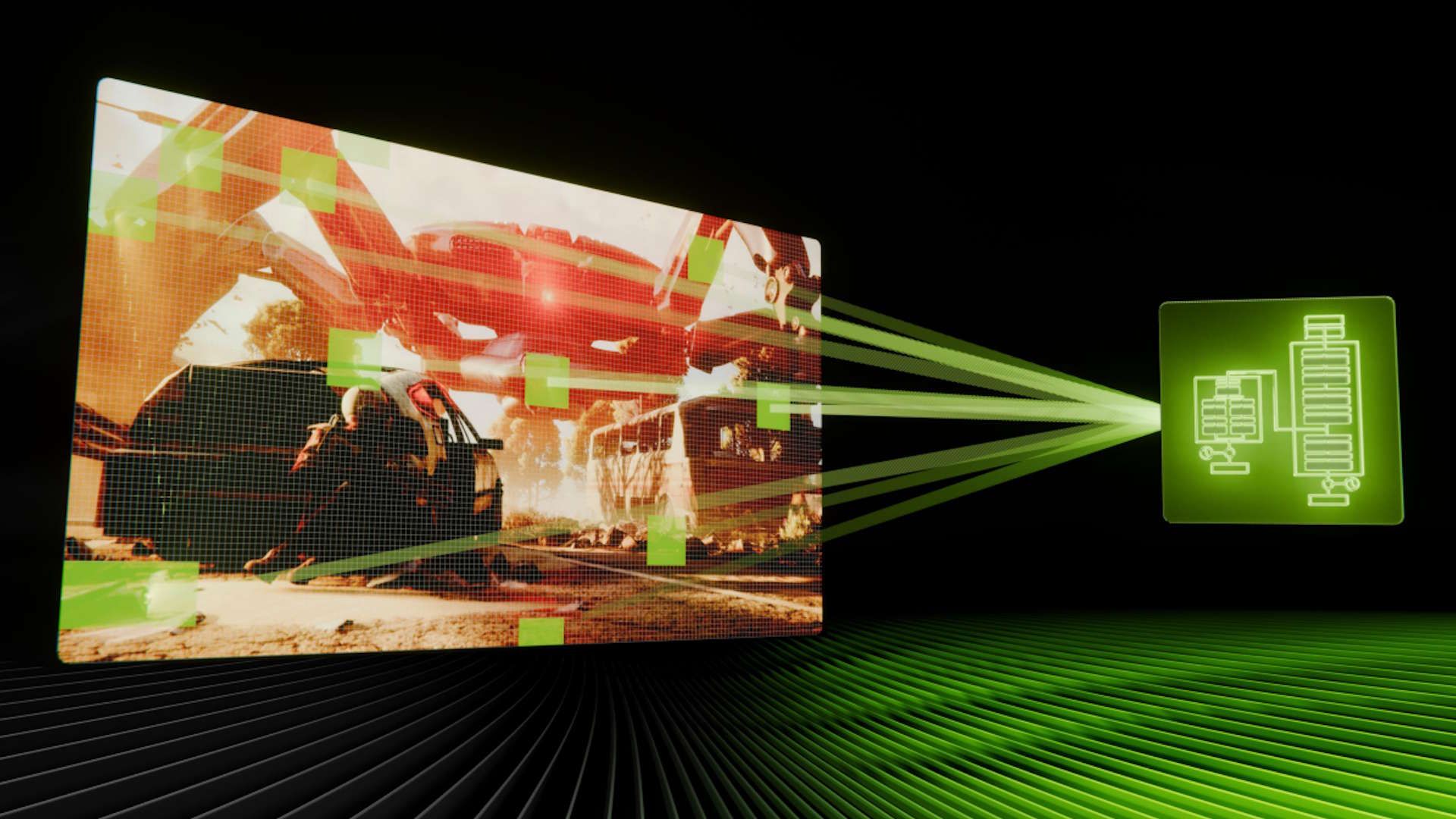
The company says that RTX 20- and 30-series cards will still be able to run the new model despite their lack of Tensor Core FP8 acceleration, but it doesn't make any guarantees about performance on that older hardware.
DLSS 4 and its transformer architecture already incurred a small but measurable performance loss on Turing and Ampere, so it's likely we'll see a larger dip with the new model on those cards. We'll need to do some testing and see whether the image quality refinements this model offers are worth the performance tradeoff on older hardware.
CES 2026 Day 0: Nvidia debuts DLSS 4.5, Ryzen 7 9850X3D aims for desktop gaming glory, Intel Panther Lake arrives
AMD ditches 'FidelityFX' in favor of apparently-meaningless 'FSR' branding, Fluid Motion Frames also renamed to FMF
As with past DLSS Super Resolution updates, gamers will be able to pick and choose among model versions using the Nvidia App on Windows to pick the one that offers the best balance of performance and image quality for a given application. DLSS 4.5 should be available right away as an Nvidia App override, so check for updates and see whether new models become available in those override options (you'll see choices for models L and M in the selection dropdown.)
DLSS Multi-Frame Generation is also getting a couple of major improvements this year, although they're coming later than the updated Super Resolution model.
First off, DLSS MFG will now have multipliers ranging up to a whopping 6x, versus the current model's 4x. In part, Nvidia says this is possible thanks to the improved image quality provided by the DLSS 4.5 super resolution model, as well as the smooth frame pacing measures it's built into its hardware and software stack. Giving the MFG model better input data should in theory result in better image quality across generated frames, although we'll have to see how well stretching a single native frame out into 4 or 5 generated frames works in practice.
It's also worth remembering, as we've long cautioned and proven through dedicated testing, that DLSS MFG isn't a way of making unplayable frame rates into playable ones. If you're trying to boost average frame rates of just 30 FPS or below with MFG, your experience will still feel as laggy and unresponsive as it's likely to at 30 FPS.
Instead, MFG 5x and 6x will likely work best as tools for making the most of the ultra-high-refresh-rate monitors coming out this year and into the future. Frame rate isn't a perfect proxy for input lag, but if you have a solid 90 FPS to work with, MFG 5x and 6x could make it practical to use 360Hz or 480Hz+ monitors in tandem with DLSS Performance or Ultra Performance without crushing graphical fidelity in exchange.
Nvidia is also introducing a new dynamic mode for MFG that will automatically adjust the frame gen multiplier to maintain a target frame rate that's set in the Nvidia App. As long as the mode switch doesn't cause stutter or other perceptible issues in exchange for maintaining that target frame rate, a dynamic MFG could be a handy feature, but we'll need to try it out to see how quickly and smoothly it can handle the transitions between multipliers.
DLSS MFG with dynamic mode and extended multipliers will arrive in spring 2026, and as with the original MFG, it'll be an RTX 50-series exclusive.
For all that, some elements of DLSS 4 remain in the oven even a year after this family of features was first announced. Nvidia says that its Reflex 2 lag reduction technology with Frame Warp reprojection, which could further improve perceived responsiveness, remains targeted for a future release.
Follow Tom's Hardware on Google News , or add us as a preferred source , to get our latest news, analysis, & reviews in your feeds.
Jeffrey Kampman Senior Analyst, Graphics As the Senior Analyst, Graphics at Tom's Hardware, Jeff Kampman covers everything to do with GPUs, gaming performance, and more. From integrated graphics processors to discrete graphics cards to the hyperscale installations powering our AI future, if it's got a GPU in it, Jeff is on it.
thestryker Dynamic MFG is definitely the most interesting thing they've announced and I hope AMD and Intel follow suit. Assuming it doesn't come with stutter/frame time issues this seems like the best way to use frame generation. Reply
Notton Frame Gen Ghost trails were the most noticeable visual artifacts in the games I was playing with FG turned on, so I'm glad they are trying to fix it. Reply
ohio_buckeye While some in the community might say that nvidia not releasing new cards is disappointing especially after rumors of the 50 super series, we are likely starting to get to a point of diminishing returns on gpus. If anyone is old enough to remember back to the Pentium 3 and 4 days, it was like every couple of years you had an almost revolutionary new cpu come out. Over the past number of years yes they’ve made progress but probably not the huge speed jumps we used to see. Graphics cards might be the same situation now that there will be advancements but that a lot of the performance benefit may be felt with improved frame generation and upscaling to try to get the most out of hardware on the market. Good for nvidia to try to keep improving the software side. As someone who owns a 9070xt, it seems AMD has made some progress as well, so hopefully they keep up their improvements as well. Reply
TheyStoppedit More fake frames. Lovely. Give it 2 years and we will have MFG x15. It won't be long until we see 1 real frame per minute and every other frame will be fake. And GPU performance uplifts? Lol. Forget it. All R&D from here on in goes into enterprise. Reply
bill001g All they need to do is put a massive FPS counter in the center of the screen. There are still huge number of people that only care about seeing a bigger number. For some reason they don't see all the ghosting and artifacts caused by frame gen, maybe because they stare at the FPS counter. The need for frame generation is fundamentally a game developer issue. There are games that run and look very well without using frame gen except on lower end GPU. Many game companies will put even less effort into fixing this if they think there is some magic frame generation to save them. Reply
Key considerations
- Investor positioning can change fast
- Volatility remains possible near catalysts
- Macro rates and liquidity can dominate flows
Reference reading
- https://www.tomshardware.com/pc-components/cpus/SPONSORED_LINK_URL
- https://www.tomshardware.com/pc-components/cpus/nvidia-introduces-dlss-4-5-and-multi-frame-generation-6x-at-ces-2026-updated-models-can-generate-higher-quality-upscaled-frames-and-more-of-them-dynamically#main
- https://www.tomshardware.com
- HP puts HyperX name on Omen gaming laptops — new systems get Intel and AMD's latest processors
- Thermaltake goes retro at CES 2026, shows off liquid cooler with CRT-themed display and 80s-style PC cases
- Gigabyte's Aorus RTX 5090 Infinity takes aim at Asus' ROG Matrix — superconducting heatpipes, 'Windforce Hyperburst' cooling brings 'penetrating airflow' to bot
- NVIDIA, US Government to Boost AI Infrastructure and R&D Investments Through Landmark Genesis Mission
- Keychron launches wireless Q Ultra keyboard series with up to 660 hours of battery life with 8K polling — plus a keyboard made of marble
Informational only. No financial advice. Do your own research.