
When you purchase through links on our site, we may earn an affiliate commission. Here’s how it works .
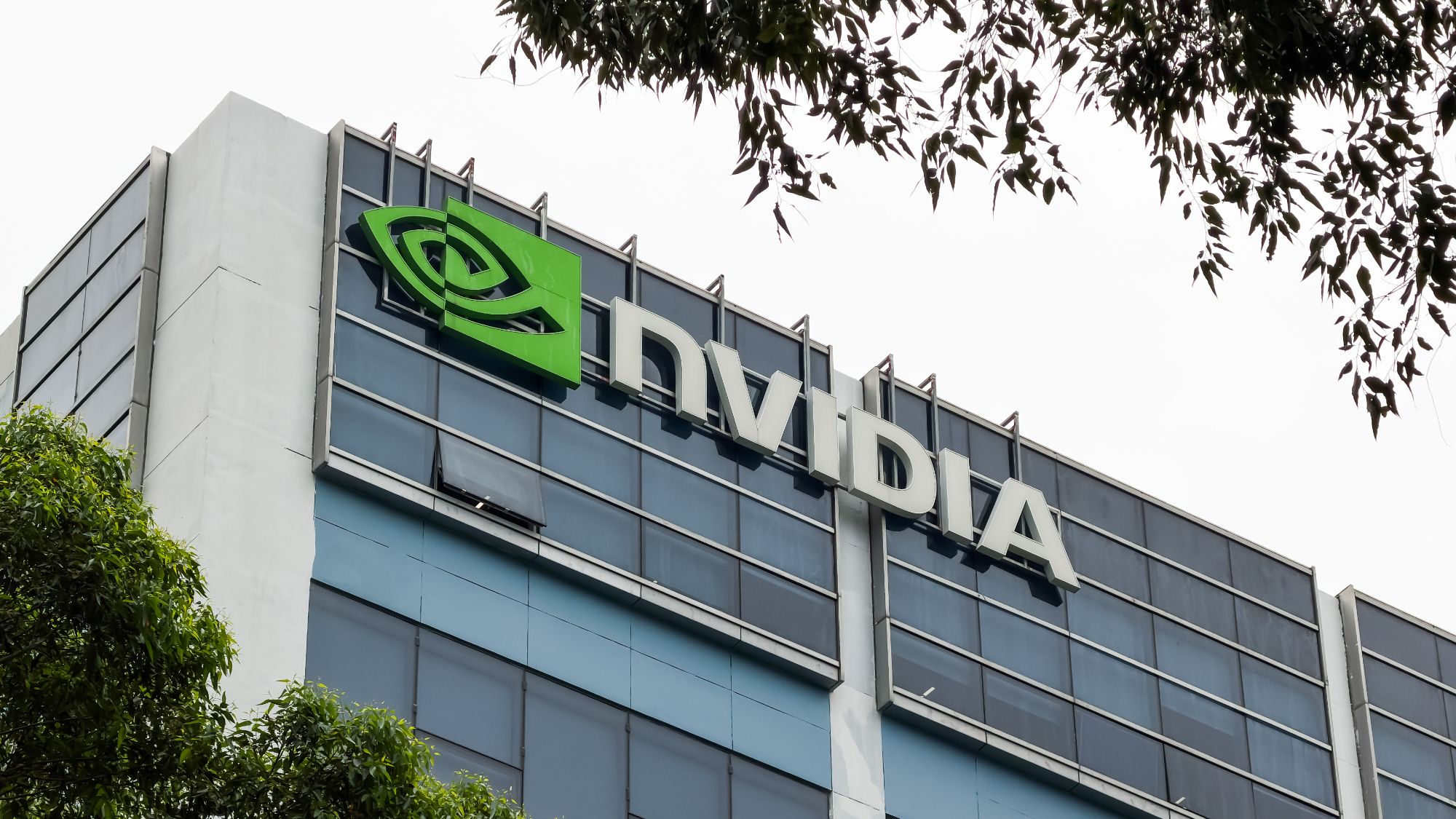
Chinese semiconductor firms have taken a big chunk of the domestic market, claiming 41% of the local AI server market and delivering 1.65 million AI GPUs out of a total of 4 million units in 2025. IDC numbers reported by Reuters claim that Nvidia still leads with a 55% market share, shipping an estimated 2.2 million cards, but this is a major contraction compared to the company’s claimed 95% market share before sanctions.
Huawei is reported to be the big winner among the Chinese chipmakers, shipping around 812,000 AI chips or nearly 20% of the market. The Shenzhen-based firm is continuing development of AI processors, with the company launching its Atlas 350 AI accelerator last week, which is claimed to have nearly three times the performance of Nvidia H20 chips . T-Head, which is owned by Alibaba, the e-commerce platform widely known as China’s Amazon , holds a distant third place with 256,000 units sold.
AMD sits just outside of the top three chipmakers in China, shipping 160,000 units for a 4% share of the domestic AI chip market. Baidu’s Kunlunxin AI chip subsidiary and Chinese AI chip maker Cambricon round out the top five, with each company delivering 116,000 cards.
You may like Nvidia China market share to drastically decrease from 66% to 8%, analysts claim China’s GPU cloud consolidates around Baidu and Huawei as domestic AI chips scale up Chinese companies reportedly considering sourcing H200 chips from the black market as chips held at the border Even though the U.S. banned Nvidia and AMD from selling their most advanced chips to China in 2023, many Chinese tech firms still favored nerfed versions of their latest AI GPUs, like the Nvidia H20 and AMD MI308. However, U.S. President Donald Trump completely banned all AI GPU exports in April 2025, forcing Chinese companies to rely on domestic chip makers.
Trump reversed the ban on the H20 and MI308 in July 2025, but Chinese companies were told to stop ordering Nvidia’s chips after U.S. Commerce Secretary Howard Lutnick’s “addition” comments during an interview. In December 2025, Trump made a complete U-turn and finally allowed Nvidia to ship the H200 to China, but it took several months before Chinese companies were allowed to order the U.S.-only chips, and only for specific institutions and applications.
Beijing is facing a dilemma as it wants to support its domestic chip industry but also wants its AI tech companies to remain competitive on the global stage. While Chinese chip makers have advanced by leaps and bounds in recent years, it still lags five to ten years in AI data center chips compared to Nvidia and AMD. Despite that, the Chinese government’s efforts seem to be paying off, as seen by the increasing market share of local chip makers.
We have yet to see if Washington’s move to allow Nvidia to sell its H200 chips to China will see the company regain its lost market share in 2026. But even if Chinese companies are eager to purchase these AI GPUs en masse, Beijing’s effort to redirect some of the demand towards domestic semiconductors will likely mean that Nvidia would have a hard time returning to pre-sanctions market share.
Get Tom's Hardware's best news and in-depth reviews, straight to your inbox.
Key considerations
- Investor positioning can change fast
- Volatility remains possible near catalysts
- Macro rates and liquidity can dominate flows
Reference reading
- https://www.tomshardware.com/tech-industry/SPONSORED_LINK_URL
- https://www.tomshardware.com/tech-industry/nvidia-market-share-in-china-falls-to-less-than-60-percent-chinese-chip-makers-deliver-1-65-million-ai-gpus-as-the-government-pushes-data-centers-to-use-domestic-chips#main
- https://www.tomshardware.com
- Kioxia discontinues 2D NAND products, last shipments to be made in 2028 — 1980s planar NAND memory reaches end of life
- How Autonomous AI Agents Become Secure by Design With NVIDIA OpenShell
- Save a huge $100 on this vivid 27-inch MSI OLED monitor with fast 240Hz refresh rate — now $399.99, this MAG QD-OLED model is close to its lowest price ever on
- Blowing Off Steam: How Power-Flexible AI Factories Can Stabilize the Global Energy Grid
- Analyzing Elon Musk's TeraFab — A step towards Tesla and SpaceX's partial vertical integration, or an unattainable dream?
Informational only. No financial advice. Do your own research.