
When you purchase through links on our site, we may earn an affiliate commission. Here’s how it works .
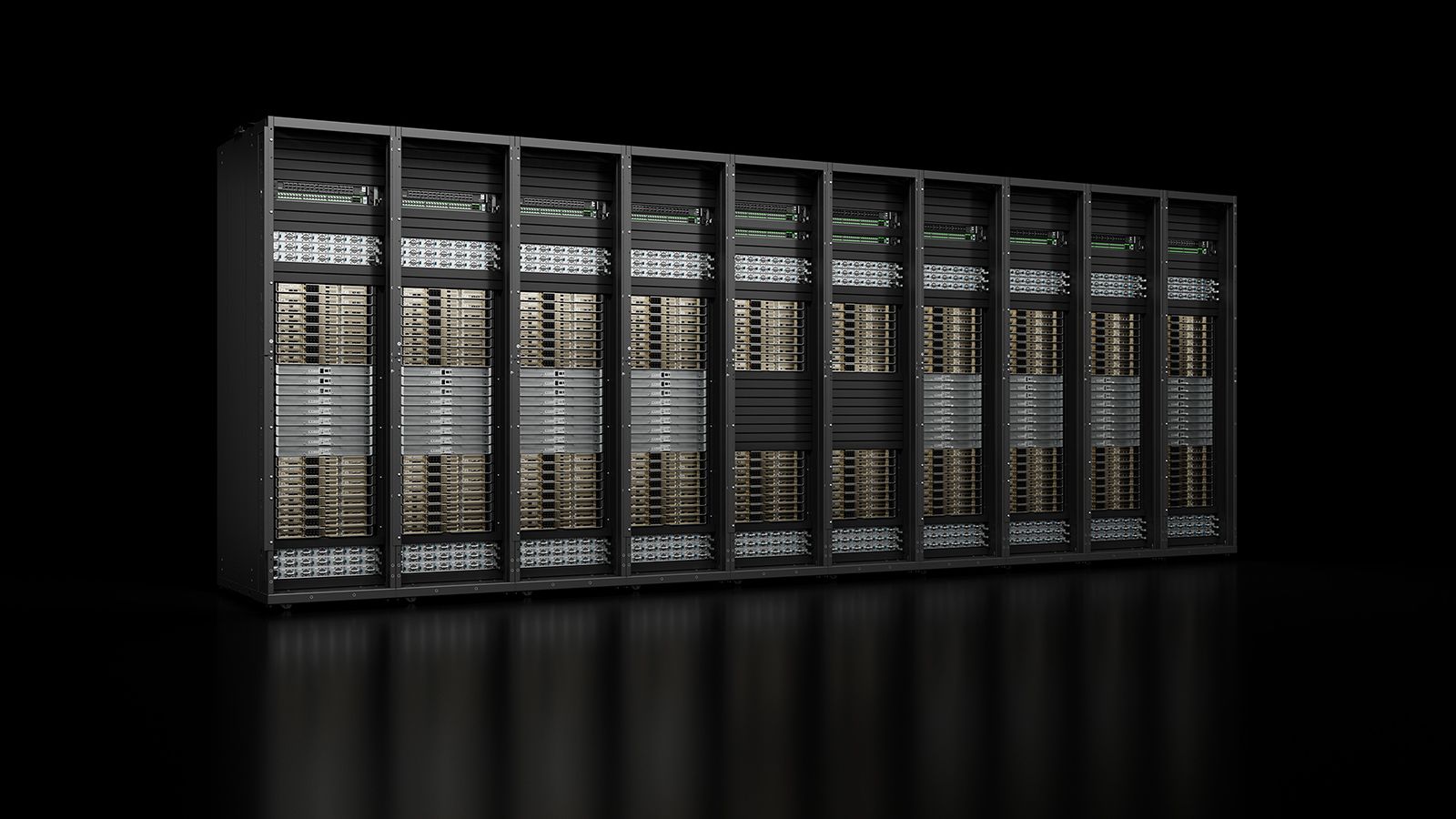
(Image credit: Nvidia) Nvidia announced at GTC that it would team up with HPE to build two new supercomputers based on its Vera Rubin platform for Los Alamos National Laboratory. The machine will be used for national security and scientific research using AI simulation and scientific computing, thus following the latest trends in supercomputing. In all, Nvidia said it has won seven supercomputer contracts with the Department of Energy (DoE).
Nvidia's announcement comes on the heels of AMD's announcement yesterday of two new supercomputer wins with the Department of Energy .
Los Alamos National Laboratory has contracted with HPE to build its Mission and Vision supercomputers based on Nvidia's Vera Rubin platform, which comprises the company's next-generation Vera CPUs and Rubin GPUs. The machines will scale up using NVLink Gen6 technology and scale out using Nvidia's QuantumX 800 Infiniband networking.
Nvidia GPUs and Fujitsu Arm CPUs will power Japan's next $750M zetta-scale supercomputer
Nvidia Rubin CPX forms one half of new, "disaggregated" AI inference architecture
AMD and Oracle partner to deploy 50,000 MI450 Instinct GPUs in new AI superclusters
The Mission supercomputer — designed for the National Nuclear Security Administration and therefore used to ensure the safety, reliability, and performance of the American nuclear stockpile without conducting live nuclear tests — is scheduled to go online in 2027. The Vision computer will build on the achievements of the earlier Venado supercomputer and serve open scientific and AI research.
"Mission is the fifth advanced technology system in Los Alamos' AI for national security science program," said Dion Harris, the head of data center product marketing at Nvidia. "It is expected to be operational in 2027 and designed to run classified applications. The Vision system builds on the achievements of the LANL Venado supercomputer and is designed for unclassified AI and open science research. The Mission and Vision systems represent a significant investment in the US national security and open science capabilities."
Nvidia did not disclose the expected performance of Mission and Vision. However, Vision is projected to take up the baton from Venado, the world's 19th-fastest supercomputer with an Rmax FP64 performance of 98.51 PFLOPS , so it is reasonable to expect Vision to offer at least twice the compute throughput for scientific computing. The comparison also implies that Nvidia's Vera Rubin platform will not sacrifice HPC-oriented FP64 performance for AI-oriented low-precision performance.
" We will share more details on the specific configurations [of supercomputers] later," said Harris. "The great thing about this [platform], looking at how these systems will be used for both open science and for national security research, we think it will bring both AI capabilities as well as traditional simulation capabilities to, to the scientific research endeavors."
Get Tom's Hardware's best news and in-depth reviews, straight to your inbox.
Key considerations
- Investor positioning can change fast
- Volatility remains possible near catalysts
- Macro rates and liquidity can dominate flows
Reference reading
- https://www.tomshardware.com/tech-industry/supercomputers/SPONSORED_LINK_URL
- https://www.tomshardware.com/tech-industry/supercomputers/nvidia-unveils-vera-rubin-supercomputers-for-los-alamos-national-laboratory-announcement-comes-on-heels-of-amds-recent-supercomputer-wins#main
- https://www.tomshardware.com
- How to watch Nvidia GTC 2025 keynote — Jensen Huang shares the latest in AI and beyond
- NVIDIA Launches Open Models and Data to Accelerate AI Innovation Across Language, Biology and Robotics
- Unlucky buyer purchases external Seagate HDD, gets an SD card glued inside a plastic shell
- Fangs Out, Frames Up: ‘Vampire: The Masquerade — Bloodlines 2’ Leads a Killer GFN Thursday
- NVIDIA AI Physics Transforms Aerospace and Automotive Design, Accelerating Engineering by 500x
Informational only. No financial advice. Do your own research.