
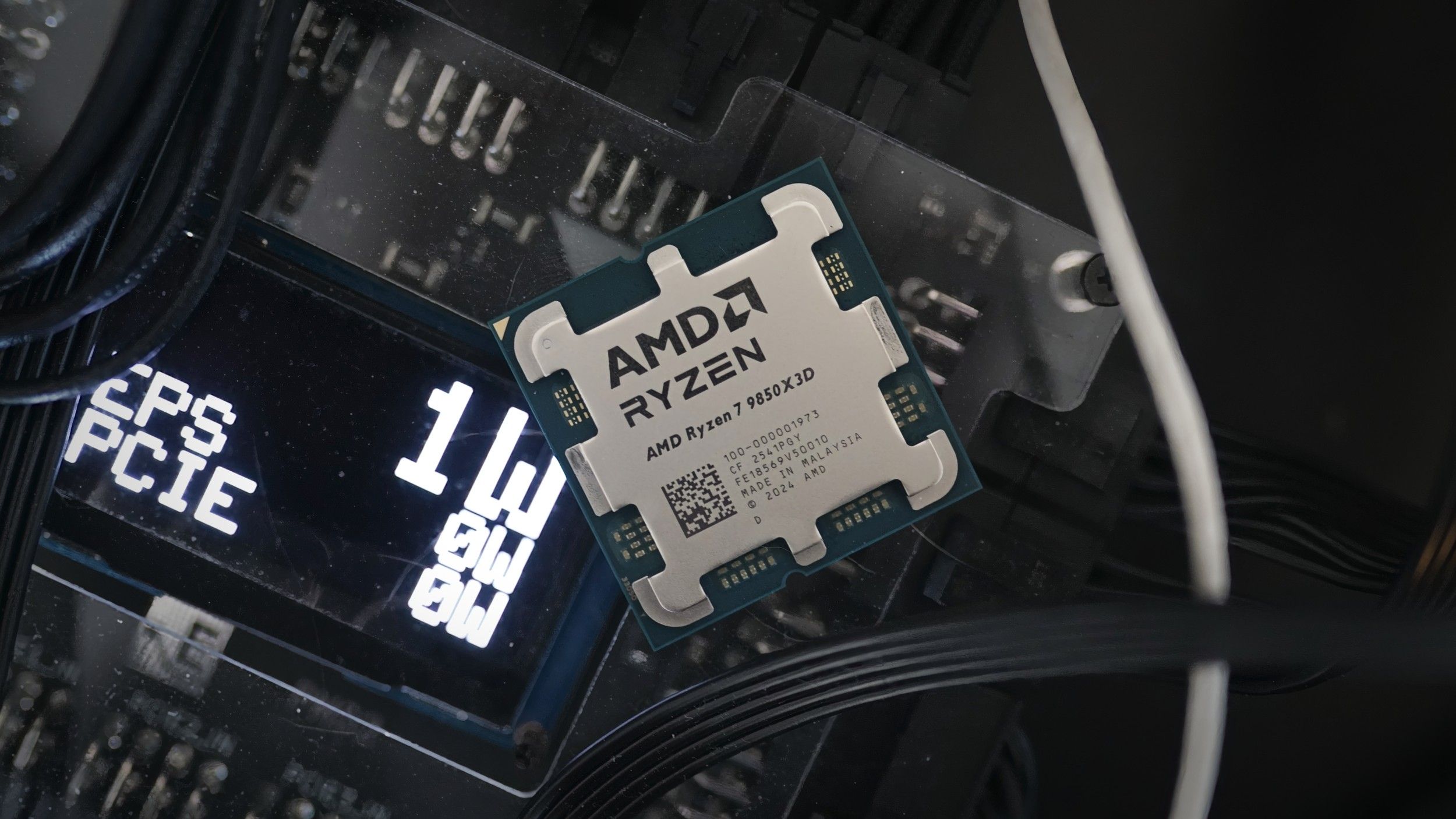
AI demand for server CPUs is starting to affect the supply for consumer processors.
When you purchase through links on our site, we may earn an affiliate commission. Here’s how it works .
PC makers are facing new challenges as the memory and storage chip shortage is now being compounded by a lack of supply of Intel and AMD CPUs. According to Nikkei Asia , some manufacturers like HP and Dell are now saying that the number of processors that get delivered to them no longer matches the required volume, with some sources saying that the situation is getting worse compared to some months back. This shortage is causing prices to increase, with costs rising by an average of 10% to 15%, if not more. More importantly, orders are also facing delays, with lead times jumping from around a couple of weeks to six months in some cases.
“Previously, the average lead time for a CPU was around one to two weeks, but now the wait time has prolonged to an average of eight to 12 weeks,” one server manufacturer executive told Nikkei Asia , while another one said that this could extend up to six months. Furthermore, other industry sources expect this to become much worse in the second quarter of 2026, and PC makers can’t solve the problem by throwing cash at it. “If money can solve the problem, that would be great,” an executive for a gaming PC brand told the publication. “What we worry about is that even if we pay more, we still cannot get more. The CPU shortage is getting more serious day by day, no less than the memory chip situation.”
We first saw inklings of this in early February, when Intel and AMD server CPUs reported supply shortages in China. The two companies even confirmed spikes in CPU demand during their respective quarterly financial results, with AMD CEO Dr. Lisa Su saying that business exceeded expectations and Intel CFO David Zinsner mentioning that “the CPU has become cool again this year.”
You may like Intel, AMD server CPUs reportedly suffering from supply shortages in China ‘CPUs are cool again,' Intel and AMD reporting spikes in CPU demand due to agentic AI AMD Zen 6 and Intel Nova Lake CPUs reportedly arriving late, delayed to CES 2027 Just like the current memory and storage chip shortage, this jump in CPU demand is coming from AI hyperscalers. Tech companies bought up as many GPUs as they could when AI LLMs were popularized by ChatGPT, resulting in the GPU shortage between 2023 and mid-2025. But as the graphics cards supply normalized, we started experiencing memory and storage chip shortages, beginning in late 2025. As AI tech firms were willing to pay top-dollar for these chips, manufacturers moved the majority of their production capacity for these premium customers, leaving the consumer market struggling to fight over what little remained. It has even gotten to the point that Micron, the maker of Crucial SSDs and RAM, has exited the consumer market to focus on AI and enterprise customers.
Now, it seems that we’re getting a CPU shortage even before the memory and storage chip supply has yet to recover. That’s because while AI training relies heavily on GPUs, the rest of the system relies on CPUs. And as smaller models and agentic AI become more popular, the demand for server processors is increasing as well.
On the surface, this does not bode well for the PC market. One server manufacturer employee told Nikkei Asia that demand for general-purpose server CPUs could increase by nearly 15% in 2026, but Intel’s output capacity is only going up by single-digit rates. Furthermore, since AMD does not have its own fab, it must compete with other companies that make chips, like Nvidia and Google , for capacity from foundries like TSMC and Samsung.
However, this is an opportunity for Arm-based chips to step up and capture more of the market, especially in mainstream laptops. While gamers and those who require specialized apps would likely want to stay with x86 processors, Arm-powered devices have been slowly entering the market ever since Microsoft made a serious push with the Snapdragon-powered Copilot+ PCs in 2024. Qualcomm is even taking steps to make gaming on Windows on Arm better , while Nvidia’s N1X is tipped to arrive on laptops this year . This is a major threat to the x86 system, with Intel and AMD banding together to help maintain the architecture’s popularity. But if the two companies cannot meet the demand for their processors, then buyers might have no choice but to look elsewhere for their CPU needs.
Get Tom's Hardware's best news and in-depth reviews, straight to your inbox.
Key considerations
- Investor positioning can change fast
- Volatility remains possible near catalysts
- Macro rates and liquidity can dominate flows
Reference reading
- https://www.tomshardware.com/pc-components/cpus/SPONSORED_LINK_URL
- https://www.tomshardware.com/pc-components/cpus/pc-makers-face-shortages-of-intel-and-amd-cpus-that-stretch-up-to-six-months-lead-time-for-orders-jumps-from-just-two-weeks-in-the-face-of-ai-demand#main
- https://www.tomshardware.com
- HP's new AI workstation can expand horizontally to add 15% more internal volume — alternate side panel also includes more active cooling.
- We need your opinions to shape Tom's Hardware Premium
- How Autonomous AI Agents Become Secure by Design With NVIDIA OpenShell
- New NVIDIA Nemotron 3 Super Delivers 5x Higher Throughput for Agentic AI
- Russian ‘Starlink Rival’ established with 16 satellites launched, aims for 900 by 2035 — commercial operation to begin next year with 250 sputniks
Informational only. No financial advice. Do your own research.