
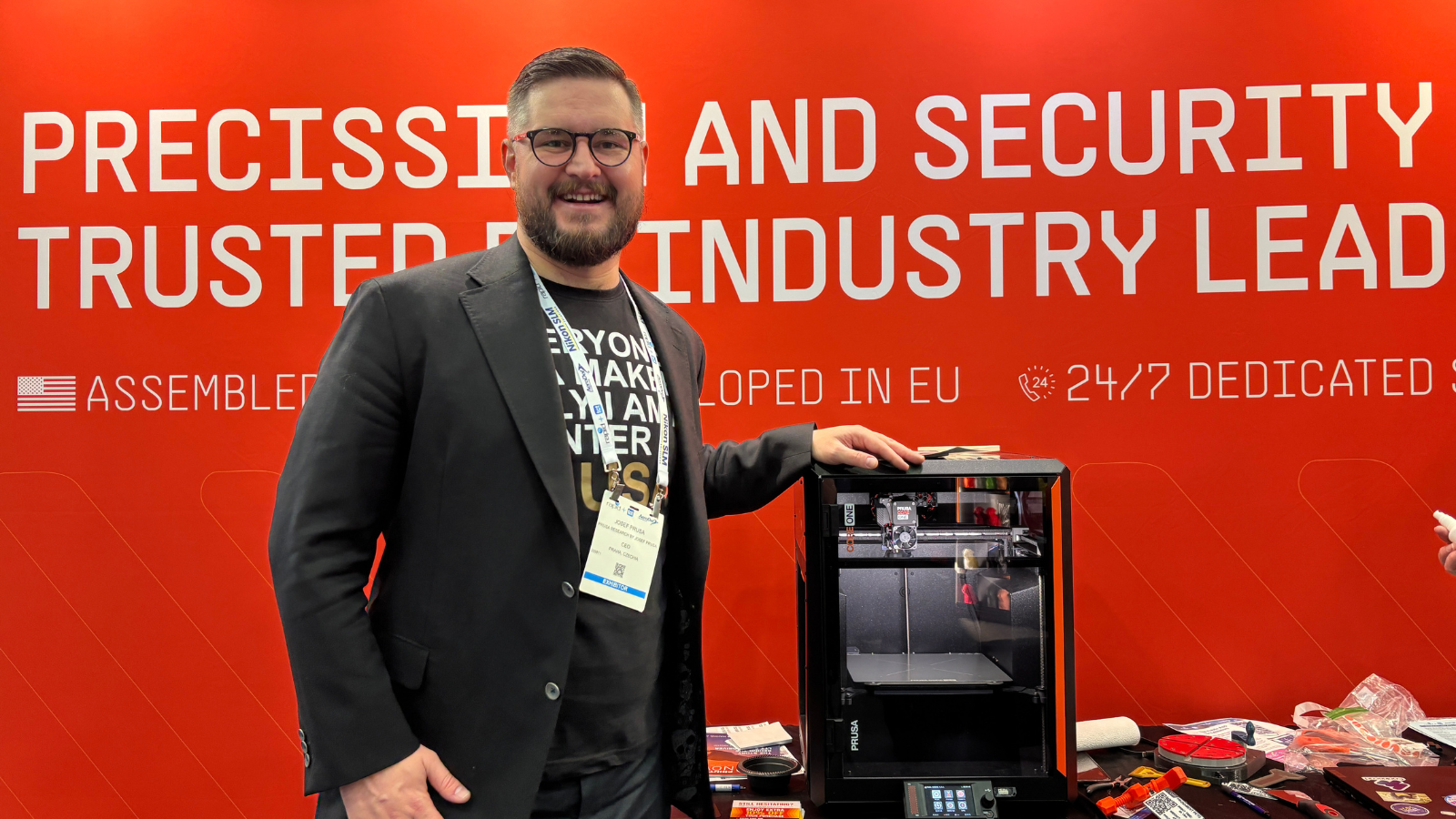
OCL also includes protections that are missing from existing licenses, including an explicit patent license grant, safeguards against AI data mining, and a codified Right-to-Repair, ensuring that both hobbyists and businesses can legally produce spare parts to keep machines running.
The new license is not just for practical prints. Prusa Research highlights the popular Lucky 13 model, an action figure designed by Gabe Rosiak (AKA Soozafone) and licensed under a Creative Commons license. Gabe intended to simply share a free toy with the community. He didn’t mind too much with the toy was picked up by large print farms and sold, but it stung when they didn’t credit his work.
But it was financially devastating when a patent troll stole his design and managed to slip it by the U.S. Patent and Trademark Office. The new patent holder began issuing takedown notices and demanding licensing fees exceeding $10,000 per year, even targeting the original Soozafone upload on Printables.
Prusa Research is now funding the legal effort to invalidate the patent. Its in-house patent attorneys have filed a request for reexamination with the U.S. Patent and Trademark Office, aiming to demonstrate that the design was publicly available long before the patent application.
While OCL could not have prevented the patent theft, after all, a piece of paper can not stop bad-faith actors, it would have changed the legal battle to follow. The terms of the OCL says that by downloading the file, you’ve agreed to keep the file open source. If they later attempt to claim the file as their own, they are in breach of contract. This gives the original designer an additional legal tool that is faster and cheaper than proving prior art.
Follow Tom's Hardware on Google News , or add us as a preferred source , to get our latest news, analysis, & reviews in your feeds.
Denise Bertacchi Social Links Navigation Freelance Reviewer Denise Bertacchi is a Contributing Writer for Tom’s Hardware US, covering 3D printing. Denise has been crafting with PCs since she discovered Print Shop had clip art on her Apple IIe. She loves reviewing 3D printers because she can mix all her passions: printing, photography, and writing.
edzieba He pointed to his company’s 2016 MMU1 multiplexer as an example of an open source design copied and used by competitors. Nobody copied the MMU. Everyone copied the Bambu Lab AMS, which solved the retracted-molten-filament issue (that causes the MMU to jamb as the filament resolidifies in the feedline, by adding a head-end filament cutter so the molten filament remains in the hot part of the print head) and replaced the motorised selection head with a shared motor, with dedicated motors for each reel. The swiftly abandoned quad-filament head pictured in the article was also not 'copied' by others. Prusa's implementation used 4 bowden extruders feeding one passive head, whereas the A1 (and A1 clones like the Kobra 3) use an AMS to feed the head's single direct-drive extruder. Prusa likes to crow about everyone copying them, but when you actually look into it the more common occurrence is for others to take the same idea (which usually does not originate with Prusa either, e.g. the 'Prusa i3' came from the RepRap Mendel), but implement it better, with everyone then copying that better implementation. See: all the X1C clones, including Prusa's own Core One. Reply
Key considerations
- Investor positioning can change fast
- Volatility remains possible near catalysts
- Macro rates and liquidity can dominate flows
Reference reading
- https://www.tomshardware.com/3d-printing/SPONSORED_LINK_URL
- https://www.tomshardware.com/3d-printing/prusa-research-introduces-the-open-community-license-to-protect-open-source-3d-printing-hardware-new-rules-aimed-at-addressing-industry-abuses#main
- https://www.tomshardware.com
- Micron outlines grim outlook for DRAM supply in first earnings call since killing Crucial memory and SSD brand — CEO says it can only meet half to two-thirds of
- In a pinch? Last-minute digital gift ideas for Christmas 2025 for the techie in your life — here's the picks if you have no time left for deliveries
- NVIDIA Acquires Open-Source Workload Management Provider SchedMD
- Helping to fight the RAM-pocalypse, this $470 Newegg combo pairs an Asus RoG Strix X870E-H WiFi 7 motherboard with 32GB of G.Skill Flare X5 Series DDR5-6000 RAM
- North Korean infiltrator caught working in Amazon IT department thanks to lag — 110ms keystroke input raises red flags over true location
Informational only. No financial advice. Do your own research.