
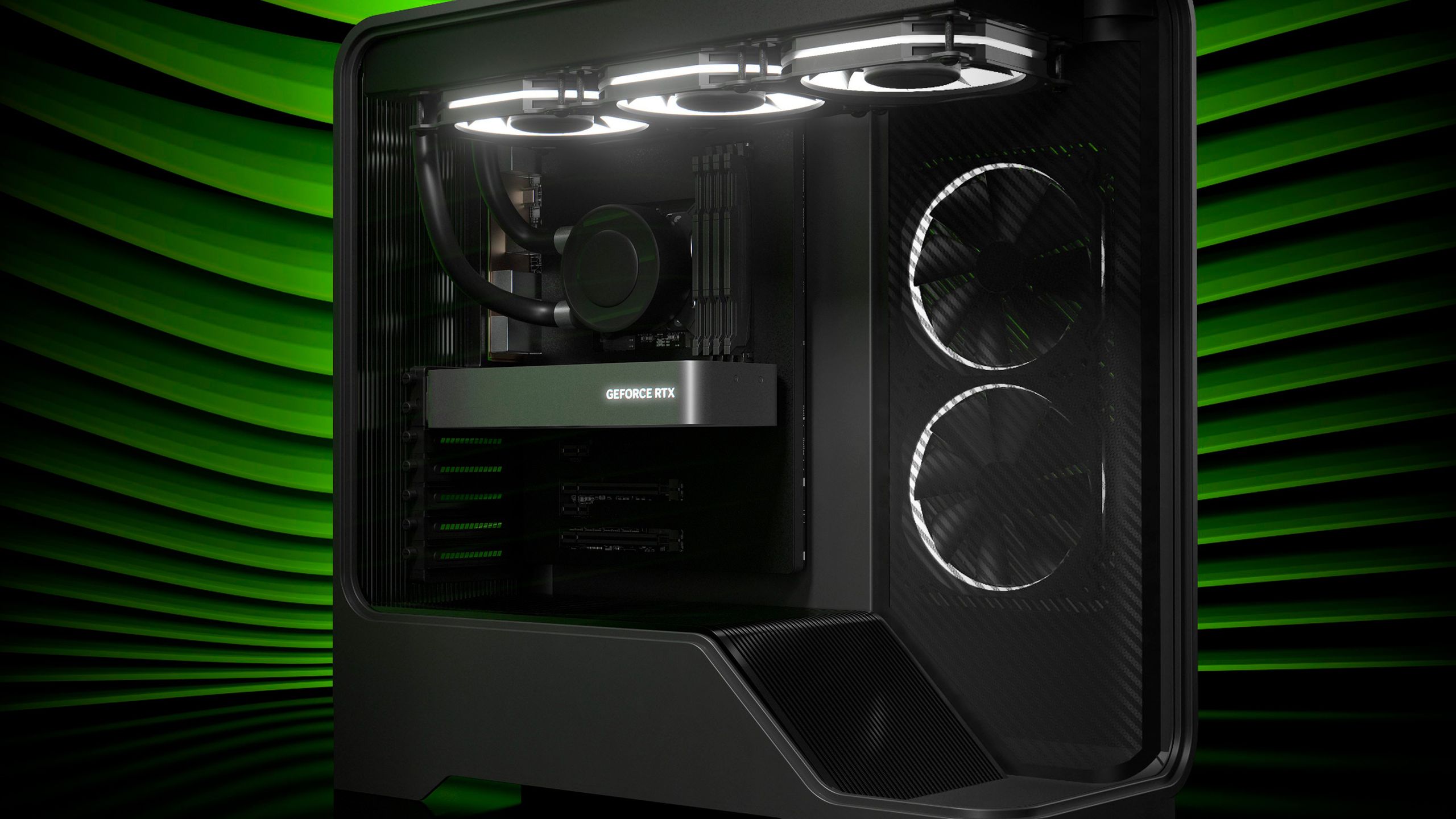
The GeForce RTX 5050 has always been the ugly duckling of the Blackwell family. While every other Blackwell GPU uses GDDR7 memory , Nvidia stuck the GeForce RTX 5050 with slower GDDR6 memory. GDDR6 is generally more affordable to purchase, and suppliers are still producing those chips. The problem is that they have begun transitioning to GDDR7. As a result, GDDR6 production is limited, and with the consequent shortages and high demand, GDDR6 prices are following a similar upward trend.
The limited supply and rising prices of GDDR6 are likely why Nvidia is revamping the GeForce RTX 5050 with GDDR7 memory. The chipmaker has probably already run the numbers, and GDDR7 makes more sense profit-wise. But the new RAM isn't just a drop-in replacement. According to kopite7kimi, the GeForce RTX 5050 9GB GDDR7 also uses a different die compared to the original model. While the vanilla GeForce RTX 5050 employs the GB207 die, the 9GB GDDR7 variant appears to switch to the larger GB206 die, which is present in higher-end SKUs such as the GeForce RTX 5060 , GeForce RTX 5060 Ti , and the GeForce RTX 5070 Mobile .
You may like Nvidia reportedly working on RTX 5050 with 9GB of VRAM, new RTX 5060 with cut-down GB205 also planned Nvidia RTX 5070 mobile GPU looks set to get more VRAM despite global memory crisis Gigabyte CEO explains Nvidia's potential GPU supply strategy amid crushing memory shortages A full GB206 chip features 4,608 CUDA cores, but any GeForce RTX 5050 would likely only use a little over half of that total. Nvidia can conveniently repurpose GB206 dies that don't meet the strict requirements for higher-end models in the GeForce RTX 5050. Salvaging dies like this is a common strategy in the semiconductor industry that helps chipmakers reduce electronic waste and optimize production efficiency by ensuring every usable chip reaches the market. The GeForce RTX 3050 went through the same process over its lifetime. It initially launched with the GA106 die and subsequently shifted to the GA107 die in its later three revisions.
The memory configuration of the GeForce RTX 5050 9GB GDDR7 differs significantly from that of its predecessor. While the original SKU has four 2GB GDDR6 chips, totaling 8GB of memory distributed evenly across four memory modules, the new 9GB variant uses a different approach, employing three 3GB GDDR7 chips. The upgrade not only increases the total available memory but also introduces a notable difference in its design.
Reducing the number of memory modules from four to three causes the memory interface to narrow. The launch configuration utilizes four 32-bit memory controllers, collectively providing a 128-bit memory bus. In contrast, the 9GB GDDR7 variant relies on three memory modules, each paired with a 32-bit controller, resulting in a narrower 96-bit memory interface.
Get Tom's Hardware's best news and in-depth reviews, straight to your inbox.
Key considerations
- Investor positioning can change fast
- Volatility remains possible near catalysts
- Macro rates and liquidity can dominate flows
Reference reading
- https://www.tomshardware.com/pc-components/gpus/SPONSORED_LINK_URL
- https://www.tomshardware.com/pc-components/gpus/rumored-rtx-5050-9gb-gddr7-could-make-hay-from-recycled-rtx-5060-silicon-refreshed-entry-level-blackwell-card-might-finally-have-enough-vram-for-dlss-and-mfg-in-demanding-games#main
- https://www.tomshardware.com
- Grab this speedy 4TB Crucial P310 SSD, the cheapest on sale right now, for just £299.99 — nearly £90 price drop is as good as it gets for high-capacity PC stora
- Intel shares XeSS 3.0 SDK for game devs with 3x and 4x MFG modes — but it still hasn't followed through on its open-source promise
- Apple’s brand new M5 MacBook Air and MacBook Pro models are already discounted on Amazon — shave $50 off nearly the entire 2026 lineup
- This RTX 5060 Acer gaming laptop with 16GB RAM and a 1TB SSD is a steal for just £799.99 — solid 1080p performer includes a 10-core Intel CPU and a fast 165Hz r
- Minisforum's new flagship NAS comes with OpenClaw pre-installed — Strix Halo-powered N5 Max can run a local AI LLM
Informational only. No financial advice. Do your own research.