
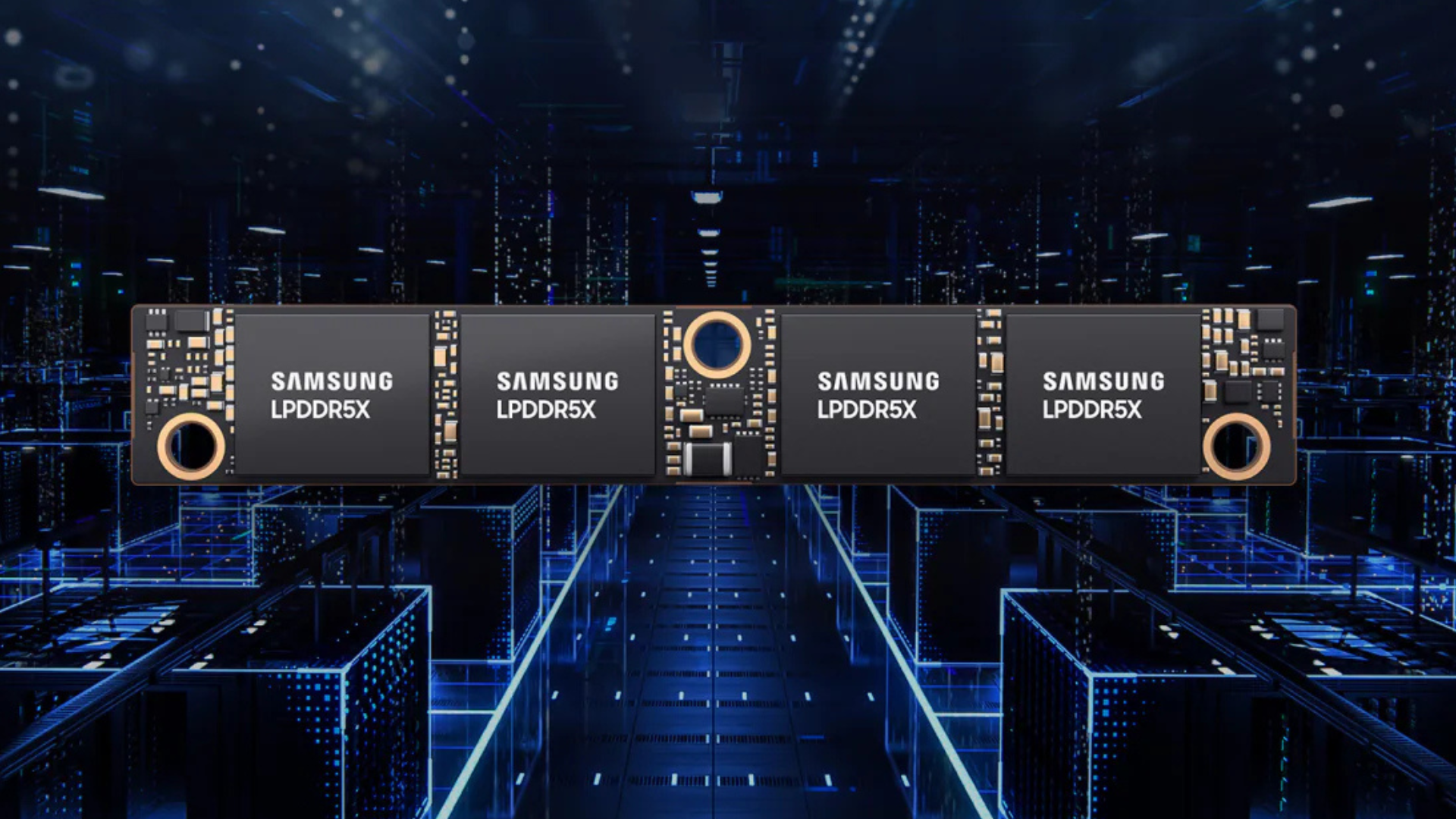
AI workloads, on the other hand, operate under a different set of constraints. Training and inference pipelines are bandwidth-bound and highly parallel, with performance dominated by sustained data movement. In that context, LPDDR5X's higher latency is largely amortized, while its higher transfer rates and lower power consumption deliver measurable gains.
So, while modular LPDDR form factors have struggled to gain traction in deployments like consumer desktops, where interactive applications (such as games) are acutely sensitive to memory latency, it has found a more natural fit in AI applications where throughput and efficiency are more important.
One of the most consequential aspects of SOCAMM2 is not the module itself, but the fact that it is being aligned with a JEDEC standard. Memory buyers are wary of proprietary form factors that lock them into a single vendor, and server platforms live or die by ecosystem support. By tying SOCAMM2 to an open specification, other memory suppliers and platform vendors will obviously participate.
Micron has already publicly stated that it is sampling SOCAMM2 modules with capacities reaching 192 GB, indicating that the form factor is not limited to niche configurations. High-capacity modules are essential if SOCAMM2 is to be taken seriously as a replacement or supplement to RDIMMs in AI servers, where per socket memory footprints can be enormous.
Even with standardization underway, several technical questions remain open. Thermal behavior under sustained load is one of them. LPDDR devices are efficient, but packing many of them into a compact module introduces heat density challenges, particularly in horizontally mounted configurations. Signal integrity at the upper end of LPDDR5X data rates is another concern, particularly as platforms approach the limits of what board layouts and connectors can reliably support.
Reliability and error handling could also present challenges. Enterprise buyers expect robust ECC support, telemetry, and predictable failure modes. JEDEC’s inclusion of SPD and management features in the SOCAMM2 specification is meant to address this, but real-world validation will depend on platform implementations and firmware maturity.
Finally, there is the question of cost. LPDDR5X is not inherently cheaper than DDR5, and SOCAMM2 adds new packaging and mechanical complexity. Its value proposition rests on total system economics rather than module price in isolation. Lower power draw can reduce cooling requirements and operating costs over the years of deployment, and modularity can improve asset utilization by allowing memory to be reused or upgraded independently. Whether those savings outweigh any upfront premium will vary by deployment and is likely to be a deciding factor in adoption.
Ultimately, Samsung’s SOCAMM2 announcement fits into a broader pattern of the data center industry revisiting assumptions that were baked in when servers were built primarily for general-purpose computing. AI workloads have changed the balance between compute, memory, power, and serviceability, and memory vendors are responding with form factors that would have seemed unnecessary a decade ago. SOCAMM2 does not redefine server memory on its own, but it reflects a recognition that the traditional memory DIMM might not be a viable solution for AI systems at scale.
Luke James Social Links Navigation Contributor Luke James is a freelance writer and journalist. Although his background is in legal, he has a personal interest in all things tech, especially hardware and microelectronics, and anything regulatory.
Key considerations
- Investor positioning can change fast
- Volatility remains possible near catalysts
- Macro rates and liquidity can dominate flows
Reference reading
- https://www.tomshardware.com/tech-industry/SPONSORED_LINK_URL
- https://www.tomshardware.com/tech-industry/samsung-introduces-socamm2-lpddr5x-memory-module-for-ai-data-centers#main
- https://www.tomshardware.com
- IDC expects average PC prices to jump by up to 8% in 2026 due to crushing memory shortages — some vendors already selling pre-builts without RAM
- Robots’ Holiday Wishes Come True: NVIDIA Jetson Platform Offers High-Performance Edge AI at Festive Prices
- Search pioneer AltaVista’s star shone bright with a clean and minimal UI 30 years ago — engine lost momentum after multiple ownership changes and the embrace of
- 3 Ways NVIDIA Is Powering the Industrial Revolution
- LG responds swiftly to user backlash, will allow users to remove Microsoft Copilot link from TVs — clarifies service is not an app, future update will include t
Informational only. No financial advice. Do your own research.