
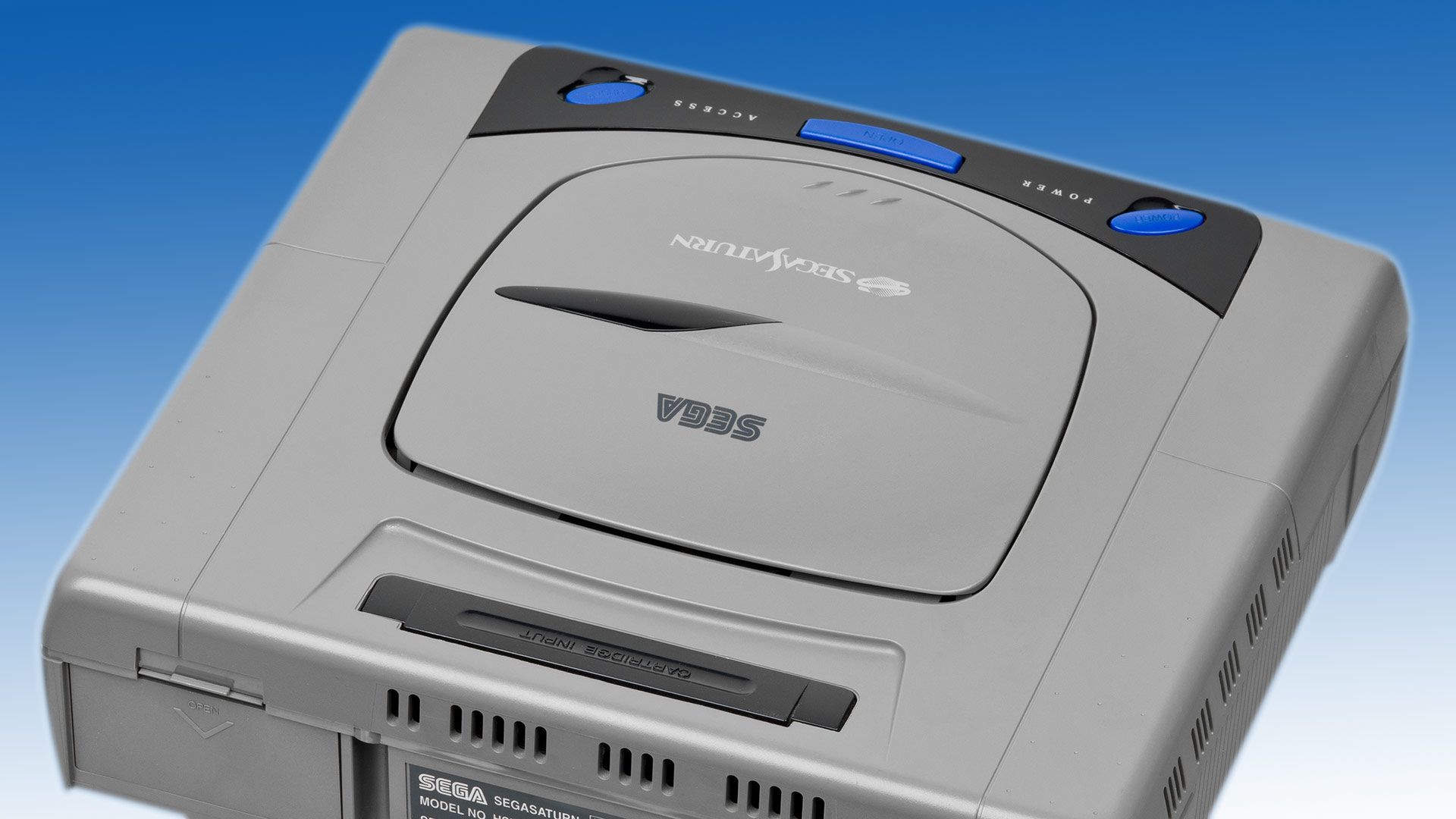
The fabled Saturn accelerator was designed to deliver Virtua Fighter 3 and Shenmue games as a bridgehead to the Dreamcast era.
When you purchase through links on our site, we may earn an affiliate commission. Here’s how it works .
Rumors about a missing hardware link between the Sega Saturn and Dreamcast have swirled mysteriously for many years. Now, thanks to a series of interviews published by Japan’s Beep21 gaming magazine (machine translation), the truth is out. An ex-Hitachi, ex-Sega, and ex- Sony engineer has confirmed that he proposed and developed a Saturn graphics accelerator, codenamed TRIP, based on Hitachi’s SH‑3 processor.
The Sega Saturn console launched in late 1994 / early 1995, as Sega’s fifth-generation machine, going up against Sony’s first-generation PlayStation. Sega became concerned about leaks pointing to great PlayStation ( PS One , PSX) performance. So, a few months before the launch, it reconfigured its Saturn with an extra Video Display Processor (VDP). Thus, the machine ended up with ‘processor soup’ made up of dual Hitachi SH-2 (28 MHz) RISC processors, two VDPs, plus co-processors dedicated to 3D geometry, sound, and I/O.
With its previous-gen console, the Genesis (AKA Mega Drive), Sega didn’t hold back from iterating with the Mega-CD, 32X, Sega Channel network, and more. But rumors about an accelerator for the Saturn came and went with no hardware ever released, nor revealed, until now.
You may like Real-time raytracing demo reveals 1990s Sega Saturn console’s untapped power The ‘Father of Sega Hardware' has passed away Massive two-year project recovers 144 previously undumped Sega Genesis game ROMs from the mid-1990s TRIP accelerator with SH-3 processor The missing link between the Saturn (1994) and Dreamcast (1998) was an accelerator for the former, internally known as the TRIP. Beep21 heard about this elusive project from an engineer called Junichi Naoi.
According to the source story and interview, Naoi was a Hitachi engineer who was in the team that developed the SH-1, SH-2, and other CPUs and ASICs . For the SH-2, he implemented several Sega-requested enhancements into the design. However, in 1994, Naoi would join Sega and help the firm develop cost-optimized revisions of the console over its lifecycle.
In 1996, a couple of years after Saturn first hit the market, and a couple of years before the Dreamcast would splash down, Sega felt that its current console was losing its shine. Not only was the PlayStation 1 doing amazingly well, but 3D accelerators were starting to establish PCs as very capable modern gaming machines.
Thus, the TRIP project was born at Sega. The proposed accelerator module for the Saturn would include a Hitachi SH-3. This chip was expected to significantly boost graphics and geometry calculations on the Saturn. According to the report/interview, the TRIP was judged to be good enough to propose that future Dreamcast classics Virtua Fighter 3 and Shenmue be launched alongside it.
Get Tom's Hardware's best news and in-depth reviews, straight to your inbox.
Key considerations
- Investor positioning can change fast
- Volatility remains possible near catalysts
- Macro rates and liquidity can dominate flows
Reference reading
- https://www.tomshardware.com/video-games/console-gaming/SPONSORED_LINK_URL
- https://www.tomshardware.com/video-games/console-gaming/segas-missing-link-saturn-trip-accelerator-project-was-real-1996-era-plans-revealed-by-engineer-for-the-first-time#main
- https://www.tomshardware.com
- Tech titans team up to form optical interconnect alliance to solve the AI buildout's big data bottleneck — Nvidia, AMD, Broadcom & more set sights on building P
- 40-year-old Arcade classic shoot ‘em up Gradius gets pure ASCII PC remake — you can even save your gaming screenshots as .TXT files
- US and Gulf states race for Ukrainian interceptor drones, 3D printed model costs $1,000 apiece — Shahed-136 kamikaze drone threat spurs rush for interceptors
- NVIDIA Virtualizes Game Development With RTX PRO Server
- 2026 PC shipment forecast slashed amid memory shortages — IDC says total PC market value to nonetheless increase to $274 billion due to ongoing price hikes
Informational only. No financial advice. Do your own research.