
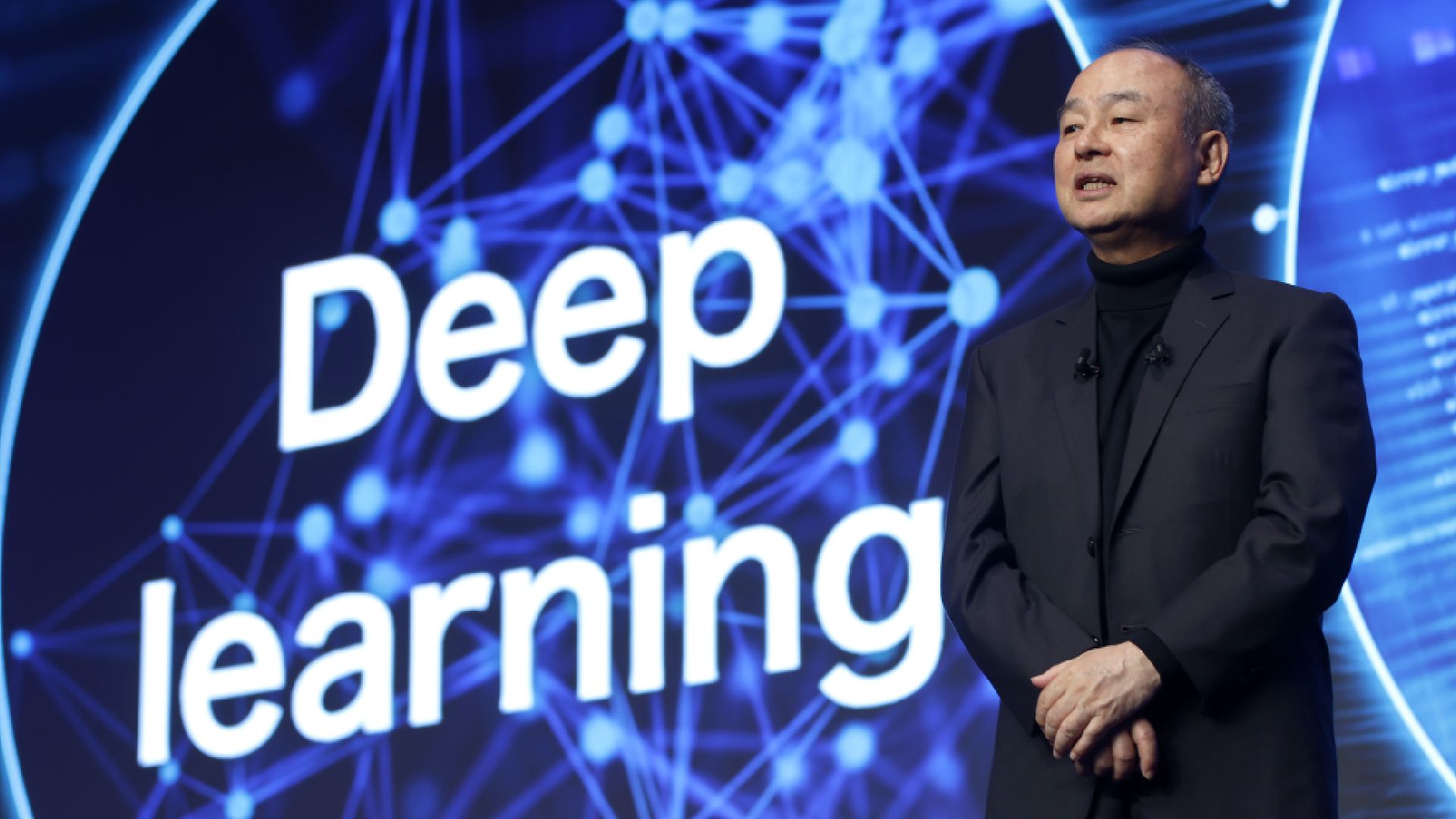
To fund this, SoftBank has aggressively reshaped its balance sheet, exiting its entire position in Nvidia for $5.8 billion and selling $12.7 billion worth of T-Mobile shares. In doing so, Masayoshi Son effectively traded SoftBank’s exposure to public, liquid assets for a private AI platform and its associated infrastructure.
The company’s Vision Fund is reflective of why Son might have been keen to do this. Split into multiple parts, Vision Fund 1 recorded a $4.1 billion loss in the quarter, dragged down by declines in publicly-traded holdings like Coupang, which suffered a significant data breach. Meanwhile, Vision Fund 2, which includes OpenAI, generated a $6.6 billion gain, more than offsetting those losses.
The older portfolio, heavy with late-stage tech companies that are now exposed to public market volatility, is under serious pressure while the newer fund, anchored by OpenAI, is delivering gains at a scale large enough to dominate consolidated earnings. In effect, SoftBank’s quarterly performance is now increasingly tied to how OpenAI is valued.
In addition to its heavy investment in OpenAI, SoftBank also retains a majority position in Arm, whose CPU architectures underpin much of the world’s mobile computing and an expanding share of the server silicon market. Arm is also known to be interested in manufacturing its own chips.
Over the past two years, SoftBank has also acquired Ampere , the Arm-based server CPU company founded by former Intel executive Renee James, and Graphcore , the UK AI accelerator startup that once claimed its Intelligence Processing Unit could be an alternative to GPUs in AI training and machine learning applications. SoftBank has said that these companies are now housed under a new unit — the AI Computing Segment — alongside Arm.
Anyone looking at this collection of assets can easily come to the conclusion that it resembles what appears to be a developing hardware strategy. Arm’s designs are already central to hyperscale data center applications, and Ampere’s server CPUs target cloud-native and AI workloads with high core counts and power efficiency. Graphcore, despite facing commercial headwinds, developed architectures purpose-built for machine learning. Overlay OpenAI’s model development needs on top of that, and you’ve got everything you need to support AI training and inference at scale. In fact, reports claim that Arm is developing a custom CPU to be used by OpenAI itself.
OpenAI’s valuation is tied to growth in both model capability and enterprise adoption — and both require infrastructure. Training frontier models demands clusters built around high-performance accelerators and high-bandwidth memory, and serving them at a global scale requires data centers with robust power delivery and cooling capacity.
OpenAI shows clear compute and revenue scaling to soothe investor worries as company preps for IPO
OpenAI could reportedly run out of cash by mid-2027
Key considerations
- Investor positioning can change fast
- Volatility remains possible near catalysts
- Macro rates and liquidity can dominate flows
Reference reading
- https://www.tomshardware.com/tech-industry/SPONSORED_LINK_URL
- https://www.tomshardware.com/tech-industry/softbank-4-2-bn-openai-gain-lifts-quarterly-profit-as-ai-exposure-deepens#main
- https://www.tomshardware.com
- Rufus devs blame Microsoft for blocking latest Windows 11 ISOs, resulting in IP bans — Windows Insiders can't download latest Insider ISOs and are met with IP b
- $1,000 bought an RTX 5080 in November 2025, now it only buys an RTX 5070 Ti — report shows 15% average global price hike across Nvidia, AMD & Intel GPUs
- Tech tinkerer gets Gemini to help him 'vibe code' an x86 motherboard design — bot help was impressive, but project still required human awareness and interventi
- Save $900 on RAM bundle with almost a whole PC: 128GB of G.Skill memory, 9850X3D, MSI X870E motherboard, and 4TB SSD — the same price as buying the RAM by itsel
- Seagate's enormous 20TB IronWolf HDDs are just $419, or $21 per-terabyte — large-capacity storage deal from Newegg is perfect for your NAS
Informational only. No financial advice. Do your own research.