
Jowi Morales is a tech enthusiast with years of experience working in the industry. He\u2019s been writing with several tech publications since 2021, where he\u2019s been interested in tech hardware and consumer electronics. ","collapsible":{"enabled":true,"maxHeight":250,"readMoreText":"Read more","readLessText":"Read less"}}), "https://slice.vanilla.futurecdn.net/13-4-13/js/authorBio.js"); } else { console.error('%c FTE ','background: #9306F9; color: #ffffff','no lazy slice hydration function available'); } Jowi Morales Social Links Navigation Contributing Writer Jowi Morales is a tech enthusiast with years of experience working in the industry. He’s been writing with several tech publications since 2021, where he’s been interested in tech hardware and consumer electronics.
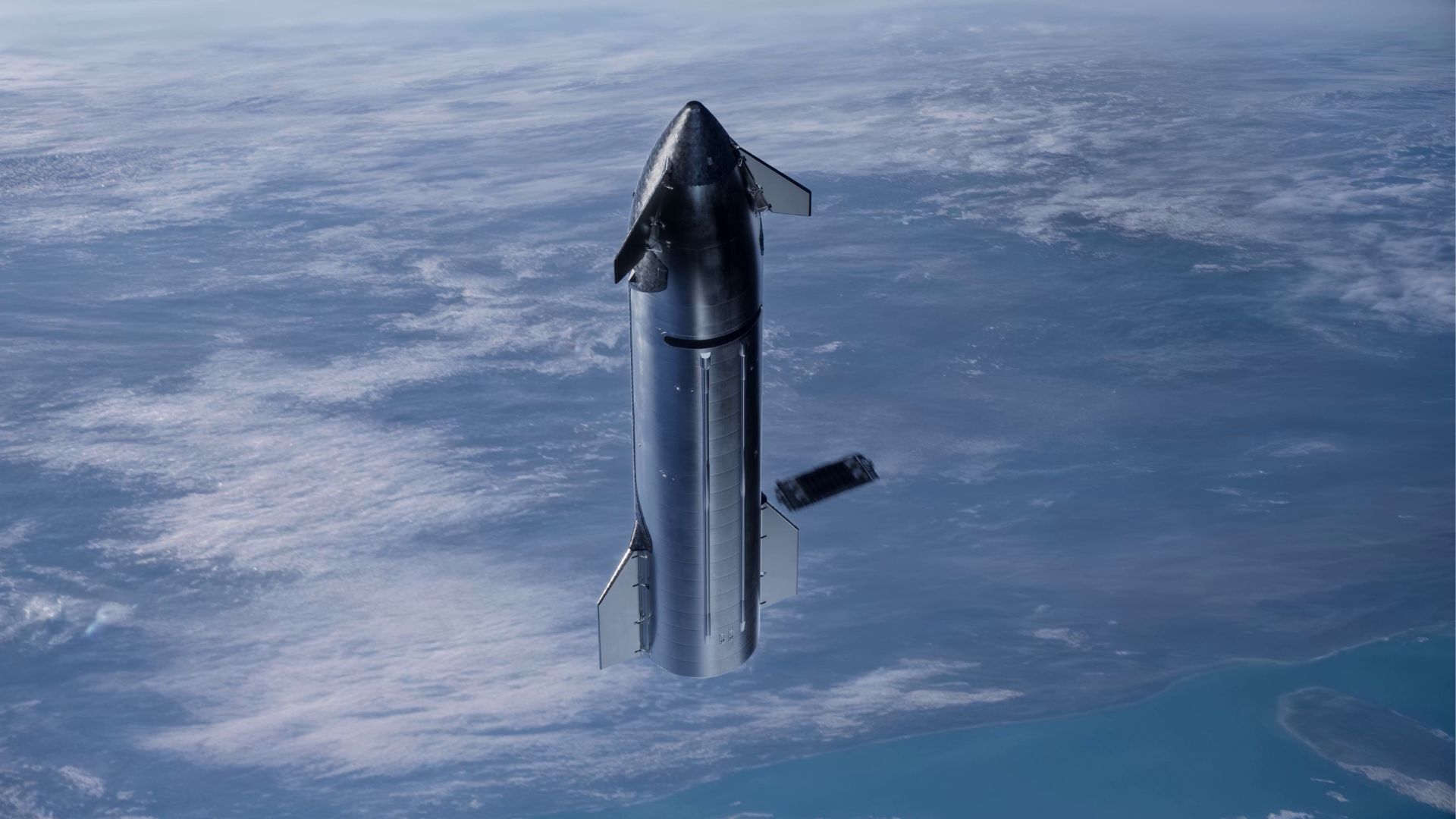
Tanakoi …electronics like advanced AI chips are susceptible to cosmic radiation, corrupting data and frying circuits… NASA has already ran and tested AI chips on the ISS station, and Starcloud has operated NVidia's H100 in orbit. There’s also the question of cooling, as the usual solutions that work on Earth’s surface aren’t applicable in space A simple ammonia loop as the ISS used works fine for cooling. Or for higher efficiency a multi-stage system using PAO or even water as the working fluid. …putting so many satellites in orbit around the Earth risks a Kessler Syndrome event… This is just anti-tech fear porn. There's far too much volume in a 1000-km thick shell around the earth, especially when one considers these satellites are designed to deorbit at EOL. They're also built to resist fragmentation far better than 1970s-era satellites which gave rise to the concept. Reply
bit_user Oh, I knew this would happen. Musk is eventually going to merge all of his companies. They'll all eventually sink into the abyss, together. But this one made the most sense to happen first. SpaceX is the one that's "too big to fail" (i.e. too systemically important) and probably has the best ability to raise money. Meanwhile, xAI is burning through vast amounts of cash. So, SpaceX is bailing out xAI and then it can either issue more shares or get a government bailout. Eventually, after SpaceX buys Tesla and inevitably enters chapter 11, I hope a judge forces it to spin off the rocket business and lets the rest die in a fire. Reply
bit_user Tanakoi said: A simple ammonia loop as the ISS used works fine for cooling. Or for higher efficiency a multi-stage system using PAO or even water as the working fluid. The scale of the cooling needed is what poses a problem for orbital datacenters. I'm not saying it can't be solved, but doing so will probably add a lot of mass, which disproportionately increases launch costs. You probably need to radiate the heat out into space with an array of heatsinks that's approximately the same size as the solar array. I think that's what we worked out, in the first thread about orbital datacenters. And for that to work, you need to transfer the heat out across that entire structure. That sounds pretty massive, to me. Reply
basel8 bit_user said: The scale of the cooling needed is what poses a problem for orbital datacenters. I'm not saying it can't be solved, but doing so will probably add a lot of mass, which disproportionately increases launch costs. You probably need to radiate the heat out into space with an array of heatsinks that's approximately the same size as the solar array. I think that's what we worked out, in the first thread about orbital datacenters. And for that to work, you need to transfer the heat out across that entire structure. That sounds pretty massive, to me. Radiative cooling is far less efficient than convective or conductive so you're right that you will need a lot more materials to cool the data center down. Just like the hyperloop there's several fatal flaws in this whole notion that questions the viability of this. Reply
bigdragon "SpaceX Bails Out xAI" should be the headline. Usually when someone rich has one of their companies acquire another company of theirs it's because the company being acquired is failing financially while having some important IP worth protecting. I think the bigger story is what's going on at Tesla. How much longer until SpaceX has to acquire Tesla too? You know, the car company that decided it no longer wants to be a car company and just wants to do robotics, subscriptions, and autonomous taxis? Yeah, that Tesla. Reply
bit_user bigdragon said: I think the bigger story is what's going on at Tesla. How much longer until SpaceX has to acquire Tesla too? Yup. I predict that's not far off. Reply
Findecanor Tanakoi said: This is just anti-tech fear porn. There's far too much volume in a 1000-km thick shell around the earth, especially when one considers these satellites are designed to deorbit at EOL. They're also built to resist fragmentation far better than 1970s-era satellites which gave rise to the concept. Last year, the man for which "Kessler Syndrome" got its name: Donald Kessler, co-authored an article claiming that we are dangerously close , warning us that the amount of satellites that are planned to be launched (by the likes of StarLink) is unsustainable. Links: SemanticScholar, ResearchGate Current satellites do a lot of course corrections to avoid space debris. For example, the StarLink fleet does 800 course corrections per day in total. If a solar flare disrupts satellites' ability to manoeuvre, it would take approximately 5 ½ days before there is a collision. This number has changed dramatically because of constellations such as StarLink. The European Space Agency recommends stopping launches now , and starting active debris removal. I got this above from a video by Sabine Hossenfelder on YouTube. She unfortunately posted direct links to the articles behind a Patron paywall, and I'm not going to google them for you. Reply
JayGau Tanakoi said: This is just anti-tech fear porn. There's far too much volume in a 1000-km thick shell around the earth, especially when one considers these satellites are designed to deorbit at EOL. They're also built to resist fragmentation far better than 1970s-era satellites which gave rise to the concept. So easy to dismiss any criticism and danger warnings by just saying "it's just anti-tech fear porn", just like Jensen Huang did about AI recently. Reply
Tanakoi bit_user said: The scale of the cooling needed is what poses a problem for orbital datacenters. I've already done (and shared the calculations here) that a datacenter can exhaust some 40MW of heat using a two-stage loop operating at 400K, using radiators less than twice as large as those already currently being used on the ISS . How is that impractical? Findecanor said: Current satellites do a lot of course corrections to avoid space debris. For example, the StarLink fleet does 800 course corrections per day in total Oops! You forgot that Starlink does a course correction if it determines the risk of collision is even 1:1,000,000. It could stop performing those corrections for several years on average before it had a single collision. And that's with the current constellation — this new planned constellation will operate higher, in largely unused orbits. JayGau said: So easy to dismiss any criticism and danger warnings by just saying "it's just anti-tech fear porn" The laws of physics dismiss them. We're talking about a space some 600,000,000,000,000,000,000 cubic meters in volume. Reply
Key considerations
- Investor positioning can change fast
- Volatility remains possible near catalysts
- Macro rates and liquidity can dominate flows
Reference reading
- https://www.tomshardware.com/tech-industry/artificial-intelligence/SPONSORED_LINK_URL
- https://www.tomshardware.com/tech-industry/artificial-intelligence/spacex-acquires-xai-in-a-bid-to-make-orbiting-data-centers-a-reality-musk-plans-to-launch-a-million-tons-of-satellites-annually-targets-1tw-year-of-space-based-compute-capacity#main
- https://www.tomshardware.com
- Everything Will Be Represented in a Virtual Twin, NVIDIA CEO Jensen Huang Says at 3DEXPERIENCE World
- Intel's upcoming Core Ultra 9 290K Plus appears on Geekbench with chart-topping scores — Arrow Lake refresh beats the 285K by ~10% across single- and multithrea
- Intel's upcoming Core Ultra 9 290K Plus appears on Geekbench with chart-topping scores — Arrow Lake refresh beats the 285K by ~10% across single- and multithrea
- Intel is co-developing new Z-Angle Memory to compete with HBM used in AI data centers — vertically-stacked memory touts 2 to 3x more capacity, greater bandwidth
- RayNeo Air 3s Pro AR glasses review: A meaningful usability upgrade for already stellar glasses
Informational only. No financial advice. Do your own research.