
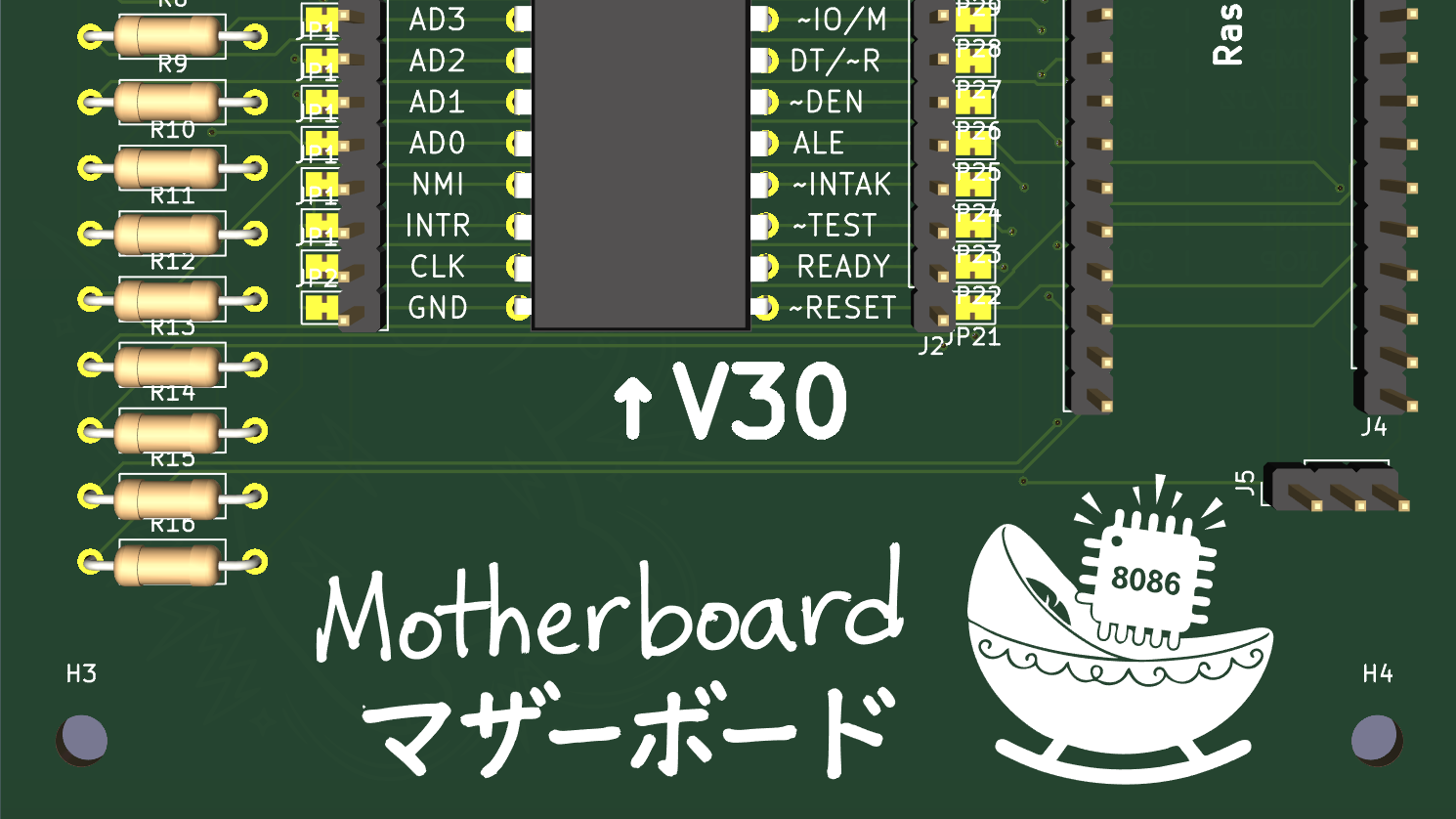
This is the moment where the AI bot started showing its limitations, as it suggested changes to the circuit, blissfully unaware of the material or time costs involved. Ikejima rolled up his sleeves and got out his logic analyzer, which promptly "went berserk" on connection. As it turns out, the 8086 design uses the same physical line for addresses and code, switching between them at each clock tick.
Once he sorted that out with the control software, he came across another bug that should have been obvious: 8086 chips use one RAM chip for even bytes, and another for odd bytes. After a handful of fixes, Ikejima finally got the CPU to work and execute code. He then figured he wanted to run actual software on it, and settled on getting MS-DOS' COMMAND.COM.
That effort proved more than he had considered, as COMMAND.COM rewrites itself in memory, and requires some interfacing to an actual BIOS and I/O — while all he effectively had was a CPU socket and some memory. After more research, he settled on using HI-DOS on the cradle side to be able to have a BIOS, and eventually booted HIDOS MS-DOS, albeit with some limitations, like the lack of writeable storage and the limited amount of memory.
Even still, he did manage to run some simple programs, culminating in what's effectively a pretty impressive demonstration of what's possible when you couple human logic and reasoning with the massive helping hand of an AI bot. Do read the entire adventure at Ikejiima's blog .
Follow Tom's Hardware on Google News , or add us as a preferred source , to get our latest news, analysis, & reviews in your feeds.
Bruno Ferreira is a contributing writer for Tom's Hardware. He has decades of experience with PC hardware and assorted sundries, alongside a career as a developer. He's obsessed with detail and has a tendency to ramble on the topics he loves. When not doing that, he's usually playing games, or at live music shows and festivals. ","collapsible":{"enabled":true,"maxHeight":250,"readMoreText":"Read more","readLessText":"Read less"}}), "https://slice.vanilla.futurecdn.net/13-4-16/js/authorBio.js"); } else { console.error('%c FTE ','background: #9306F9; color: #ffffff','no lazy slice hydration function available'); } Bruno Ferreira Contributor Bruno Ferreira is a contributing writer for Tom's Hardware. He has decades of experience with PC hardware and assorted sundries, alongside a career as a developer. He's obsessed with detail and has a tendency to ramble on the topics he loves. When not doing that, he's usually playing games, or at live music shows and festivals.
hwertz Just to point out the 8086 came out in 1978 and the IBM PC in 1982. So I'm not sure where the 1987 date in the article came from. But good article, interesting to see someone have a go at this. Reply
Key considerations
- Investor positioning can change fast
- Volatility remains possible near catalysts
- Macro rates and liquidity can dominate flows
Reference reading
- https://www.tomshardware.com/raspberry-pi/raspberry-pi-projects/SPONSORED_LINK_URL
- https://www.tomshardware.com/raspberry-pi/raspberry-pi-projects/tech-tinkerer-gets-gemini-to-help-him-design-an-x86-motherboard-from-scratch-bot-help-was-impressive-but-project-still-required-human-awareness-and-intervention#main
- https://www.tomshardware.com
- Engineer finds his smart sleep mask can read other people's brainwaves due to poor software security — superpower granted via poor-quality software with hardcod
- How to Get Started With Visual Generative AI on NVIDIA RTX PCs
- [Daily Due Diligence] NVDA NVDA
- The ‘Father of Sega Hardware' has passed away, designed all of Sega's consoles — Hideki Sato worked his way up from engineer to become Sega’s acting president,
- Netgear Nighthawk M7 5G Wi-Fi 7 mobile hotspot review – Global eSIM marketplace is a game-changer
Informational only. No financial advice. Do your own research.