
When you purchase through links on our site, we may earn an affiliate commission. Here’s how it works .
Microsoft first announced DirectStorage for PC back in 2020, with Forspoken being the first game to officially support it in early 2023. However, it wasn’t until Ratchet & Clank: Rift Apart was released later that year that we saw the full DirectStorage suite in action. Ratchet & Clank: Rift Apart was the first title to ship with GDeflate compression and support for GPU decompression of assets – a task that had previously been the responsibility of the CPU.
In theory, this should have facilitated more seamless streaming of assets with smoother performance, as the feature aimed to reduce the CPU bottleneck associated with the decompression of assets during gameplay. In practice, the opposite happened, in particular on Nvidia GPUs.
DirectStorage on PC aims to bring many of the benefits of the fast storage technology used in the PS5 and Xbox Series X|S. Its purpose is to allow games to make full use of NVMe SSDs with minimal CPU overhead, allowing for reduced load times, faster asset streaming, and larger, more dense worlds in games. DirectStorage 1.1 also added support for GPU decompression, which would shift the burden of decompression of game assets from the CPU to the GPU. This amplifies the amount of data that can be transferred through the SSD -> RAM -> VRAM pipeline.
You may like Microsoft debuts DirectStorage 1.4 at GDC 2026, with Zstandard compression and GACL The GPU benchmarks hierarchy 2026 The great Bench GPU retest begins — how we're testing for our GPU Hierarchy in 2026, and why upscaling and framegen are still out Unlike CPUs, GPUs have thousands of cores, and they are also very efficient at performing repeatable tasks in parallel. GDeflate is a data-parallel compression scheme that is specifically optimized for GPU decompression.
GDeflate has two levels of parallelism. First, the original data stream is split into 64 KB tiles, and each time is compressed separately. If the CPU does the decompression, then each tile can be decompressed by a different thread. If the GPU does the decompression, then each tile can be decompressed by a single thread group. Second, the data is arranged within a tile so that many lanes within a thread group can decompress that tile in parallel. GPU decompression not only saves CPU cycles, but also saves system interconnect bandwidth and on-disk footprint since the data remains compressed until it reaches VRAM.
(Image credit: Tom's Hardware) (Image credit: Tom's Hardware) (Image credit: Tom's Hardware) One benefit of data moving at a faster rate through this pipeline is that, theoretically, you would need to hold less data in system memory at any point in time, which could be extremely helpful given the skyrocketing prices of DDR . This will be especially true if game developers start to lean even more into the high bandwidth of NVMe storage. Another benefit, which is especially evident in Ratchet & Clank, is that textures load in faster with DirectStorage enabled. As you can see above, with it disabled, you get blurry textures until the higher resolution textures load in.
When Ratchet & Clank: Rift Apart launched, many users reported that disabling DirectStorage by removing the dstorage.dll files from the game folder (and therefore falling back to CPU decompression) resulted in better performance – particularly in terms of more stable frametime. The issue affected mainly Nvidia GPUs, including the 4090 and 3090.
In early 2025, Marvel’s Spider-Man 2 was released on PC with DirectStorage and GPU decompression support. Once again, there were reports of improved performance when disabling DirectStorage and falling back to CPU decompression on NVIDIA GPUs. When testing on a 4090, I saw increases of 18-25% in 1% lows in Spider-Man 2 when disabling DirectStorage, depending on resolution. These GPUs struggled to handle both rendering and decompression tasks simultaneously.
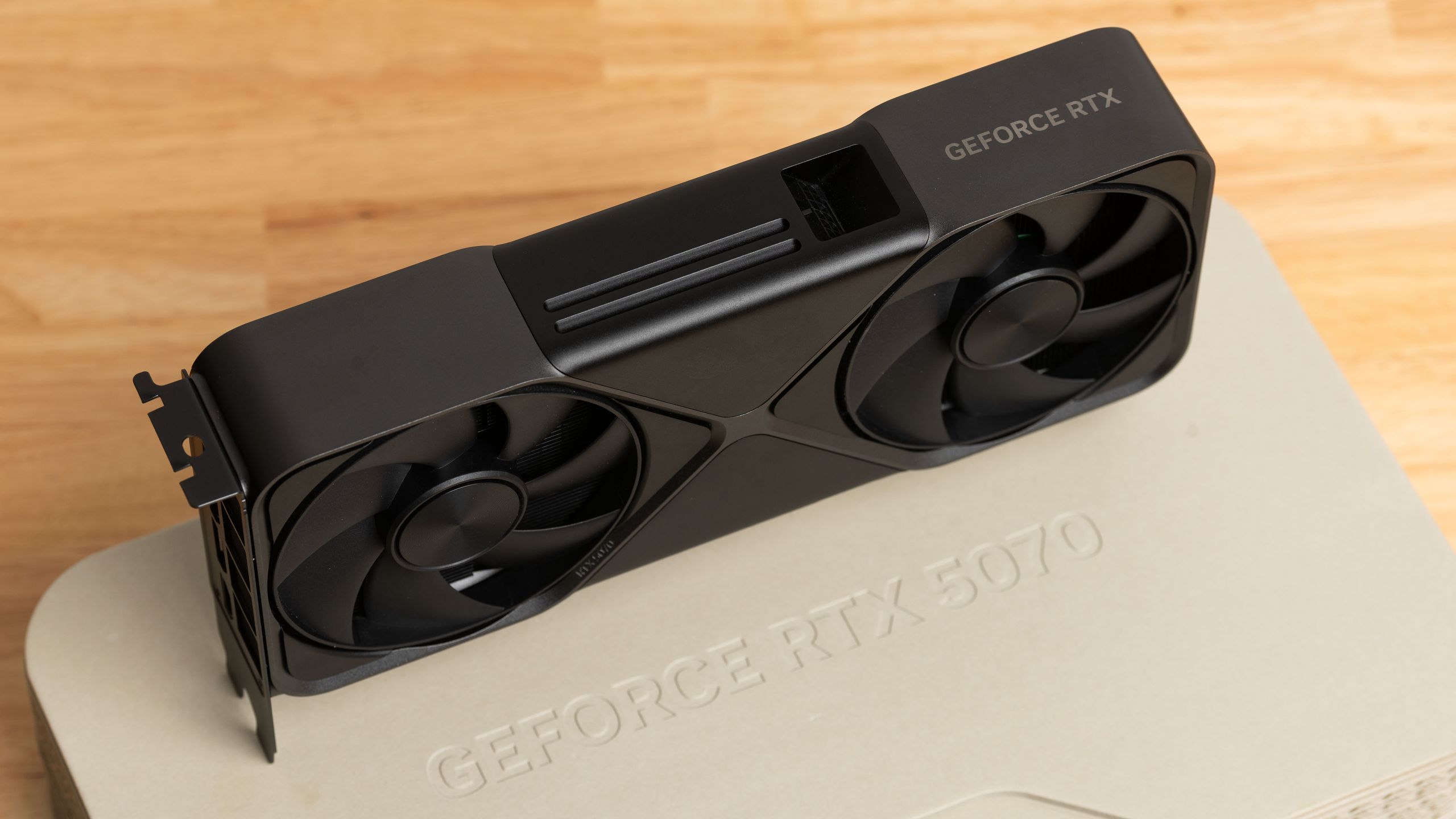
My initial tests were performed on a 5090 , but I was pleasantly surprised to see that leaving DirectStorage enabled no longer tanked performance. However, the 5090 is an absolute beast, so this was not necessarily a sign that the Blackwell architecture is better suited to handle GPU decompression. For that, we need to test more Blackwell GPUs across the stack. Note that AMD Radeon GPUs never experienced this issue, so we will only be testing Nvidia cards in this article.
64GB (2x32GB) G.SKILL Flare X5 DDR5 @6200 MHz CL30
Key considerations
- Investor positioning can change fast
- Volatility remains possible near catalysts
- Macro rates and liquidity can dominate flows
Reference reading
- https://www.tomshardware.com/pc-components/gpus/SPONSORED_LINK_URL
- https://www.tomshardware.com/pc-components/gpus/testing-directstorage-with-gpu-decompression-do-blackwell-gpus-have-the-upper-hand#main
- https://www.tomshardware.com
- HP Omen Max 45L review: Flagship desktop gaming PC performance with a price tag to match
- Micron's $24 billion Singapore fab could need 500 transformers, more than double the output of any single manufacturer — heavy electrical infrastructure the lat
- Three individuals charged with attempting to break US sanctions on AI chips — damning text messages between conspirators reveal intention to find clients to ‘ac
- Grab this $8.98 TP-Link gigabit Ethernet switch for lag-free 4K streaming and gaming — save nearly 50% on silent unmanaged 5-port hub to instantly expand your L
- RTX 5060 gaming laptop brings epic power for under $1,500 — save $580 on Dell's Alienware 16X Aurora
Informational only. No financial advice. Do your own research.