
AI is the defining technology of our time, quickly becoming core business infrastructure. It’s fueled by a diverse ecosystem of models: large and small, open and proprietary, generalist and specialist.
This variety is essential for a future where every application will be powered by AI, every country will build it and every company will use it. And it’s not a debate between open versus closed innovation.
As NVIDIA founder and CEO Jensen Huang told attendees at a special session on open frontier models at NVIDIA GTC , “Proprietary versus open is not a thing. It’s proprietary and open.”
That’s why the future of AI innovation isn’t about a single massive model. Every industry — healthcare, finance, manufacturing — tackles its own unique challenges. They all need AI that can reason about their data and workflows in various ways. And that requires systems of models, tuned and specialized for different modalities, domains and organizations, working together to solve a specific business problem.
NVIDIA is a major contributor to open source AI: it’s now the largest organization on Hugging Face , with nearly 4,000 team members . And at GTC, the company announced the NVIDIA Nemotron Coalition , a first-of-its-kind global collaboration of model builders and AI labs working to advance open, frontier-level foundation models through shared expertise, data and compute.
The first project stemming from the coalition will be a base model codeveloped by Mistral AI and NVIDIA, with coalition members contributing data, evaluations and domain expertise to support the model’s post-training and continued development. It’ll be shared with the open ecosystem and underpin the next generation of NVIDIA Nemotron models, which have been downloaded more than 45 million times from Hugging Face.
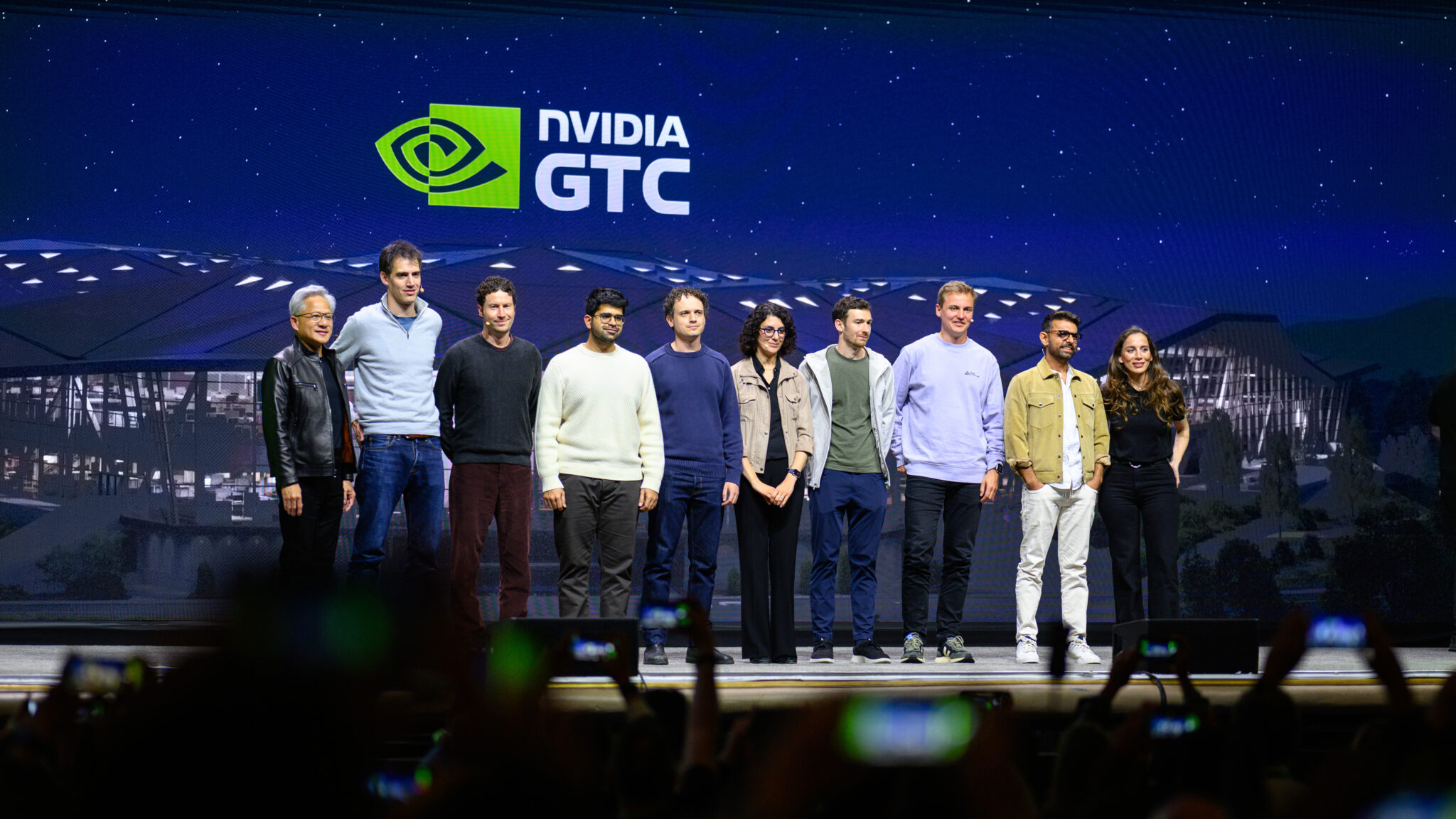
Several Nemotron Coalition members joined other leaders building and consuming open models for a back-to-back panel session at GTC.
The first panel featured LangChain cofounder and CEO Harrison Chase, Thinking Machines Lab founder and CEO Mira Murati, Perplexity CEO and cofounder Aravind Srinivas, Cursor CEO and cofounder Michael Truell, and Reflection AI cofounder and CEO Misha Laskin. The second included Mistral cofounder and CEO Arthur Mensch, OpenEvidence CEO Daniel Nadler, and Black Forest Labs cofounder and CEO Robin Rombach, alongside Hanna Hajishirzi, senior director of natural language processing at Ai2, and Anjney Midha, founder of AMP PBC.
Five key points stood out from the conversation:
Key considerations
- Investor positioning can change fast
- Volatility remains possible near catalysts
- Macro rates and liquidity can dominate flows
Reference reading
- https://blogs.nvidia.com/blog/ai-future-open-and-proprietary/#primary
- https://blogs.nvidia.com/blog/author/karibriski/
- https://blogs.nvidia.com/blog/ai-future-open-and-proprietary/#disqus_thread
- NVIDIA DSX Air Boosts Time to Token With Accelerated Simulation for AI Factories
- Gigabyte Aero X16 Review: Capable hardware, compromised experience
- Seagate FireCuda 530R 2TB SSD Review: A stealthy workstation powerhouse
- Google's TurboQuant reduces AI LLM cache memory capacity requirements by at least six times — up to 8x performance boost on Nvidia H100 GPUs, compresses KV cach
- Snap Decisions: How Open Libraries for Accelerated Data Processing Boost A/B Testing for Snapchat
Informational only. No financial advice. Do your own research.