
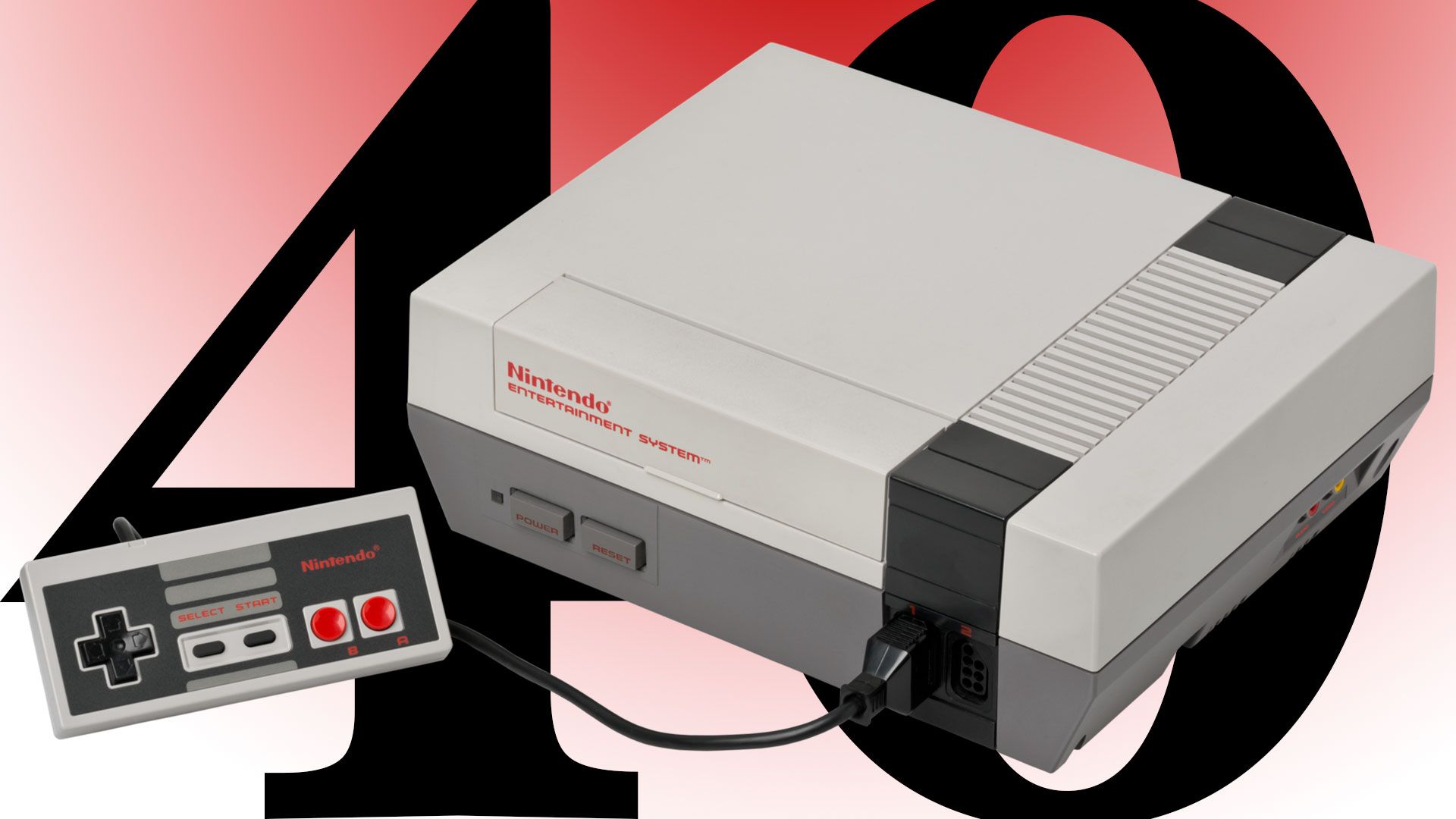
Nintendo of America veterans chatted to a host from the Video Game History Foundation to celebrate the console’s Ruby jubilee.
When you purchase through links on our site, we may earn an affiliate commission. Here’s how it works .
(Image credit: Public Domain via Wikipedia) To celebrate the 40 th anniversary of the Nintendo Entertainment System (NES) in the U.S., the Video Game History Foundation hosted a discussion with three of the key executives behind the big 1985 launch in the U.S. Among the interesting stories told, we were tickled to hear that, in some alternate future reality, the NES might have ended up looking like an Atari 2600 — complete with a wood veneer finish and top switches.
Watch On The above panel discussion, headlined “We Launched the NES 40 Years Ago Today,” was recorded at the Portland Retro Gaming Expo 2025.
The panel included Frank Cifaldi, the Founder and Director of the Video Game History Foundation, and three former Nintendo of America employees. In 1985, Bruce Lowry was VP of Sales, Gail Tilden was the marketing communications manager, and Lance Barr was a product designer involved in preparing the NES and the Zapper for the U.S. market.
Atari just resurrected its most potent foe in the console wars from 45 years ago, the Intellivision Spirit
Modders recreate the original Xbox prototype with solid block of metal and original hardware
Iconic Vectrex console reimagined for the modern day with OLED display, microSD, and wireless controllers
Many video gaming enthusiasts will already be aware that the NES was a version of the Famicom (Family Computer) that Nintendo marketed in Japan since 1983. However, the North American hardware came with a distinctly different design from the Japanese console, which shared the same MOS 6502 -powered 8-bit guts.
Straight off the bat, the panel highlighted their dislike of the Japanese Famicom design and explained how it had to be different in the U.S., with the industry still reeling from the Video Game Crash of 1983. Launching into this market might have seemed foolhardy at the time, with both retailers and consumers skeptical of ‘new’ video game systems. Thus, it was important for Nintendo to do its utmost to give the NES a fighting chance in North America.
The panel started by discussing why the Japanese design wasn’t simply brought to the American market, as it was, despite their dislike for the outward appearance.
Barr was first to step up to answer this, and without hesitation opined that “I thought it was awful.” The American product designer said the color scheme wasn’t to his liking, nor was the cartridge door mechanism, which he called “weird.” Even the gold metal section atop the controllers drew criticism for looking like it was made from “leftover beer cans” from recycling.
Get Tom's Hardware's best news and in-depth reviews, straight to your inbox.
Key considerations
- Investor positioning can change fast
- Volatility remains possible near catalysts
- Macro rates and liquidity can dominate flows
Reference reading
- https://www.tomshardware.com/video-games/nintendo/SPONSORED_LINK_URL
- https://www.tomshardware.com/video-games/nintendo/the-nes-at-40-employees-reveal-there-were-plans-for-a-woodgrain-veneer-model-to-rival-the-atari-2600#main
- https://www.tomshardware.com
- Wolfenstein 3D publisher recalls fight to distribute game in Germany — porn stores and plain packaging came to the rescue of 1990s FPS gamers
- Asus, MSI, other manufacturers panic-buying RAM stocks, while major memory chipmakers rake in profits — massive demand for HBM and RDIMM for data centers drivin
- AI On: 3 Ways to Bring Agentic AI to Computer Vision Applications
- Chinese AI startup gets access to 2,300 banned Blackwell GPUs by exploiting cloud loophole — rents compute from Indonesian firm with 32 Nvidia GB200 server rack
- The MP944 was the ‘real’ world’s first microprocessor, but it was top secret for nearly 30 years — F-14 Tomcat's chip lived in the shadow of the Intel 4004, but
Informational only. No financial advice. Do your own research.