
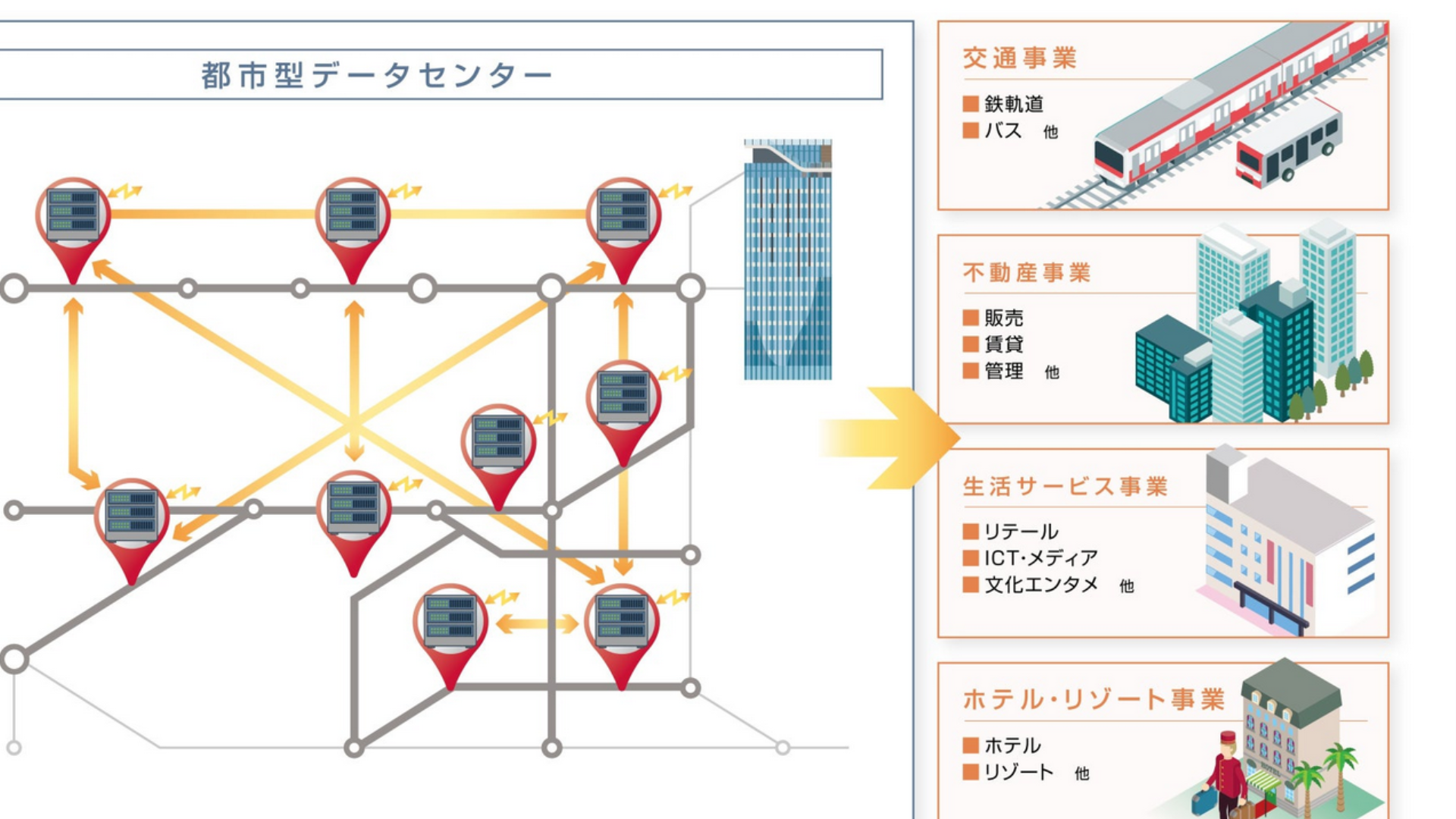
Tokyu Corporation, Tokyu Electric Railway, It's Communications Corporation, and Tokyu Construction are all participating. Tokyu Construction is developing the modular unit itself, Tokyu Electric Railway is providing the site beneath the elevated track, and It's Communications will supply fiber connectivity using optical cable already installed along the railway.
The modular unit packages servers, cooling, and power supply equipment into a container-sized enclosure that can be deployed without constructing a full building. The consortium plans to measure the server housing's sound insulation, thermal insulation, vibration isolation, and cooling performance under the specific environmental conditions of a railway overpass. Based on the results, it will assess whether the format is viable for deployment in other locations along the Tokyu network.
You may like US startup plans to build data centers inside ocean-based wind turbines, servers water cooled via chilly North Sea Microsoft turns to superconductors for distributing power to its AI data centers Nvidia-backed trial shows AI data centers can flexibly adjust power use in near real time, with global implications for energy consumption Optical fiber network is already established along the rail lines One advantage the consortium is banking on is the large-capacity optical fiber network that It's Communications has already built along Tokyu's rail lines. Rather than trenching new fiber to connect a facility, these under-track installations could tap directly into existing backbone infrastructure. The consortium also said it’s considering future data center deployments across the broader Tokyu Line network, including in Shibuya, as part of a longer-term digital infrastructure strategy.
The experiment takes place against a backdrop of severe infrastructure challenges in Tokyo's data center market. Yasuo Suzuki, executive vice president and managing director for Japan and APAC at NTT Global Data Centers, told Data Center Knowledge in September 2025 that power grid connection wait times in inner Tokyo can stretch five to 10 years.
Tokyo land prices rose 69% in 2024, according to Mordor Intelligence, and the city already has 132 operational data centers with at least 18 more under construction. Medium-sized facilities in Japan are growing at a 12% compound annual growth rate through 2031, according to the same research firm, outpacing larger builds because they can be deployed faster in constrained urban environments.
Follow Tom's Hardware on Google News , or add us as a preferred source , to get our latest news, analysis, & reviews in your feeds.
Get Tom's Hardware's best news and in-depth reviews, straight to your inbox.
Key considerations
- Investor positioning can change fast
- Volatility remains possible near catalysts
- Macro rates and liquidity can dominate flows
Reference reading
- https://www.tomshardware.com/tech-industry/SPONSORED_LINK_URL
- https://www.tomshardware.com/tech-industry/tokyu-group-to-test-modular-data-centers-under-tokyo-railway-overpasses#main
- https://www.tomshardware.com
- Corsair's Scimitar RGB Elite gaming mouse hits an all-time low of $49 — 17 programmable buttons built for MMO gaming
- New NVIDIA Nemotron 3 Super Delivers 5x Higher Throughput for Agentic AI
- Radeon RX 9070 XT bundle bonanza includes free SSDs, AIO coolers, and power supplies for $699 — Red Team rescues gamers with reasonably-priced GPU bundles
- Museum opens doors to ‘World’s largest collection of Apple products’ on April 1 to celebrate Apple’s 50th anniversary — 2,000 artifacts spread across 20,000 sq
- AMD Ryzen 9 7900X 12-core CPU hits all-time low of $199 — Zen 4 chip brings unbeatable value at $16.58 per core
Informational only. No financial advice. Do your own research.