
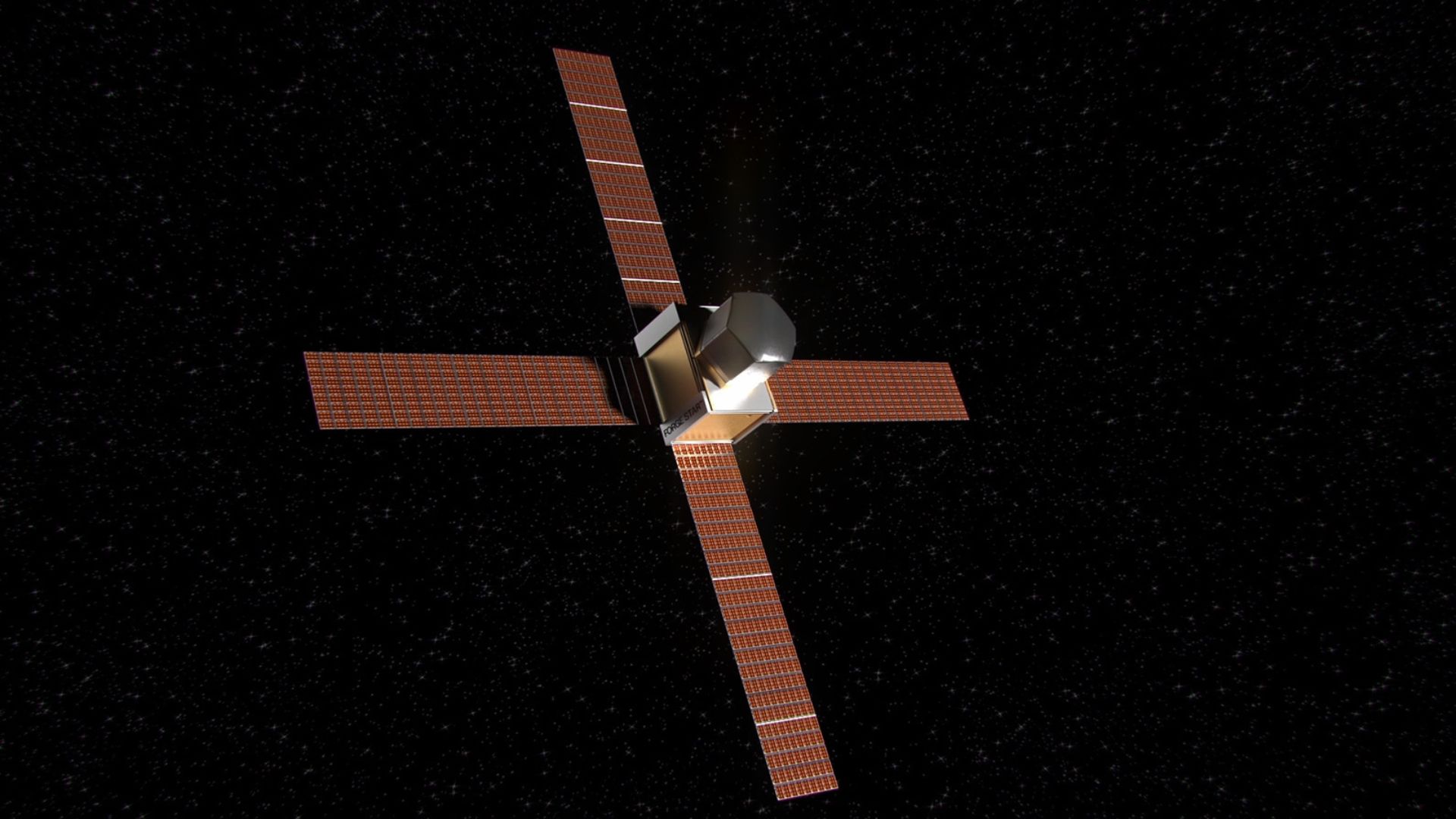
Jowi Morales Social Links Navigation Contributing Writer Jowi Morales is a tech enthusiast with years of experience working in the industry. He’s been writing with several tech publications since 2021, where he’s been interested in tech hardware and consumer electronics.
cyrusfox Sounds wildly optimistic. Even if the physics checks out, how do you realistically supply the tools, materials, power, and maintenance in orbit at any scale that matters economically? Reply
thisisaname This is a technical close to making chips in space as a candle is to a space laser. Interesting but they have very far to go. Reply
bit_user cyrusfox said: Sounds wildly optimistic. Even if the physics checks out, how do you realistically supply the tools, materials, power, and maintenance in orbit at any scale that matters economically? Those are all engineering problems. Hard ones, but the first step is figuring out whether space truly offers advantages not available in terrestrial manufacturing. If not, then we can stop right here. If so, then the next step is to figure out all the issues around performing the full chipmaking process (or at least all of the stages that need to happen in orbit) and the logistics + scale-up problems you mention. Someone mentioned that an Orbital Skyhook is much more practical than a space elevator and still a more efficient way to get stuff into orbit than launching every payload with all the propellant needed to get it into orbit. https://en.wikipedia.org/wiki/Skyhook_(structure) The problem with fully self-propelled launch vehicles is that the propellant needed for that last leg of the journey adds weight and must itself be lifted, as well as the additional fuel tank capacity needed to hold it. So, the benefits of launching to a suborbital altitude are nonlinear. Reply
George³ So, in reality, nothing has been achieved and the theoretical maximum results will probably remain on paper forever? Heating devices are not like they were first launched into space. There are hardly any spacecraft without systems for maintaining the temperature environment, including heating, because it hardly heats up to 1000 degrees, although rheotans (or their modern successors in the role of heating elements) can reach hundreds of degrees. How do they deal with defects caused by cosmic radiation in the manufacturing process. Oh, wait, in fact, they didn't start a manufacturing process at all, they just heated up a small furnace. What a pity that you can't just heat a little silicon in a furnace and turn it into a modern chip with just this processing. Ps. Small answer from Gemini LLM: The use of furnaces for heating materials in space has a long history dating back to the 1970s. While the article highlights semiconductor production by the British company Space Forge , high-temperature processing technology in orbit has been applied dozens, if not hundreds, of times before. Here is a summary of the types and quantities of furnaces launched to space stations prior to this mission: 1. International Space Station (ISS)Multiple high-temperature furnaces have operated on the ISS, some reaching temperatures significantly higher than the 1000°C mentioned in the article: Electromagnetic Levitator (EML): Developed by ESA, this furnace can heat metals up to 2100°C . It allows for containerless melting (via levitation), which is key to achieving the material purity mentioned. Materials Science Laboratory (MSL): Includes modules like the Low Gradient Furnace (LGF) and the Solidification and Quenching Furnace (SQF) , which reach up to 1400°C . Kobairo Rack (Gradient Heating Furnace – GHF): A Japanese furnace in the "Kibo" module designed for high-quality crystal growth at temperatures up to 1600°C . SUBSA and PFMI: Older furnaces (dating back to 2002) operating around 850°C for semiconductor research.2. Tiangong (Chinese Space Station)China has achieved significant records in this field in recent years: Containerless Materials Processing Cabinet: Between 2024 and 2025, Chinese scientists reported heating tungsten alloys to over 3100°C (the highest temperature ever achieved in orbit). High-Temperature Materials Science Experiment Rack: The station features specialized infrastructure for stable, high-temperature material science research.3. Historical Stations (Mir, Salyut, and Skylab) Mir and Salyut (USSR): Between 1980 and 1991, over 500 experiments were conducted on Soviet stations using furnaces such as "Kristall," "Splav," and "Korund." These were used to melt semiconductors, optical materials, and superconductors, often at temperatures exceeding 1000°C. Skylab (USA): As early as 1973, Skylab housed a multipurpose furnace ( M518 ) that reached 1000°C to study crystal growth and metal alloys.SummaryWhile it is difficult to provide an exact "count" of individual devices (due to many interchangeable modules and upgrades), over 20 major types of large-scale furnace systems have been sent into space throughout history, performing thousands of individual heating cycles. The Space Forge experiment is significant not because it is the first, but because it focuses on commercial and scalable manufacturing (via the returnable ForgeStar satellite), whereas previous furnaces on space stations were primarily used for fundamental scientific research. Would you like me to look for more technical details on how the ForgeStar satellite's return mechanism compares to how samples are brought back from the ISS? Reply
LordVile bit_user said: Those are all engineering problems. Hard ones, but the first step is figuring out whether space truly offers advantages not available in terrestrial manufacturing. If not, then we can stop right here. If so, then the next step is to figure out all the issues around performing the full chipmaking process (or at least all of the stages that need to happen in orbit) and the logistics + scale-up problems you mention. It’s not really an engineering problem it’s an accounting problem. If you do find a way to power it, get everything back down/up, manage a maintenance plan and assume that it’s not affected by radiation you need to make it cheap enough to be profitable over fabs on the ground. bit_user said: Someone mentioned that an Orbital Skyhook is much more practical than a space elevator and still a more efficient way to get stuff into orbit than launching every payload with all the propellant needed to get it into orbit. https://en.wikipedia.org/wiki/Skyhook_(structure) The problem with fully self-propelled launch vehicles is that the propellant needed for that last leg of the journey adds weight and must itself be lifted, as well as the additional fuel tank capacity needed to hold it. So, the benefits of launching to a suborbital altitude are nonlinear. A skyhook is LEO only this really should be GEO as to not crash every few years Reply
bit_user LordVile said: It’s not really an engineering problem it’s an accounting problem. If you do find a way to power it, get everything back down/up, manage a maintenance plan and assume that it’s not affected by radiation you need to make it cheap enough to be profitable over fabs on the ground. Accounting is about moving money around. When you want to make something cheaper, that's still engineering. Think about bridges. You need a bridge to be strong enough to hold its required carrying capacity and durable enough to last for its design life. You don't want to over-build it by too much, or else the materials and construction costs needlessly balloon. So, engineering is required to find better materials and designs to deliver on its requirements within budget. Engineering. LordVile said: A skyhook is LEO only this really should be GEO as to not crash every few years Those aren't the only two orbital altitudes. You don't need to go all the way up to a geostationary orbit, just to achieve a low rate of decay. Also, I think Skyhook can work even to help lift to higher orbits. It just means that you need to carry some fuel with you, beyond the skyhook stage. Reply
George³ By the way, it is interesting to what extent the purity and defect-freeness of semiconductors manufactured in orbit would contribute to increasing the performance and reliability of chips, since they are already close to the physical limits of miniaturization? Even if they were manufactured perfectly, which is questionable in space due to radiation, electromagnetic interference, etc., despite the improvements mentioned in the article, they cannot overcome the physical limits. Reply
George³ bit_user said: Accounting is about moving money around. When you want to make something cheaper, that's still engineering. Think about bridges. You need a bridge to be strong enough to hold its required carrying capacity and durable enough to last for its design life. You don't want to over-build it by too much, or else the materials and construction costs needlessly balloon. So, engineering is required to find better materials and designs to deliver on its requirements within budget. Engineering. Those aren't the only two orbital altitudes. You don't need to go all the way up to a geostationary orbit, just to achieve a low rate of decay. Also, I think Skyhook can work even to help lift to higher orbits. It just means that you need to carry some fuel with you, beyond the skyhook stage. And higher orbits, especially geostationary, will require crossing the Van Allen belts… Reply
LordVile bit_user said: Accounting is about moving money around. When you want to make something cheaper, that's still engineering. Think about bridges. You need a bridge to be strong enough to hold its required carrying capacity and durable enough to last for its design life. You don't want to over-build it by too much, or else the materials and construction costs needlessly balloon. So, engineering is required to find better materials and designs to deliver on its requirements within budget. Engineering. It depends IF it’s possible to get it that cheap. You can engineer something to be as cheap as possible and it can still be economically unviable. bit_user said: Those aren't the only two orbital altitudes. You don't need to go all the way up to a geostationary orbit, just to achieve a low rate of decay. You’re going to be launching billions in value of equipment, a low rate of decay isn’t going to be profitable unless you operate it like the ISS which increases cost over time. bit_user said: Also, I think Skyhook can work even to help lift to higher orbits. It just means that you need to carry some fuel with you, beyond the skyhook stage. The extra fuel you’d be carrying to get up normally you mean? Reply
bit_user LordVile said: You’re going to be launching billions in value of equipment, a low rate of decay isn’t going to be profitable unless you operate it like the ISS which increases cost over time. Heh, the maintenance costs of just about everything increase over time, as more and more parts of it degrade and need repair or replacement. LordVile said: The extra fuel you’d be carrying to get up normally you mean? Well, if you want to look at the question seriously, then Wikipedia says (in the page I previously linked) a skyhook design was proposed that could reach altitudes of up to 700 km. 600 km is about the point at which atmospheric density drops to that of space. It's atmospheric drag that makes lower orbits less viable, which is probably why the skyhook proposal targeted 610 to 700 km. https://en.wikipedia.org/wiki/Thermosphere Reply
Key considerations
- Investor positioning can change fast
- Volatility remains possible near catalysts
- Macro rates and liquidity can dominate flows
Reference reading
- https://www.tomshardware.com/tech-industry/semiconductors/SPONSORED_LINK_URL
- https://www.tomshardware.com/tech-industry/semiconductors/uk-company-shoots-a-1000-degree-furnace-into-space-to-study-off-world-chip-manufacturing-semiconductors-made-in-space-could-be-up-to-4-000-times-purer-than-earthly-equivalents#main
- https://www.tomshardware.com
- NVIDIA Awards up to $60,000 Research Fellowships to PhD Students
- MSI B850 MPower Motherboard Review: Micro ATX made for overclocking memory
- Unlucky RTX 5080 buyer who received rocks made whole after month-long investigation — Reddit user shows off new tattoo to commemorate
- Asus announces product price hikes starting January 5, and AI is to blame — RAM and storage cost pressure cited as main trigger for pricing increases
- Chinese enthusiast overclocks AMD's Ryzen 7 9800X3D to 7.33GHz on Colorful X870E Vulcan motherboard — New world record achieved using liquid nitrogen cooling
Informational only. No financial advice. Do your own research.