
A month-long North Sea operation forced three Russian submarines to abandon surveying activity over cables and pipelines.
When you purchase through links on our site, we may earn an affiliate commission. Here’s how it works .
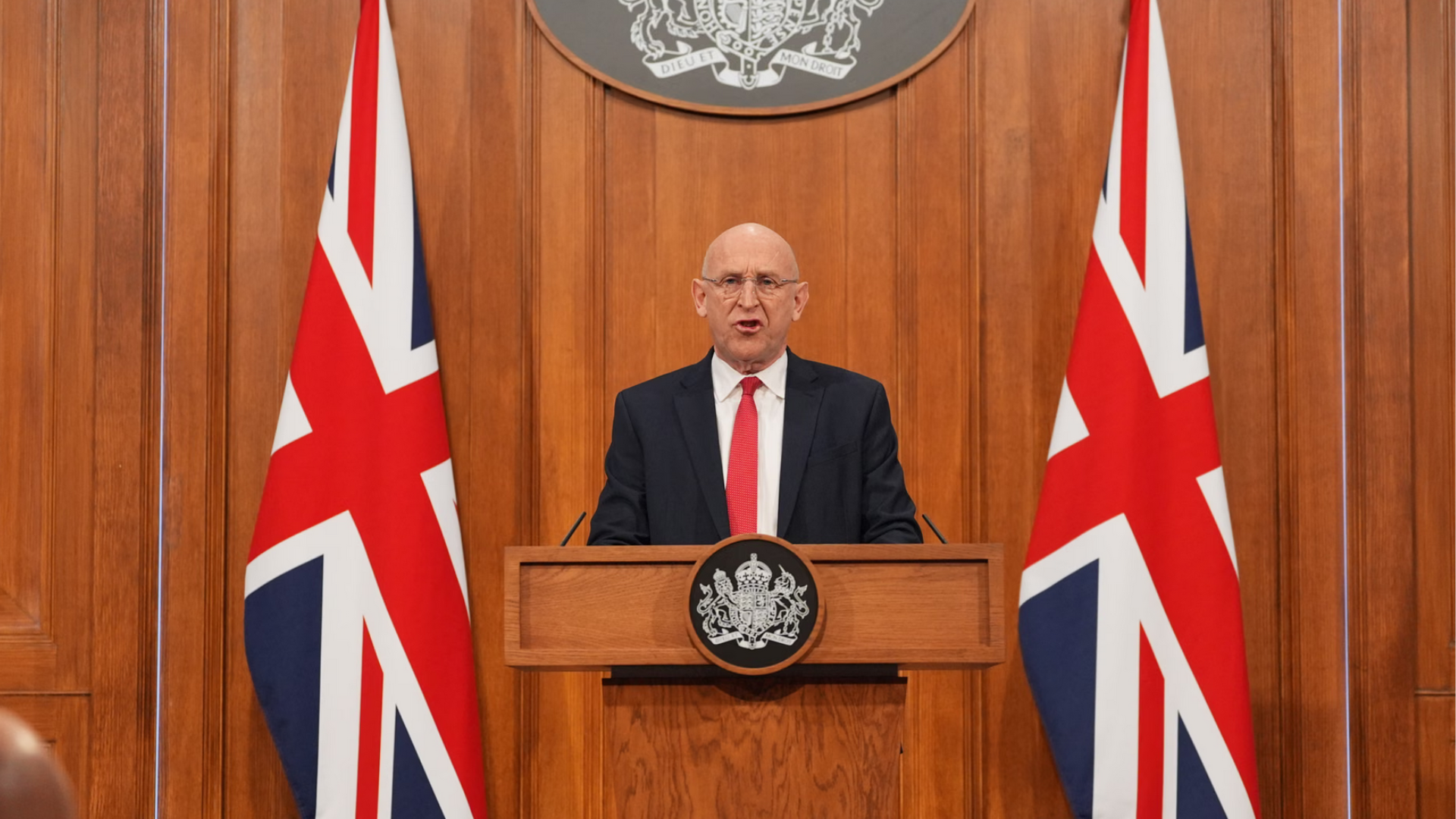
A Royal Navy warship and P8 maritime patrol aircraft have tracked three Russian submarines, including two GUGI-class deep-sea vessels, attempting to survey undersea cables and pipelines in the North Atlantic during a month-long operation, UK Defence Secretary John Healey told a Downing Street press conference on Thursday morning.
Healey said the Russian activity took place while international attention was focused on the U.S.-Israel war in Iran, and that the Russian subs abandoned the mission without damaging any infrastructure.
Healey declined to specify the exact location or the cables involved, saying only that the activity didn’t take place in UK territorial waters. He said UK forces would work with allies to verify that no pipelines or cables had been damaged. Addressing Vladimir Putin directly, Healey said any attempt to damage undersea cables or pipelines would "have serious consequences.”
You may like Russian ship loitering near transatlantic data cables chased off by Royal Navy attack helicopter Undersea cable cutting shenanigans lead Finland to create a dedicated maritime surveillance center Russian 'Inspector' spacecraft intercepted communications from a dozen European satellites, report claims The GUGI-class is a Russian special-mission submarine programme associated with seabed operations and reconnaissance, and the presence of two such vessels alongside a third submarine clearly points to surveillance efforts. Healey said the operation demonstrated that UK armed forces were capable of detecting, deterring, and responding to threats against vital undersea infrastructure.
Undersea cables carry the majority of international data traffic, and the global network of them is expanding rapidly to meet AI-driven capacity demand. As of mid-February, 119 new cables were planned globally, up from 98 in January 2025 and 66 in January 2020, according to TeleGeography chief research officer Tim Stronge, cited by the Wall Street Journal .
Unfortunately, the cables themselves are difficult to harden. A typical armored submarine cable is roughly 1.4 inches in diameter, wrapped in galvanized steel wires around a copper sheath and optical fibers. Anchor drags from large commercial vessels remain the primary threat to them, and additional steel plating can’t reliably prevent a snagged cable from being ripped up. Close to shore, cables are buried, but only to limited depths.
Several nations are exploring military solutions to ward off attacks on cable infrastructure, with NATO having launched an effort known as Baltic Sentry in January. It uses ships, drones, and aircraft to patrol the Baltic Sea, and was launched after a Russia-linked vessel cut cables in 2024.
Get Tom's Hardware's best news and in-depth reviews, straight to your inbox.
Key considerations
- Investor positioning can change fast
- Volatility remains possible near catalysts
- Macro rates and liquidity can dominate flows
Reference reading
- https://www.tomshardware.com/tech-industry/SPONSORED_LINK_URL
- https://www.tomshardware.com/tech-industry/uk-navy-tracked-russian-submarines-near-undersea-cables#main
- https://www.tomshardware.com
- Ambitious hacker reduces worst-case memory latency by up to 93%, but with severe downsides — 1960s bottleneck overcome by hedging memory accesses to avoid runni
- Intel Arc GPUs can finally boot up and play 'Crimson Desert' — but you'll probably want to wait for official support
- Taiwanese chip makers call on government to stockpile helium, liquid natural gas — TSIA pleads for strategic supplies as US and Iran sign ceasefire in Middle Ea
- Asus Zenbook A16 review: Snapdragon X2 Elite Extreme is a strong chip in a so-so package
- Anthropic's latest AI model identifies 'thousands of zero-day vulnerabilities' in 'every major operating system and every major web browser' — Claude Mythos Pre
Informational only. No financial advice. Do your own research.