
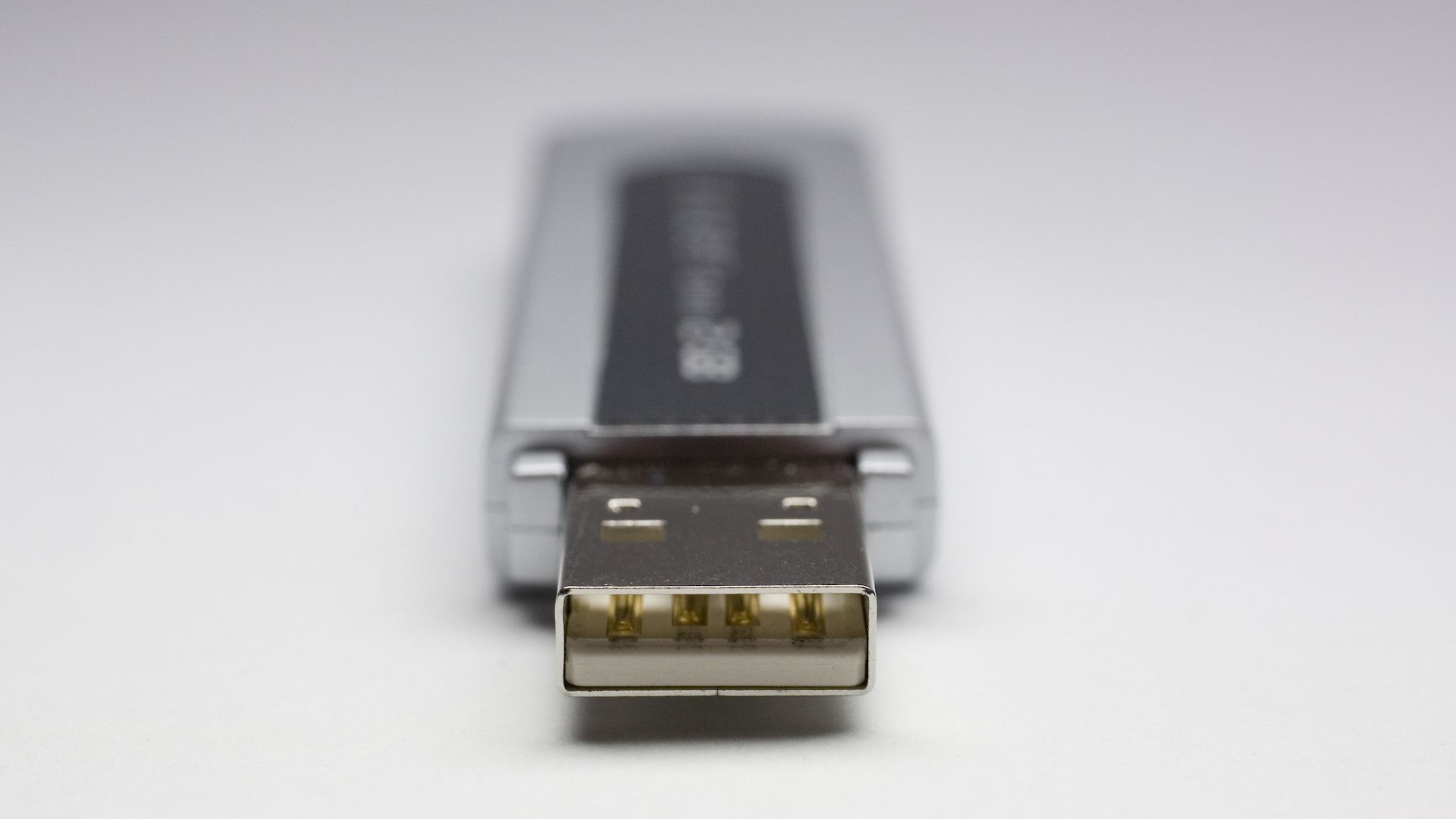
Back in the COVID-stricken days of the year 2020, Zachary Vance bought ten Kingston Digital DataTraveler SE9 32 GB USB 2.0 drives from Amazon and filled them to the brim with random data using direct block writes. He stashed them away, and planned to check data integrity on a minimum of one more drive than the year before. The test years follow the pattern of of +1, 2, 3, 4, 6, 8, 11, 15, 20, 27.
It's 2026 so we're now in test #5, and the results are the same as the previous years: zero bit rot so far, and a total of five drives tested. Vance's method is to test one additional drive for bit flips, and fully re-write any good drives. So far, all tested drives came out perfectly fine, adeptly challenging conventional wisdom that the data on a USB stick isn't expected to be readable after six months to a year, depending on who you ask.
You may like SATA SSD cheated death from failed attempt at data destruction with a drill Researcher builds bizarre 128-byte USB drive the size of a dinner plate using ancient pre-semiconductor magnetic core memory technology Best Flash Drives 2026: Fast, Spacious, Pocketable USB Storage As far as we could find, there are no large-scale tests performed specifically about long-term data retention in consumer USB drives, and Vance's effort is close to the only one we could otherwise find. Commenters pointed out some limitations of Vance's methodology, chiefly the fact that all 10 drives are from the same make, model, and almost assuredly the same lot. He's also keeping the drives at "standard conditions", meaning a box in his closet, in presumably with some form of temperature control.
Vance's results are definitely promising, but drive make and temperature may well be the biggest factors in longevity. Redditor Carnildo performed a three-drive, one-year test recently, employing three lightly-used drives, one PNY and two Lexar of different models, all on "extreme discount" at Office Depot. He left one of the drives unpowered inside an attic without climatization, a space that "spent most of the winter in sub-freezing condition[s]." The second drive was unpowered, but in a standard-temperature room. The third drive was periodically read.
After one year, all three units displayed data corruption, and the one with the most failures was actually the unpowered indoor drive, while the "active" drive displayed the least. If anything can be gleaned from this conflicting set of limited results with small data sets, it's that the largest factors are probably the quality of the USB drive and how it's stored.
Although flash memory manufacturers are meant to follow the JEDEC JESD47 standard that requires that flash chips go through a sustained test meant to simulate 10 years at 55°C, the standard is not binding or enforceable in any form, short of business dealings. While vendor contracts, QVLs, and standards of industries where the cells are used (automotive, aeronautical, etc.) can explicitly demand compliance, there are no such checks for standard consumer USB sticks, particularly among off-brand offerings.
Get Tom's Hardware's best news and in-depth reviews, straight to your inbox.
Key considerations
- Investor positioning can change fast
- Volatility remains possible near catalysts
- Macro rates and liquidity can dominate flows
Reference reading
- https://www.tomshardware.com/pc-components/usb-flash-drives/SPONSORED_LINK_URL
- https://www.tomshardware.com/pc-components/usb-flash-drives/unpowered-flash-drive-data-retention-test-shows-promising-results-after-six-years-results-show-no-data-corruption-on-usb-sticks-challenging-conventional-wisdom#main
- https://www.tomshardware.com
- March Into the Cloud With 15 New Games Coming to GeForce NOW
- Jensen Huang set to receive $4 million bonus from Nvidia, 0.002% of his $164 billion net worth — a small incentive for one of the richest people on earth
- 'Borderline scam' 1.1TB HP laptop deal on Amazon draws consumer ire, laptop has 128GB SSD and 1TB of OneDrive cloud storage — 'generous' $499 third-party laptop
- Chinese SSD maker YMTC lists its first commercial PCIe 5.0 SSD as worldwide shortage intensifies — Xtacking 4.0 NAND powers speeds of up to 10,500 MB/s
- Get 32GB of Corsair Vengeance DDR5 for $163 when bundled with AMD's new 9850X3D and an X870E-E motherboard — save $236 on the heart of your new AM5 PC
Informational only. No financial advice. Do your own research.