
Trump tariff turbulence risks handing TSMC a win over American chip manufacturers
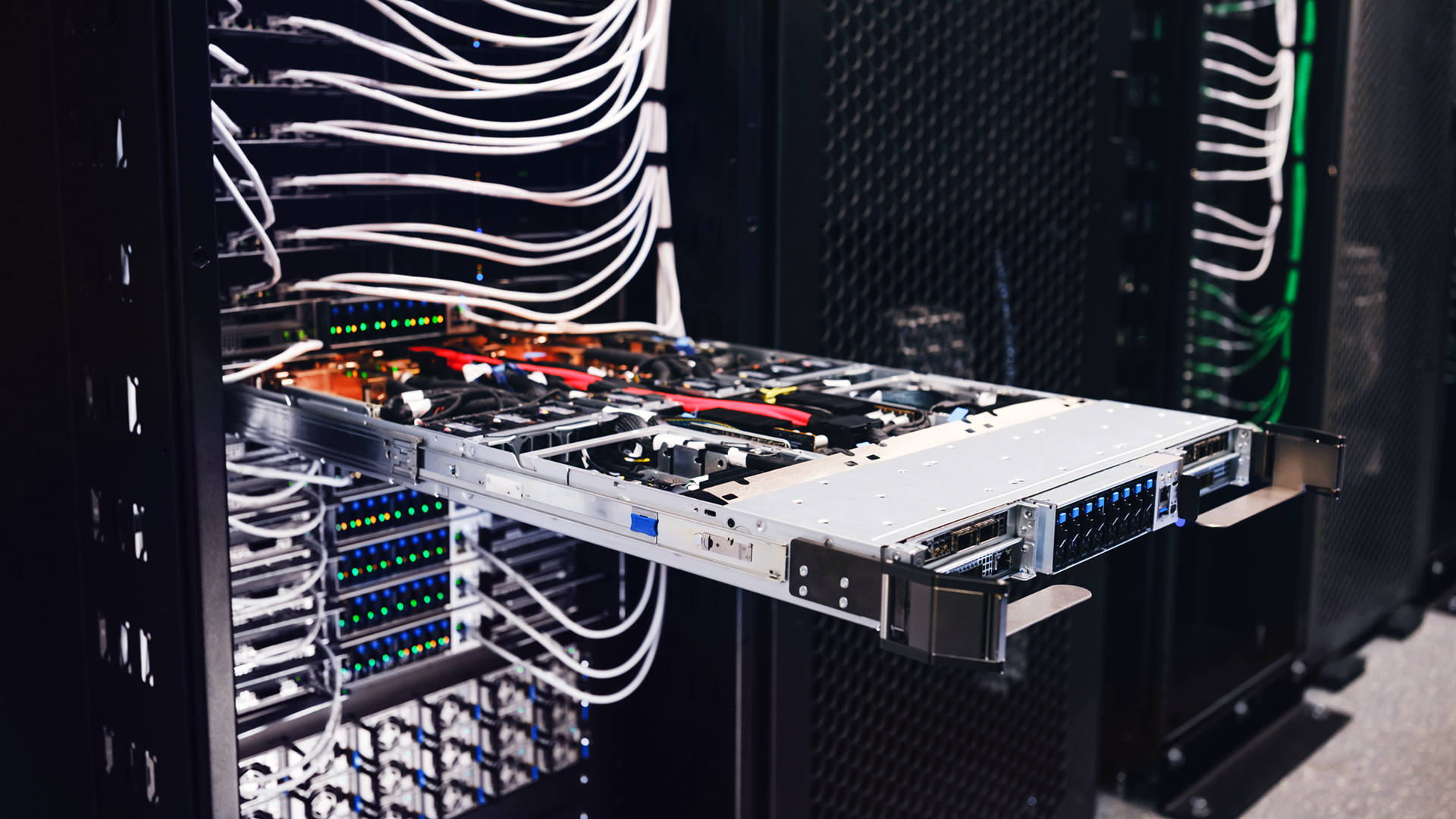
The surge of imports from Taiwan to the U.S. have a very specific reason: Taiwanese companies like Foxconn , Quanta, and Wistron produce the lion’s share of AI servers, each of which pack eight AI accelerators (such as Nvidia’s B200 or B300 ) that cost around $50,000 per unit, as well as rack-scale AI systems like Nvidia’s NVL72 GB200/GB300 that are powered by 72 AI GPUs. As the U.S. is building out its AI infrastructure, companies like AWS, Google , Meta, and Microsoft are inevitably increasing their imports from Taiwan, which reshapes the country’s trade profile.
One thing to keep in mind here is that Foxconn, Quanta, and Wistron are expanding their production capacity in the U.S. and Mexico to serve North American markets. It remains to be seen what happens to Taiwan's exports to the U.S. once these production facilities are complete. Yet, it does not look like Taiwan's exports in general are going to drop significantly because of this, as the country's exports are increasing in general.
In a bid to verify our guesses about shipments of fully equipped AI servers and other expensive machines that used to be assembled in China in the early 2020s before the U.S. government introduced export controls on advanced AI and HPC processors in 2022 – 2023, we decided to check the statistics published by Taiwan's International Trade Administration (ITA).
In total, Taiwan exported some $198.2 billion worth of goods to the U.S. in 2025, up from $111.3 billion in 2024, a dramatic increase. Meanwhile, product code 84 — which includes everything from PCs to AI servers and nuclear reactors — was by far Taiwan's largest export category when it comes to trading with the U.S. Taiwan shipped $145.78 billion worth of code 84 products to the U.S. in 2025, up a whopping 127% from $64.173 billion in 2024. When it comes to Taiwan's traditional main export products — semiconductors, product code 85 — their sales to the U.S. increase noticeably to $28.786 billion in 2025, from $23.804 billion in 2024.
But Taiwan's global exports of products code 84 — which includes AI servers and other sophisticated systems — reached $238.63 billion in 2025, up a staggering 93.5% from $123.27 billion in 2024, which means that Taiwan increased shipments of such machines not only to the U.S., but also to other countries, including those in Europe, the Middle East, and Asia. Given such growth, it looks like these countries will easily replace the U.S. as importers of Taiwanese advanced systems once Foxconn, Quanta, and Wistron start to ramp production in newly built facilities in the U.S . later this decade. As far as exports of chips (products code 85) are concerned, their sales also increased from $224.31 billion in 2024 to $276.7 billion in 2025, which represents a strong 23.4% growth, but is far lower compared to the increase in exports of sophisticated systems, such as AI servers.
Taiwan's trade with China is another interesting factor to consider. Despite political pressure from Beijing, Taiwan still increased its exports to China to $100 billion, modestly up from $96.54 billion a year before. Surprisingly, export of chips remained flat at $7.726 billion (vs. $7.763 billion a year before) year-over-year in 2025. This is likely the result of U.S. export controls and a developing semiconductor industry in the People’s Republic . As for code 85 products, which include advanced systems, their exports from Taiwan to China increased by 6.3% to $69.034 billion in 2025 from 2024.
Perhaps the most ironic thing about dramatically lowering exports from China to the U.S. is that the trade imbalance between the two countries remains significant, according to official statistics published by DigiTimes . In December alone, the U.S. recorded a $12.7 billion trade deficit with China, smaller only than deficits with the European Union, Taiwan, Vietnam, and Mexico. For 2025, the U.S. trade deficit with China decreased by $93.4 billion, but it still reached $202.1 billion.
Meanwhile, the deficit with Taiwan more than doubled, climbing to nearly $147 billion, which demonstrates that while sourcing patterns are changing amid the trade war between the U.S. and China, the overall U.S. trade gap remains large.
Anton Shilov is a contributing writer at Tom\u2019s Hardware. Over the past couple of decades, he has covered everything from CPUs and GPUs to supercomputers and from modern process technologies and latest fab tools to high-tech industry trends. ","collapsible":{"enabled":true,"maxHeight":250,"readMoreText":"Read more","readLessText":"Read less"}}), "https://slice.vanilla.futurecdn.net/13-4-17/js/authorBio.js"); } else { console.error('%c FTE ','background: #9306F9; color: #ffffff','no lazy slice hydration function available'); } Anton Shilov Social Links Navigation Contributing Writer Anton Shilov is a contributing writer at Tom’s Hardware. Over the past couple of decades, he has covered everything from CPUs and GPUs to supercomputers and from modern process technologies and latest fab tools to high-tech industry trends.
Key considerations
- Investor positioning can change fast
- Volatility remains possible near catalysts
- Macro rates and liquidity can dominate flows
Reference reading
- https://www.tomshardware.com/tech-industry/SPONSORED_LINK_URL
- https://www.tomshardware.com/tech-industry/taiwan-exports-leapfrog-china#main
- https://www.tomshardware.com
- Newegg slashes $176 off this potent AMD gaming bundle, which includes $437.99 of RAM – Ryzen 7 9800X3D CPU, 32GB of Corsair Vengeance, and X870E Aorus Elite Wif
- Get 20TB of Seagate external storage for just $11 per terabyte — rare discount lands during the AI-driven storage crunch
- AMD Zen 6 and Intel Nova Lake CPUs reportedly arriving late, delayed to CES 2027 — next-gen chips rocked by industry turmoil
- Dell's new prebuilt PC has special custom power connector for Nvidia GPU — even large OEMs apparently fear the 16-pin power connector meltdowns
- GeForce NOW Turns Screens Into a Gaming Machine
Informational only. No financial advice. Do your own research.