
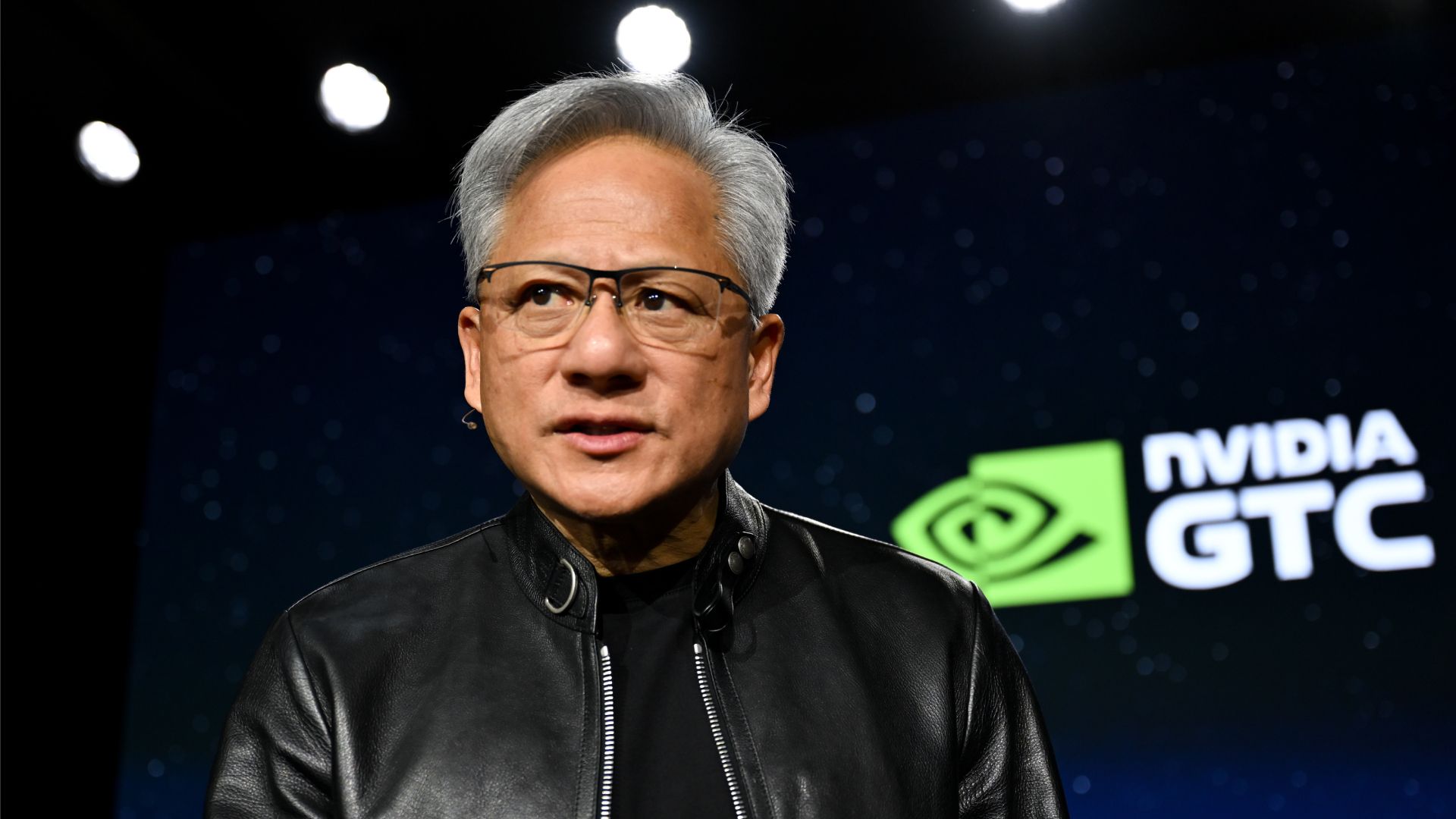
Nvidia still hasn’t sold a single H200 to China nearly three months after getting the green light from the White House
Although that would seem to distance Nvidia from any concerns, this may be only the beginning of its problems. The letter doesn't just call for a halt to exports, but hints that CEO Jensen Huang may have misled lawmakers when previously discussing GPU diversions.
In the letter, Banks and Warren highlight that as part of Huang's 2025 lobbying efforts to allow the sale of its high-end GPUs to China, he rejected the idea that GPUs were being diverted there from other territories to get around trade restrictions.
Huang reportedly told lawmakers that because Nvidia customers were aware that diversions of chips were not legally permitted, they “monitor themselves very carefully."
The Senators highlighted these and other statements by Nvidia executives as “materially false or misleading." If such statements affected licensing controls, then those controls should be reconsidered, they said.
"American export controls exist to protect American national security . They only work if the companies subject to them follow the law and meaningfully, aggressively monitor their supply chains. We are concerned that the recent Supermicro indictment raises serious questions about Jensen Huang’s public assurances.”
Huang's claims may be under scrutiny, as there is public evidence of Nvidia's abilities to track where its graphics processors end up. Although it denied claims from China that it had kill-switches, or active tracking hardware on the GPUs themselves, Nvidia has admitted that telemetry data can allow it to estimate the location of a GPU .
Since there is a trackable latency between an Nvidia GPU sending a message to Nvidia servers and then receiving the response, Nvidia can make a guess of where in the world it might be.
If that truly is the case, how could it not know GPUs planned for one territory or country were being diverted to another?
The letter also raises serious questions about the heavy contrast in U.S. export and import legislation. The Commerce Department said in response to the letter that selling Nvidia's H200 GPUs to China, “under controlled conditions, will strengthen the American technology ecosystem." And yet at the same time, the administration recently placed extreme restrictions on Chinese imports of drones and foreign-made routers.
On Monday this week, the Federal Communications Commission said it would no longer certify Wi-Fi routers manufactured outside the United States. It didn't single out China, but the measure will prohibit the sale of routers in the United States if they are manufactured in China. Similarly, the FCC has blocked the sale of next-generation Chinese drones in the United States. Although it has since allowed older models from manufacturers like DJI to be sold , the overall ban is still in place ahead of planned trade negotiations between the U.S. and China in early April.
Despite this heavier hand on other aspects of trade with China, the route for Nvidia GPU sales currently remains open, though this new letter may ultimately change that.
Nvidia also faces another potential roadblock in the form of the Chip Security Act . Set to be voted on by the House foreign affairs committee as soon as this week, it would require location tracking on all advanced AI chips to make diversion far more difficult.
Consider how cagey China was when it merely thought Nvidia GPUs had tracking hardware on board. If Nvidia is forced to add such equipment to its hardware, the company's prospective sales to China may face a far more serious roadblock.
Jon Martindale is a contributing writer for Tom's Hardware. For the past 20 years, he's been writing about PC components, emerging technologies, and the latest software advances. His deep and broad journalistic experience gives him unique insights into the most exciting technology trends of today and tomorrow. ","collapsible":{"enabled":true,"maxHeight":250,"readMoreText":"Read more","readLessText":"Read less"}}), "https://slice.vanilla.futurecdn.net/13-4-19/js/authorBio.js"); } else { console.error('%c FTE ','background: #9306F9; color: #ffffff','no lazy slice hydration function available'); } Jon Martindale Freelance Writer Jon Martindale is a contributing writer for Tom's Hardware. For the past 20 years, he's been writing about PC components, emerging technologies, and the latest software advances. His deep and broad journalistic experience gives him unique insights into the most exciting technology trends of today and tomorrow.
Key considerations
- Investor positioning can change fast
- Volatility remains possible near catalysts
- Macro rates and liquidity can dominate flows
Reference reading
- https://www.tomshardware.com/tech-industry/SPONSORED_LINK_URL
- https://www.tomshardware.com/tech-industry/us-senators-call-for-a-halt-to-nvidia-gpu-exports-in-the-wake-of-the-super-micro-scandal-looming-chip-security-act-may-put-a-wrench-into-huangs-china-ambitions#main
- https://www.tomshardware.com
- Blowing Off Steam: How Power-Flexible AI Factories Can Stabilize the Global Energy Grid
- GTC Spotlights NVIDIA RTX PCs and DGX Sparks Running Latest Open Models and AI Agents Locally
- The Future of AI Is Open and Proprietary
- NVIDIA DSX Air Boosts Time to Token With Accelerated Simulation for AI Factories
- Gigabyte Aero X16 Review: Capable hardware, compromised experience
Informational only. No financial advice. Do your own research.