
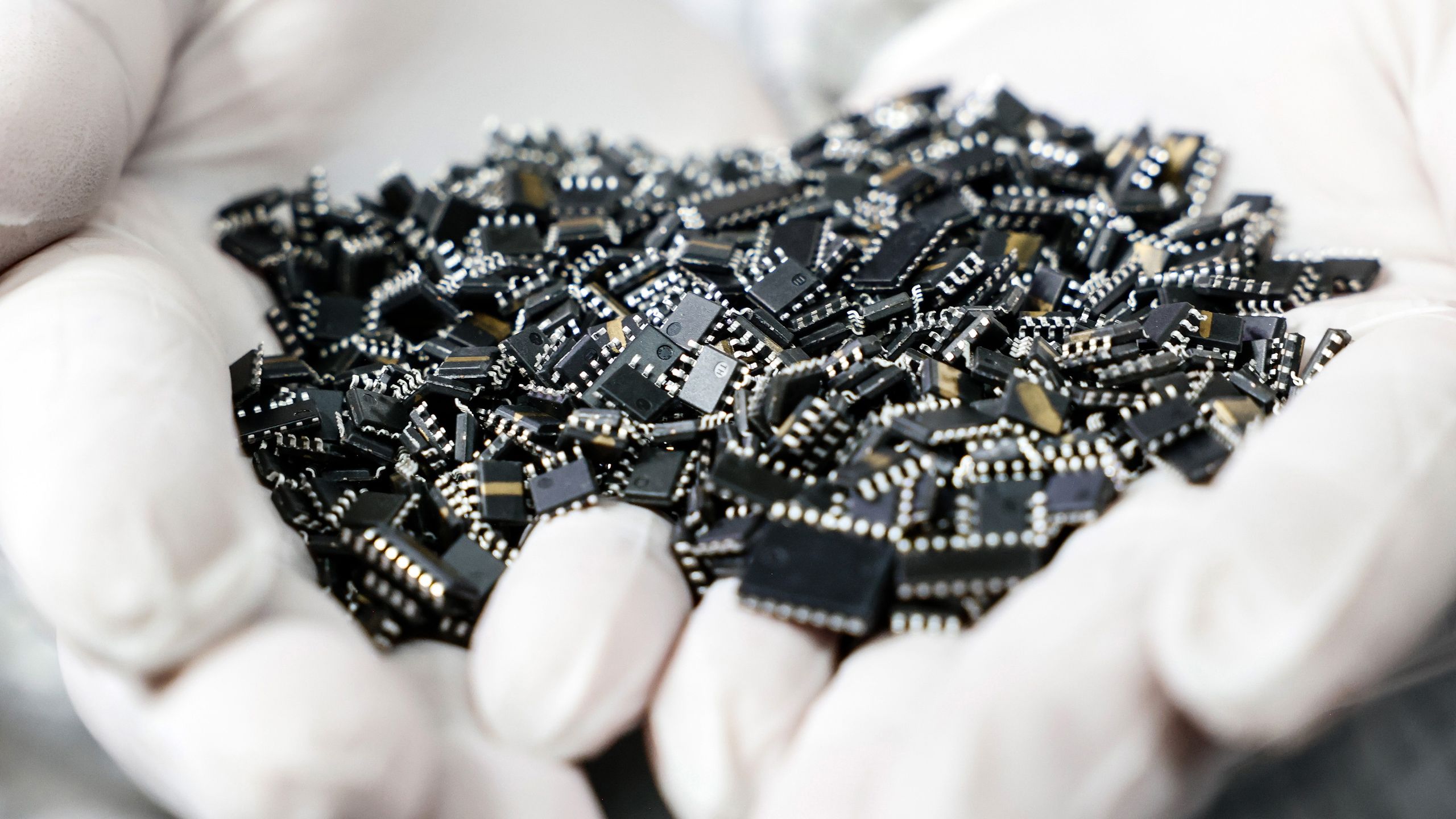
The BIOS SPI ROM, more popularly known as a BIOS chip, is a small flash memory chip that resides on your motherboard and stores the BIOS, or, in the last 15 years, the more advanced UEFI firmware. You can usually distinguish it from the other components on your motherboard by its diminutive size and 8-pin design, though some BIOS chips on higher-end motherboards can feature a 16-pin design. Don't let the chip's size fool you, as it plays a monumental role in your computer's functionality.
Without the BIOS chip or with a corrupted BIOS chip, your system will not even start. The reason is that the chip contains mission-critical instructions that initialize and test key hardware in your computer, ensuring it boots successfully every time you push the power button.
You may like Asus adds 64MB ROM to Strix Neo AM5 motherboards, following Gigabyte MSI's $80 AMD motherboards with DDR4 support swoop in to rescue gamers amid the global RAM crisis Motherboard buying advice for the PC building apocalypse Back in the old days, the capacity of BIOS chips was around 8KB to 64KB. Just as technology has evolved tremendously over the years, the capacity of these tiny chips has grown exponentially as hardware has become more sophisticated. A few years ago, it was normal to see consumer motherboards with 16MB or 32MB BIOS chips, and until recently, 64MB chips started appearing on the latest AMD motherboards. However, that doesn't mean that every AMD motherboard features a 64MB BIOS chip.
The primary reason motherboard manufacturers used smaller BIOS chips comes down to cost. Higher-capacity BIOS chips are more expensive and can impact the company's expenses. As a result, many brands have tried to minimize costs by using lower-capacity chips. However, they have transitioned to higher-capacity models due to various factors, including more complex firmware, improved GUI aesthetics, support for more processors, and additional features, such as integrated wireless drivers, so users don't have to struggle to get an Internet connection when they're doing a fresh Windows install.
Elevate your PC build with an aesthetically pleasing motherboard that bridges the divide between nature and tech. Organic wood meets uncompromising performance in a motherboard designed to unlock the full potential of AMD X3D processors with X3D Turbo Mode 2.0, for a 25% boost to gaming performance, and enhanced responsiveness.
Although the X870 and X870 chipsets are the premium offerings from AMD's 800 series, not every motherboard that leverages one of the aforementioned chipsets is guaranteed to feature high-capacity BIOS chips. There's a lot in play here, such as the manufacturer's design decisions and profit margins.
Likewise, 64MB chips aren’t just exclusive to the X870 or X870E chipset. Motherboards that leverage the more affordable B850 chipset can also come with 64MB chips if they're on the higher end of the pricing spectrum.
Get Tom's Hardware's best news and in-depth reviews, straight to your inbox.
Key considerations
- Investor positioning can change fast
- Volatility remains possible near catalysts
- Macro rates and liquidity can dominate flows
Reference reading
- https://www.tomshardware.com/pc-components/motherboards/SPONSORED_LINK_URL
- https://www.tomshardware.com/pc-components/motherboards/why-amd-motherboards-now-come-with-bigger-bios-chips-and-why-it-matters-to-you#main
- https://www.tomshardware.com/subscription
- New Commerce Department AI export rules could be seismic change for CSPs and data center operators — buying American GPUs at scale means committing to building
- NVIDIA and Global Industrial Software Leaders Partner With India’s Largest Manufacturers to Drive AI Boom
- Chinese SSD maker YMTC lists its first commercial PCIe 5.0 SSD as worldwide shortage intensifies — Xtacking 4.0 NAND powers speeds of up to 10,500 MB/s
- Chinese SSD maker YMTC lists its first commercial PCIe 5.0 SSD as worldwide shortage intensifies — Xtacking 4.0 NAND powers speeds of up to 10,500 MB/s
- Thermal Grizzly scammed out of $46,000 by Alibaba metals suppliers — company spread the risk across two copper and aluminum suppliers, only for both to send che
Informational only. No financial advice. Do your own research.