
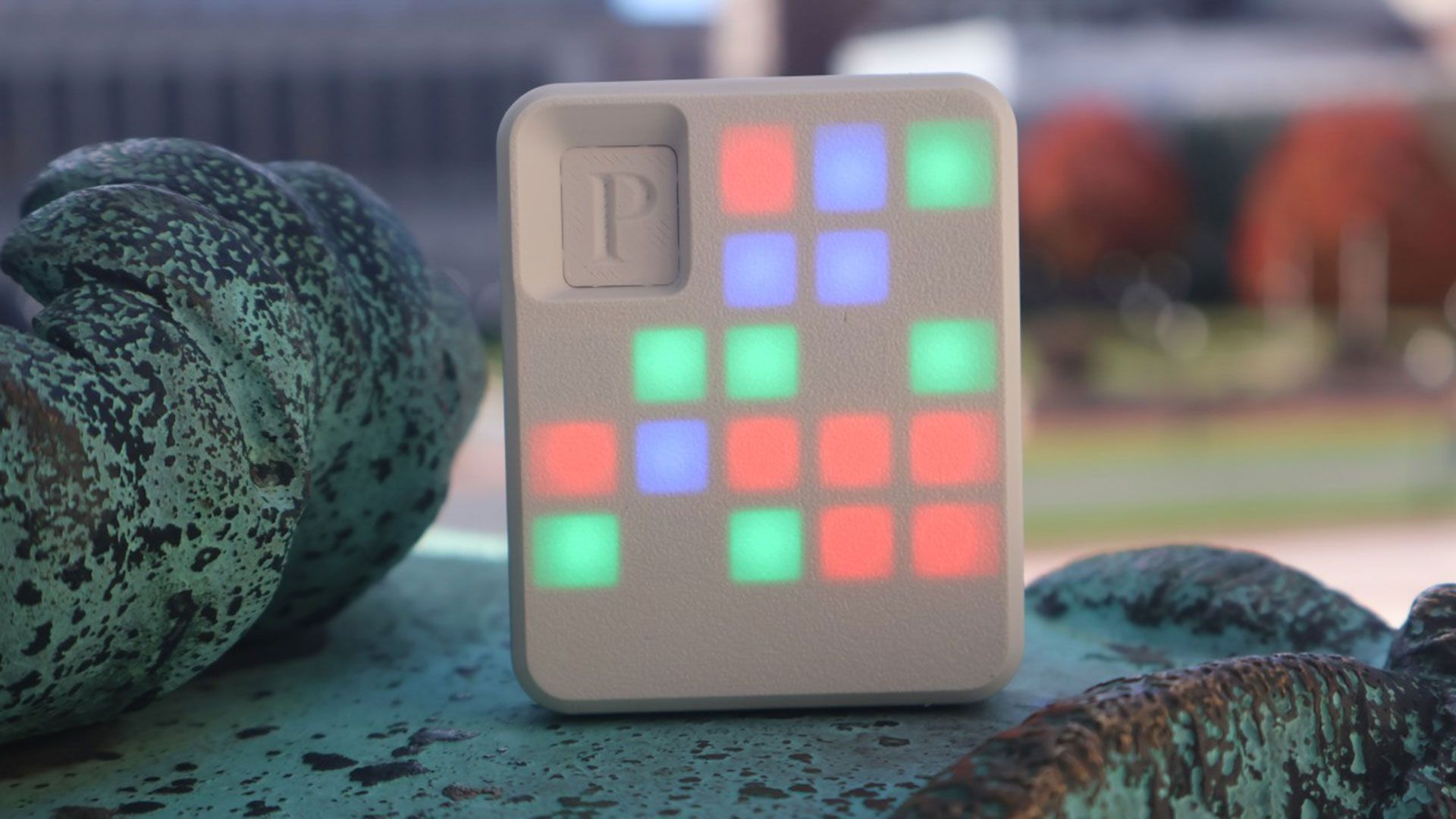
The inventor describes this $120 device as 'a watermark for humans' designed to verify video footage is genuine.
a]:text-inherit [&>a]:underline">
When you purchase through links on our site, we may earn an affiliate commission. Here’s how it works .
Watch On Kramer has been working on The Protector for the past year as a solution to the growing deepfake and AI-fake problems in tech. He soon latched onto the idea of using color-pulsing LEDs as a video watermarking system. However, a solution involving implanted subdermal LEDs (in people's foreheads) was quickly shelved. Thankfully, a less painful, less permanent, and more investor-friendly wearable LED matrix pin was decided upon to commercialize this product.
Subjects should wear this deepfake-busting device conspicuously whenever they might be recorded on video, or whenever they want others to be able to verify their message independently. The Protector contains a secret private key and a precise clock. Its ESP32-S3 microcontroller takes these inputs and generates what is claimed to be a unique and unpredictable sequence of flashing color lights. If, for whatever reason, someone wants to check whether a video of a subject wearing The Protector has been deepfaked, they can upload it to a dedicated website for verification. It is explained that iamnotfake.com checks if the light patterns in the uploaded video match the ones generated by the device at the time of the recording. The Protector is not connected to the internet except briefly when charging, to keep its clock accurate.
(Image credit: The Information Syndicate & David Kramer ) (Image credit: The Information Syndicate & David Kramer ) (Image credit: The Information Syndicate & David Kramer ) Image 1 of 3 View Original
Even if it works as intended, there seem to be some rather obvious ways a determined deepfaker could circumvent the safeguards built into The Protector. On the YouTube video page, there are numerous such suggestions. You could just edit the video to remove The Protector from the video, for example. Or someone could retain the video shell and just deepfake and/or lip-sync new content.
For some important context, though, this new device comes from the same inventor that created the clearly humorous physical NFT minting device we reported on in the summer. Kramer seems to be a staunch tech optimist, and there are signs that he might even be a satirist of the blockchain and LLM age. So it isn't easy to be sure whether The Protector is a genuinely pitched and productized anti-deepfake solution, or more of a comment on the escalating arms race between content creators and AI-generated impersonators. In conclusion, whether it is entirely deepfake-bulletproof or not, it is undeniably a techy, geeky, fun accessory.
Researchers build a $7 smartphone clip-on that spots hidden cameras
Key considerations
- Investor positioning can change fast
- Volatility remains possible near catalysts
- Macro rates and liquidity can dominate flows
Reference reading
- https://www.tomshardware.com/peripherals/wearable-tech/SPONSORED_LINK_URL
- https://www.tomshardware.com/peripherals/wearable-tech/usd120-wearable-led-pin-acts-as-a-watermark-for-humans-to-fight-deepfakes-esp32-s3-powered-protector-flashes-secret-time-synced-light-codes-every-second#main
- https://futureplc.com/terms-conditions/
- A New Dawn in the Cloud: ‘Warhammer 40,000: Dawn of War IV’ Is Coming to GeForce NOW
- NVIDIA Expands Slurm to Bring Quantum Computing Into Supercomputing
- iBuyPower’s Black Friday offers net you $650 off powerful RTX 5080 prebuilt PC
- AI enthusiast deletes Linux for a 24KB pure assembly OS that boots in 74 milliseconds
- Memory shortage could ease years earlier than RAM makers claim — TrendForce says RAM pricing will stabilize in 2027 and drop in 2028
Informational only. No financial advice. Do your own research.