
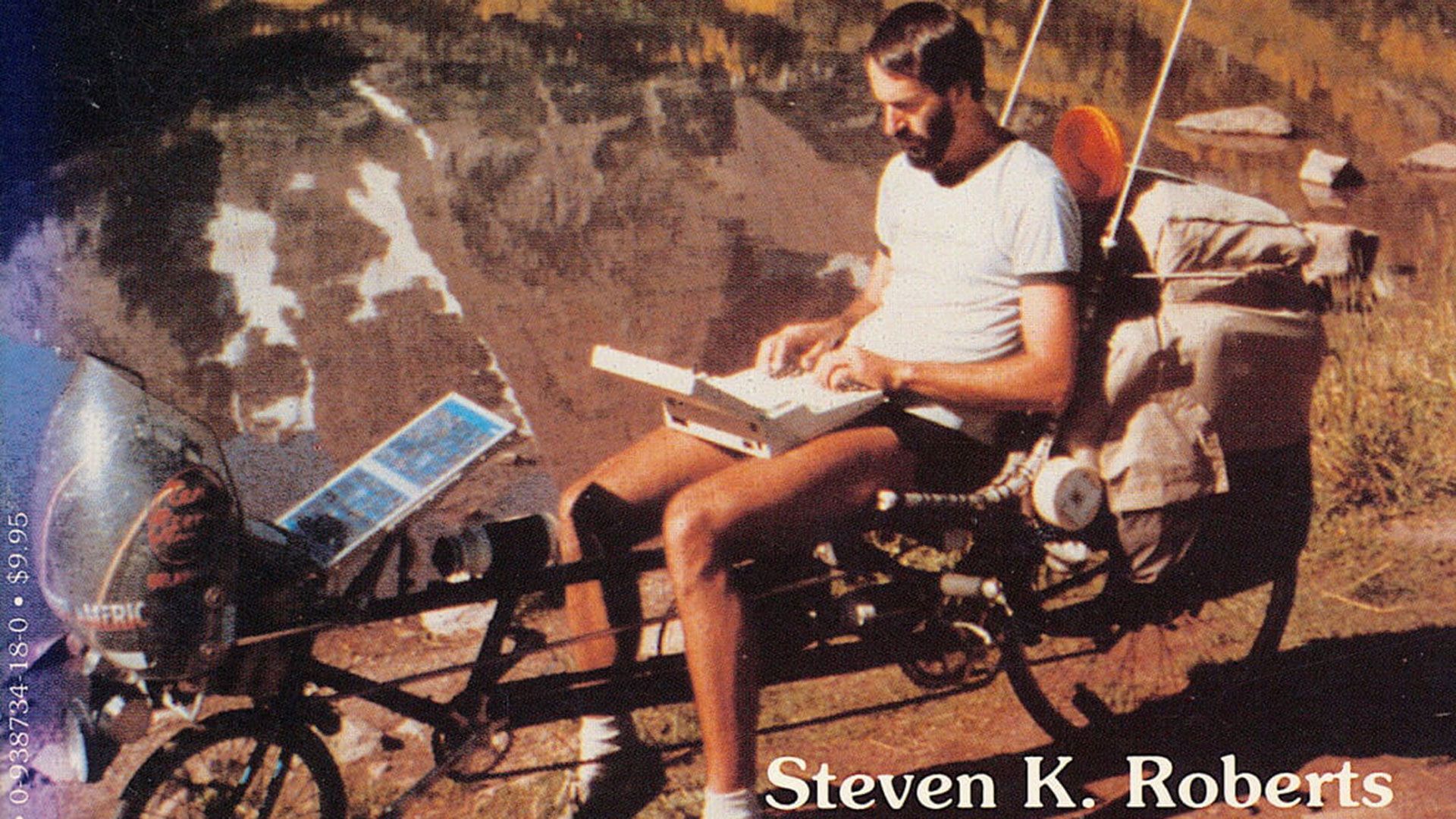
The journey started before Windows 1, before the Apple Mac, before cell phones, and before the Internet, but Steven K. Roberts managed to work ‘on the road’ for 17 months.
When you purchase through links on our site, we may earn an affiliate commission. Here’s how it works .
(Image credit: Nomadic Research Labs, Steven K. Roberts) In 1983, writer and computer whizz Steven K. Roberts began his multi-year Computing Across America quest, which would eventually be the basis of a book of the same name . Armed with his recumbent Winnebiko pedal-powered vehicle, solar panels, and the best early 80s portable tech he could lay his hands on, Roberts' journey lasted about 17 months. On the way, he traversed 17,000 miles of the U.S. while staying productive and keeping in touch with clients and publishers.
In many ways, Roberts was the pioneer of digital nomadism, a lifestyle that only gained real traction in the COVID era. However, this travelling trailblazer began his odyssey before Windows 1 , before the Apple Macintosh, before cell phones, and even before the Internet . Roberts used to keep in touch with clients via CompuServe and other early online services.
The Winnebiko was fabricated by Roberts over a six-month period ahead of the Computing Across America trip. The original digital nomad refers to this recumbent cycle as “the elemental form of my technomadic adventure substrate.”
How often should you expect to replace your headset, keyboard, or mouse — buying tips for picking longer-lasting gear
The best cheap tech you can grab this Amazon Prime Day — 13 bargains under $13 to improve your tech life
These are the top tools we use to build and maintain our precious tech, and they're on sale for Black Friday 2025
In essence, this pedal-powered low-riding vehicle was based around a “4130 Chrome-Moly frame, lugless, filleted/brazed construction, triple stays, built by Franklin Frames (Jack Trumbull).”
It also had a large 48-spoke, 27-inch wheel at the rear, and a 16-inch wheel at the front. Between them sat Roberts, pedaling his 18-speed derailleur and controlling the bike using under-seat steering.
Many readers will be more interested in the electronics than the bike. However, the computers Roberts used were upgraded during the journey. Remember, this was a time of tremendous advances in personal computing, and the original digital nomad’s journey gained attention and traction in newspapers, magazines, and on TV.
Roberts began his journey with the Radio Shack Model 100 laptop as his tech mainstay. However, he would later upgrade to the HP-110 portable. The HP represented quite an advance, with its faster 16-bit processor, more RAM, storage, and bigger display. However, this IBM PC-compatible portable running DOS and Lotus 1-2-3 weighed nearly three times as much at 9 pounds and cost about three times as much.
Get Tom's Hardware's best news and in-depth reviews, straight to your inbox.
Key considerations
- Investor positioning can change fast
- Volatility remains possible near catalysts
- Macro rates and liquidity can dominate flows
Reference reading
- https://www.tomshardware.com/laptops/SPONSORED_LINK_URL
- https://www.tomshardware.com/laptops/the-winnebiko-travelled-17-000-miles-to-complete-the-computing-across-america-expedition-40-years-ago-solar-and-1980s-portable-gadgets-powered-digital-nomadism-in-its-earliest-and-purest-form#main
- https://www.tomshardware.com
- Powering AI Superfactories, NVIDIA and Microsoft Integrate Latest Technologies for Inference, Cybersecurity, Physical AI
- Delivering AI-Ready Enterprise Data With GPU-Accelerated AI Storage
- The upcoming Steam Machine won't be 'subsidized' like consoles to hit a more attractive price target, suggesting high relative pricing — Valve engineer confirms
- Delivering AI-Ready Enterprise Data With GPU-Accelerated AI Storage
- TSMC says advanced‑node capacity falls ‘about three times short’ of AI demand — company's wafer capacity is 'still not enough' as demand continues to rise
Informational only. No financial advice. Do your own research.