
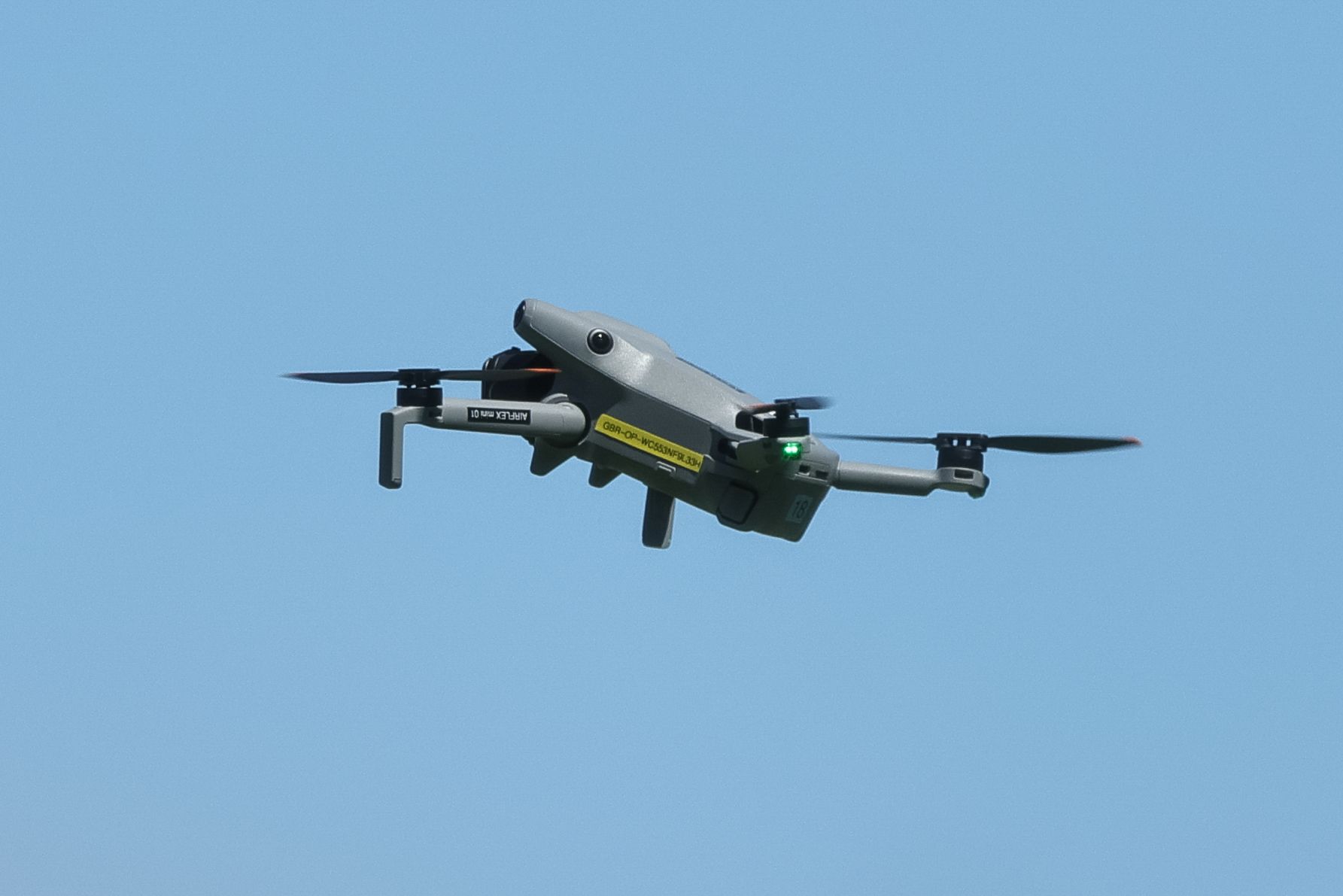
This is reminiscent of the acoustic mirror used from World War I until the advent of radar as an early warning system for bombers.
When you purchase through links on our site, we may earn an affiliate commission. Here’s how it works .
Shahed-type drones have been widely employed in Russia’s invasion of Ukraine, which is quite effective for its relatively low price compared to other, more advanced missile systems. Ukraine has been taking steps to counter this threat, including requiring users inside the country to register their Starlink units to avoid getting blocked because Russia has been using the service to guide its drones as late as last year. Other nations are experimenting with cost-effective countermeasures, too, including microwave drone swarm killers and man-portable anti-drone laser systems .
What makes these drones deadly is their price — because they’re so cheap, it’s easy for an enemy to launch them en masse and overwhelm defenses. However, if you can catch them far from their targets, they’re quite vulnerable (at least for the older propeller-driven models); even gunners armed with a shotgun or assault rifle seated inside a 50-year-old single-propeller trainer aircraft can reliably shoot them down.
The biggest issue for air defense systems is that these drones are quite small and made of lightweight materials, which gives them a relatively low radar cross-section (RCS). A Shahed-type drone usually measures around eight to 12 feet in length and has a wingspan of around eight feet. Although they could be detected by standard radar systems, their speed and size mean that the radar receiver would also pick up a lot of other clutter, such as birds, making it hard to distinguish relevant targets from background noise. These characteristics, combined with their low flight cruising altitude, mean that ground-based radars have trouble picking them up unless they’re flying relatively close.
However, their low flight path also means that they could easily be heard by observers on the ground. So, if enough people can detect their aural signature and report it to a central database, defense forces could mobilize and engage these threats while they’re still distant from their targets and away from population centers. This is similar to the acoustic mirrors and acoustic locators that militaries used in World War I before the advent of radar, wherein they built massive concrete dishes aimed upward, or used smaller, more portable metal horn arrays, crewed by trained personnel listening in to detect the low-frequency sound coming from aircraft piston engines from far away.
Ukraine’s new AI-guided laser destroys Shahed suicide drones in seconds from 3.1 miles away
Russian-made Shahed drones are ‘disintegrating in the air before reaching their targets’ due to shoddy manufacturing, video shows
Researcher develops 'spray-on' stealth coating for drones
Key considerations
- Investor positioning can change fast
- Volatility remains possible near catalysts
- Macro rates and liquidity can dominate flows
Reference reading
- https://www.tomshardware.com/tech-industry/drones/SPONSORED_LINK_URL
- https://www.tomshardware.com/tech-industry/drones/acoustic-mapping-app-uses-thousands-of-networked-old-android-phones-to-hunt-shahed-drones-crowd-sourced-microphone-network-spots-small-low-rcs-military-targets#main
- https://www.tomshardware.com/membership
- Ubisoft co-founder Claude Guillemot dies in plane crash — French publisher established in 1986 became one of the biggest entertainment companies in the world
- Valve opens Steam Machine reservations — details $1,049 starting price, randomized queue to stop scalpers, and limited inventory
- AMD brings official FSR 4.1 support to RX 7000 series GPUs — INT8 model now available in 300+ games, RDNA 3 APUs also getting FSR 4.1 soon
- The best 3D scanners 2026 — the top performing models we've benchmarked
- Coherent Breaks Ground on Expanded Texas Facility, Scaling AI’s Optical Backbone
Informational only. No financial advice. Do your own research.