
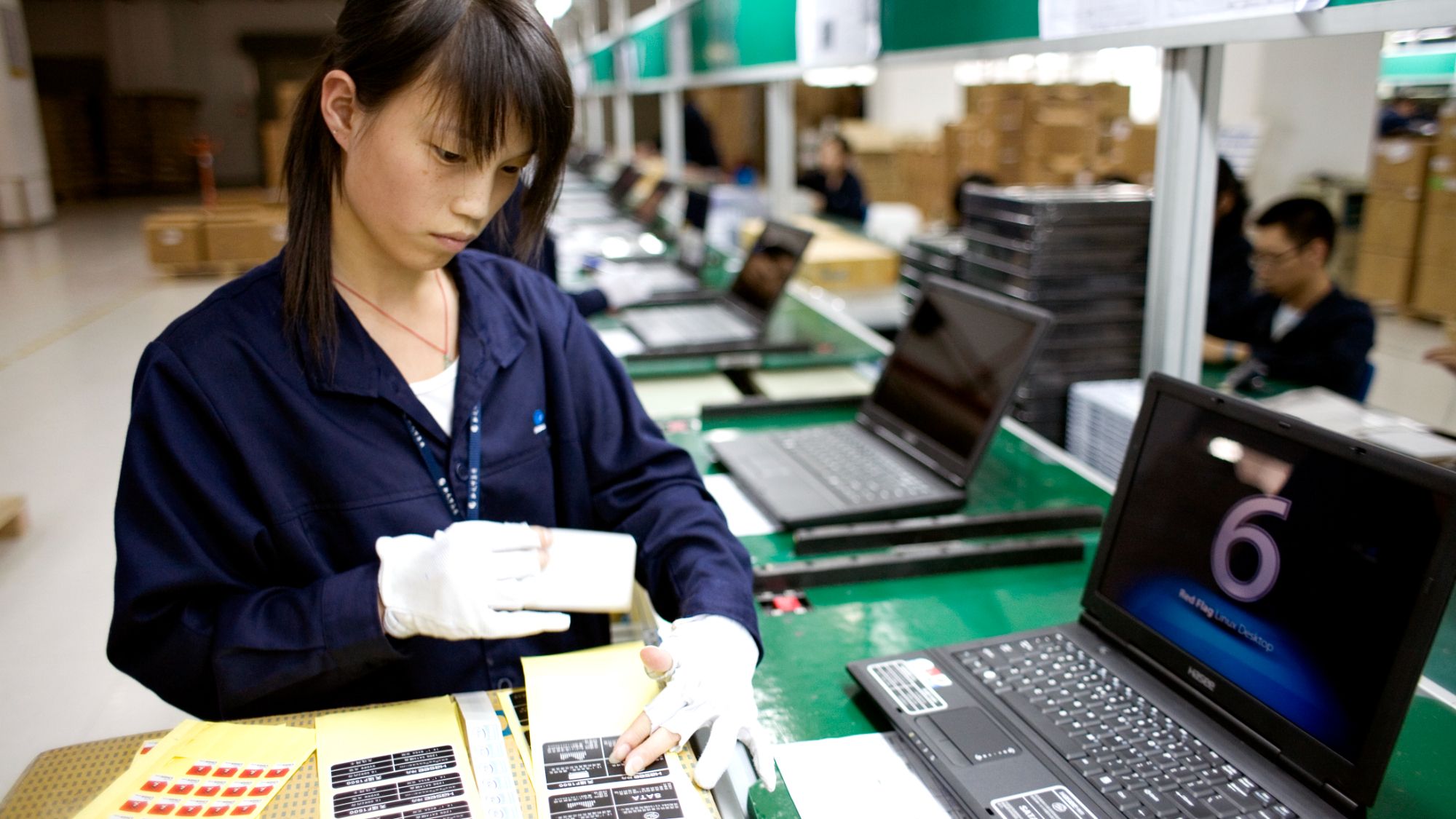
Many PC brands slowly moved out of China in 2024 and 2025 as the U.S.’s sanctions and tariffs on China have increased prices and forced them to find friendlier nations. While these nations do not have established supply chains and expertise like China, it at least spreads the risk as manufacturers avoid getting caught up in geopolitical tensions.
However, it seems that rising component prices have forced them to move back some of their capacity into China. The biggest culprit is the AI-induced memory and storage chip shortage, which has caused memory prices to climb an unprecedented 500% in 12 months. More than that, other parts like PCBs and fiberglass cloth used in motherboard manufacturing are seeing increasing prices, which Acer chairperson and CEO Jason Chen bemoaned as suppliers hyping shortage fears to protect margins.
While tech companies aren’t abandoning their “China+1” diversification strategy, the mature industry in China is helping offset increased component costs. Aside from that, the Chinese contract manufacturers often have better access to memory chips from domestic manufacturers like CXMT. "These Chinese contract manufacturers have been telling potential clients and computer makers that working with them could be a good option for securing better access to Chinese-made memory chips," a supply chain manager in the computer ecosystem told Nikkei Asia . "They are marketing themselves as a good alternative to even help sort out the supply chain."
Moving back some manufacturing capacity into China is easing some of PC manufacturers’ cost concerns, but it’s also negatively impacting the newly established supply chains in Southeast Asia. "We built two new production lines in Thailand for the PC clients, and now they are moving substantial orders back to China,” one manager at a PC component supplier told the publication. “Those two lines have not yet turned profitable, and I don't know when they will add the orders back."
TrendForce expects declining global laptop shipments to slow manufacturing exodus from China
Three major PC makers now using Chinese memory to fight 'unprecedented memory shortage,' report claims
Nvidia is bankrolling AI accelerator supply chain buildout to reserve production capacity
Unfortunately, building an entire supply chain for PC manufacturing is slow and expensive. The U.S. has been trying to accomplish this for years, and, so far, only Anduril has attempted to build laptops with 90% of its component costs coming from the U.S. and other allied countries . Even then, it expects its devices to be around 20% more expensive than the competition, which it could afford by offering them mostly to critical industries that demand supply chain security , like the government and the military. But if you’re a PC manufacturer vying for customers in the consumer market, you’re likely incentivized to find the lowest possible costs to be able to compete in pricing.
Follow Tom's Hardware on Google News , or add us as a preferred source , to get our latest news, analysis, & reviews in your feeds.
Get Tom's Hardware's best news and in-depth reviews, straight to your inbox.
Key considerations
- Investor positioning can change fast
- Volatility remains possible near catalysts
- Macro rates and liquidity can dominate flows
Reference reading
- https://www.tomshardware.com/tech-industry/manufacturing/SPONSORED_LINK_URL
- https://www.tomshardware.com/tech-industry/manufacturing/ai-component-hikes-force-the-worlds-largest-pc-makers-to-return-manufacturing-capacity-to-china-brands-to-seek-lower-production-costs-and-efficiency-in-established-supply-chain#main
- https://www.tomshardware.com/membership
- Google Cloud and NVIDIA Announce General Availability of NVIDIA Vera Rubin Infrastructure
- NVIDIA Cosmos Opens New Tools to Train, Evaluate and Deploy World Models
- Windows 11’s ‘whole ISO’ squeezed into a CD-ROM
- Leaked 256-core Zen 6c EPYC CPU destroys Zen 5 in early single-threaded benchmarks hints at 24% IPC gain
- 3.2 Petabits per second real-time optical fiber transfer speed world record claimed by Chinese team
Informational only. No financial advice. Do your own research.