
When you purchase through links on our site, we may earn an affiliate commission. Here’s how it works .
Several U.S. data centers slated for completion in 2026 are at risk of being delayed as strict schedules encounter regulatory friction, supply chain bottlenecks, and the lack of available utility. According to a report by the Financial Times , major data center projects involving Microsoft , OpenAI, and other tech companies will miss projected deadlines by more than three months. The estimate is based on data from SynMax, a geospatial data analytics company that uses satellite imaging and AI to deliver real-time insights and predictive analytics on the maritime and energy sectors.
Satellite imagery is used to estimate progress on various construction projects, looking for various milestones like land clearing and foundation work. It’s then cross-checked against industry intelligence, including public statements, regulatory and permit documents, and on-the-ground interviews.
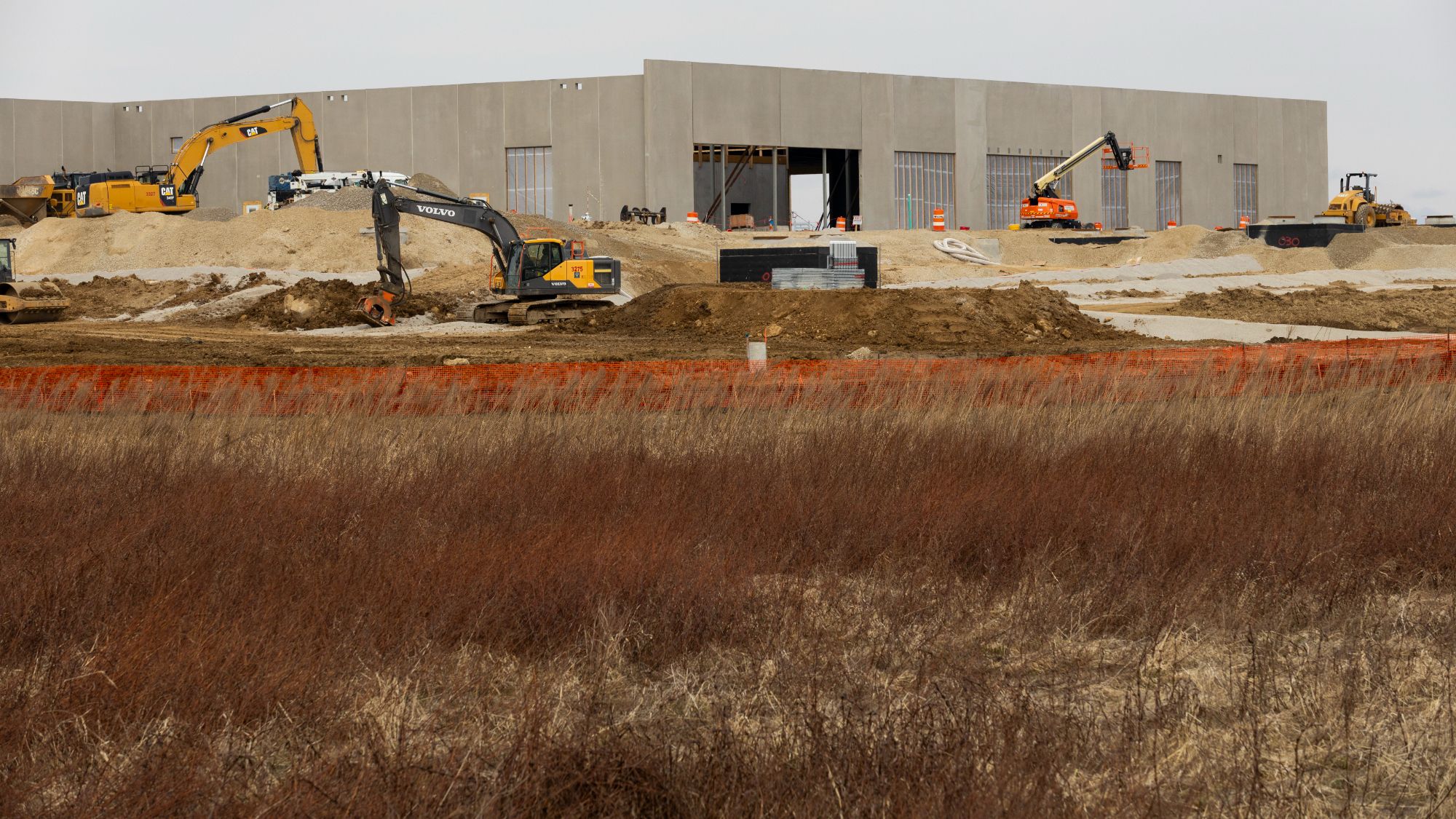
For example, a 1,200-acre, 10-building campus is under construction in Shackelford County, Texas, for Oracle, which it will then equip for OpenAI. The entire project is expected to have a 1.4-GW capacity and a delivery date in the latter half of 2026, but imagery from early April 2026 shows that only six plots of land have been cleared for construction, with only one of them showing signs of development. SynMax estimates that one building could possibly be delivered by the end of the year, but a more realistic timeline sees this pushed to 2027. Another OpenAI-linked project, a 1.2-GW site in Milam County, Texas, is showing signs of slow progress, with only one building under construction as seen from space.
You may like Half of planned US data center builds have been delayed or canceled, growth limited by shortages of power infrastructure and parts from China Local political revolts threaten to derail US data center projects China's top chipmaker warns that rushed AI data center capacity could remain idle The companies involved in these data center projects denied the reported delays. “Our historic data center build-out is on schedule and we will accelerate from here,” OpenAI told the publication. “In partnership with Oracle, SB Energy and a broader ecosystem of partners, we are delivering rapid progress in Abilene, Shackelford County and Milam County in Texas.” Oracle also said to FT , “Each data center we’re developing for OpenAI is moving forward on time, and construction is proceeding according to plan,” while SB Energy noted that “The Milam County Data Center is on schedule and on pace to be one of the fastest data centers of its kind ever delivered.”
People on the ground report otherwise, though. Construction executives report that the building sites are lacking in specialist workers like electricians and pipe fitters, an issue that has been reported since late 2025. Note that OpenAI’s data center projects aren’t the only ones apparently suffering from a delay, with another recent report claiming that half of planned U.S. data centers are reportedly being canceled or delayed because of shortages.
Building the structures to house AI GPUs isn’t the only bottleneck in building the data centers — local utility providers are straining to catch up with the increased demand for electricity. Even though AI companies are supposedly paying for the needed infrastructure upgrades required to supply the massive amounts of electricity these data centers will consume, it will take time to order, deploy, and build the necessary systems that will deliver the power that AI GPUs demand.
Some AI hyperscalers are turning to on-site generators like turbines as an alternative power source, but these require EPA permits , adding regulatory friction. Furthermore, jet engines are suffering from their own supply chain shortages , with orders from 2025 being slated for a 2028 to 2030 delivery.
Get Tom's Hardware's best news and in-depth reviews, straight to your inbox.
Key considerations
- Investor positioning can change fast
- Volatility remains possible near catalysts
- Macro rates and liquidity can dominate flows
Reference reading
- https://www.tomshardware.com/tech-industry/artificial-intelligence/SPONSORED_LINK_URL
- https://www.tomshardware.com/tech-industry/artificial-intelligence/analytics-group-signals-possible-delays-at-40-percent-of-ai-data-center-construction-sites-companies-deny-schedule-holdups-but-satellite-imagery-indicates-otherwise#main
- https://www.tomshardware.com
- Steam shown running on Nintendo Switch thanks to latest Proton Beta — FEX 2604 translates x86 to ARM-friendly instructions on Linux
- Two US citizens get combined 16 years in prison for running North Korean laptop farms — fake remote IT work scheme netted DPRK $5 million in around three years
- Press Start on April: GeForce NOW Brings 10 Games to the Cloud
- 64GB of DDR5 RAM is a staggering $216 in this latest Newegg deal — Get a 9800X3D, X870-P motherboard, case, and a free AIO for just $939
- Iran reportedly bought an in-orbit Chinese satellite to target US military sites in the Middle East — purchase agreement included ongoing ground control service
Informational only. No financial advice. Do your own research.