
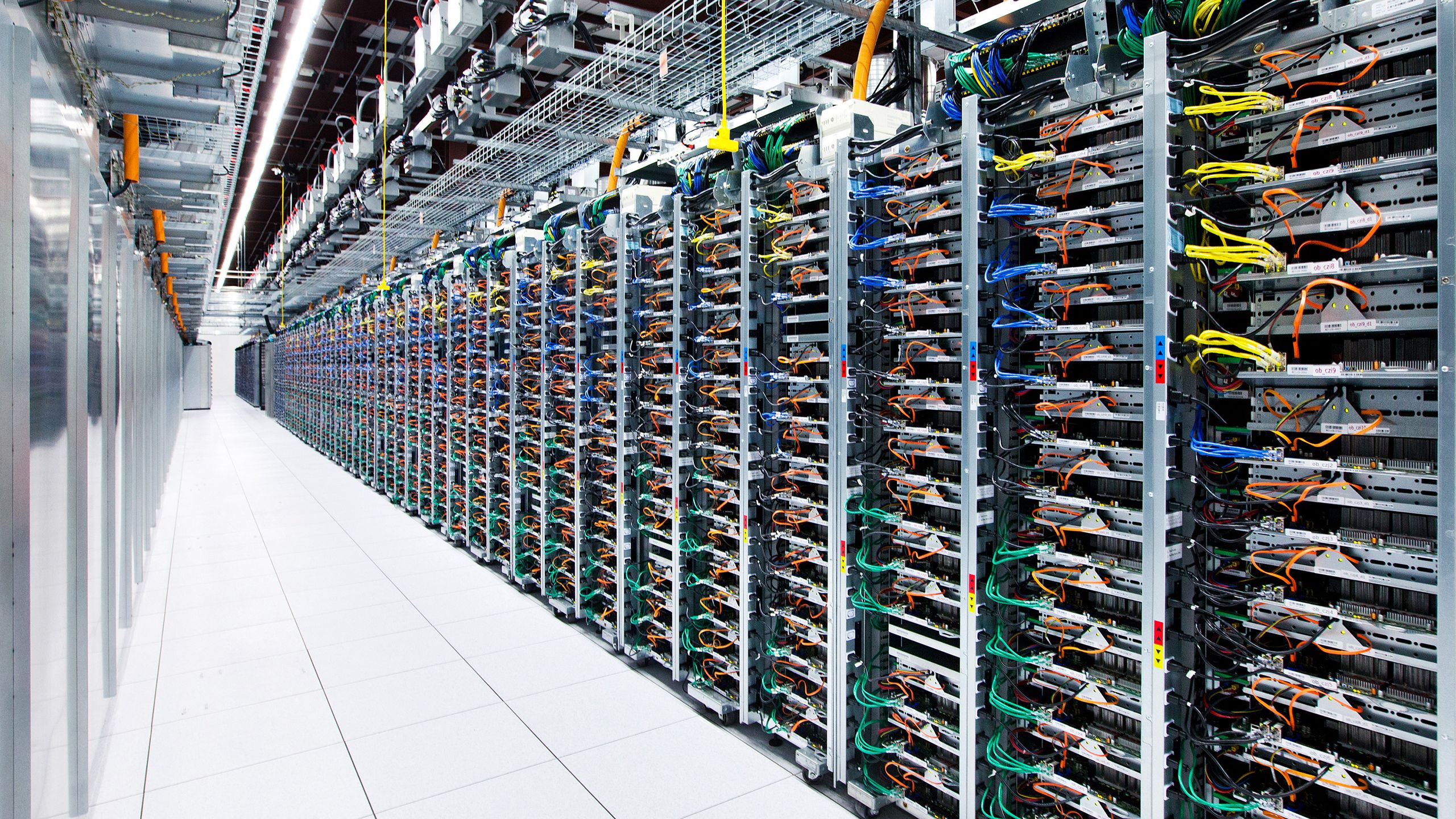
As AI servers dominated the market in Q1 2026, systems with various types of accelerators accounted for over 70% of the revenue. However, the rise of Arm-powered machines is the elephant in the room that is hard to miss, as it represents a tectonic shift in the whole market, both to the Arm instruction set architecture (ISA) in general and custom-built Arm CPUs designed by hyperscalers.
Non-x86 platforms generated $58.7 billion in revenue, a 107.6% increase year-over-year, which lifted their share of the market to 47.9%. Most of the non-x86 systems are Arm-based AI machines (think Nvidia's NVL72) as well as systems running custom CPUs, AWS, Google , and Microsoft , just to name a few. Still, also keep in mind IBM Z mainframes and IBM Power Systems (including storage) that use CPUs featuring proprietary non-x86 and non-Arm ISAs and which still generate $1 billion or more in revenue. IDC claims that Arm-based machines accounted for more than 95% of non-x86 revenue, so it is safe to say that Arm-based machines commanded over 45% of server revenues in Q1 2026.
One of the reasons why Arm-based machines now command a huge chunk of the server market is because they are used inside such systems as Nvidia's NVL72 'Blackwell' that sell for up to $6.5 million per unit . Each NVL72 rack-scale solution carries 36 compute trays with two Blackwell GPUs and one Grace CPU per unit, so while unit-wise each we are only talking about 36 processors, dollar-wise one NVL72 machine is as expensive as 928 entry-level 1P server (for $7,000) for cloud or edge applications or 433 higher-end 2P servers (for $15,000) for cloud or virtualization applications.
Given the fact that Nvidia will continue bundling its own Arm-based Vera CPUs with NVL72 'Vera Rubin' machines that will be more expensive than their Blackwell ancestors, we will not be surprised that Arm-based machines will account for well over 50% of the server market revenue in the second half of this year or in 2027. Also, keep in mind that Nvidia plans to sell server racks featuring only Vera CPUs for agentic AI applications, which will further drive sales of Arm-based machines.
Since AI servers dominate server sales, it is not surprising that sales of accelerated servers are increasing. Systems equipped with GPUs produced $68.9 billion in revenue during the quarter (up 24.8% compared to the same period a year earlier) and accounted for 56.2% of all server sales. Servers based on other accelerator types, including custom ASICs and FPGAs, expanded to $17.7 billion, up 122.1% YoY. As a result, accelerated servers earned $86.6 billion in Q1 2026, which is around 70.6% of all server revenue.
The custom AI ASIC state of play (May 2026) — Broadcom deals, Google TPUs, Meta MTIA & beyond
Analyst says Nvidia poised to capture two-thirds of the x86 server CPU market from Intel and AMD with expected $20 billion in revenue
Meta's multi-billion-dollar Graviton deal highlights intensifying CPU shortages in AI infrastructure
In contrast, x86 server revenue declined 2.9% to $63.9 billion, though IDC attributes this weakness to supply limitations rather than deteriorating demand. The market research firm claims that the industry's primary constraint is no longer customer appetite for general-purpose servers, but rather the availability of key components, including CPUs, DRAM, NAND memory, and hard drives.
Without any doubt, x86 servers remain working horses for the industry. In fact, many of them use accelerators, including ASICs, FPGAs, and GPUs, as they are used for a wide range of workloads, including AI, supercomputing, simulations, encryption, video transcoding, and many more.
AMD and Intel shipped nearly 20 million EPYC and Xeon SP processors for data center systems in 2025, according to Dean McCarron, the head and principal analyst at Mercury Research. He believes Nvidia is on track to ship four million Grace and Vera CPUs this year, which is considerably lower compared to shipments of AMD and Intel. It is hard to estimate how many custom Arm-based CPUs are deployed by AWS, Alibaba, Google, and Microsoft, but it is safe to say that we are talking millions of CPUs here; otherwise, the companies would not be able to justify development and production of custom silicon.
From a volume perspective, x86 servers remain the most popular machines, and it will probably take some time before ARM can challenge x86 in mainstream general-purpose servers. Nonetheless, it is safe to say that Arm-based data center CPUs are catching up with x86 parts in terms of volumes.
The global server market hit a record $122.6 billion in the first quarter of 2026 as AI infrastructure spending continued. Accelerated systems powered by GPUs, custom ASICs, and FPGAs generated more than 70% of server revenue, while Arm-based platforms — including Nvidia's Grace Blackwell as well as custom CPUs from Arm, Google, and Microsoft — captured nearly half of the market.
Although x86 servers based on AMD EPYC and Intel Xeon processors remain dominant in shipment volumes, supply shortages of CPUs, memory, and storage components constrained revenue growth, which further enabled Arm-powered AI-optimized systems to gain share. But while at 20 million data center processors per year, x86 volumes are untouchable for Arm today, things may change in the coming years. Nvidia is on track to ship 4 million CPUs in 2026, and other developers of custom Arm-based CPUs are certainly not standing still.
*There is one significant difference with IDC's 'ODM Direct' classification. IDC classifies revenue according to which company invoices the customer, not necessarily who manufactures the hardware. As a result, while many AI servers are built by ODMs like Compal, Foxconn, or Quanta, they are sold under brands like Dell or HPE. As a result, while the latter get more business from enterprises or sovereign AI deployments, this does not mean that big ODMs are losing business; they are actually gaining it, as the appetites of hyperscalers like AWS, Google, Meta, or Microsoft are not going anywhere, just demand from new entrants emerges.
Follow Tom's Hardware on Google News , or add us as a preferred source , to get our latest news, analysis, & reviews in your feeds.
Anton Shilov is a contributing writer at Tom\u2019s Hardware. Over the past couple of decades, he has covered everything from CPUs and GPUs to supercomputers and from modern process technologies and latest fab tools to high-tech industry trends. ","collapsible":{"enabled":true,"maxHeight":250,"readMoreText":"Read more","readLessText":"Read less"}}), "https://slice.vanilla.futurecdn.net/13-4-24/js/authorBio.js"); } else { console.error('%c FTE ','background: #9306F9; color: #ffffff','no lazy slice hydration function available'); } Anton Shilov Social Links Navigation Contributing Writer Anton Shilov is a contributing writer at Tom’s Hardware. Over the past couple of decades, he has covered everything from CPUs and GPUs to supercomputers and from modern process technologies and latest fab tools to high-tech industry trends.
Key considerations
- Investor positioning can change fast
- Volatility remains possible near catalysts
- Macro rates and liquidity can dominate flows
Reference reading
- https://www.tomshardware.com/desktops/servers/SPONSORED_LINK_URL
- https://www.tomshardware.com/desktops/servers/arm-servers-capture-over-45-percent-of-data-center-market-revenue-gpu-clusters-and-high-end-ai-infrastructure-fuel-a-tectonic-shift-away-from-x86#main
- https://www.tomshardware.com/my-account
- Quake changed gaming forever 30 years ago today — seminal title established online multiplayer culture and made 3D graphics accelerators essential PC components
- Anthropic’s powerful Mythos AI reportedly breached ‘almost all’ NSA classified systems within a few hours during red-team test — report sheds more light on the
- Ubisoft co-founder Claude Guillemot dies in plane crash — French publisher established in 1986 became one of the biggest entertainment companies in the world
- Best Amazon Prime Day tech deals live — PC hardware deals on GPUs, CPUs, SSDs, and more
- Valve Steam Machine review: Couch gaming unboxed, but not always at 4K
Informational only. No financial advice. Do your own research.